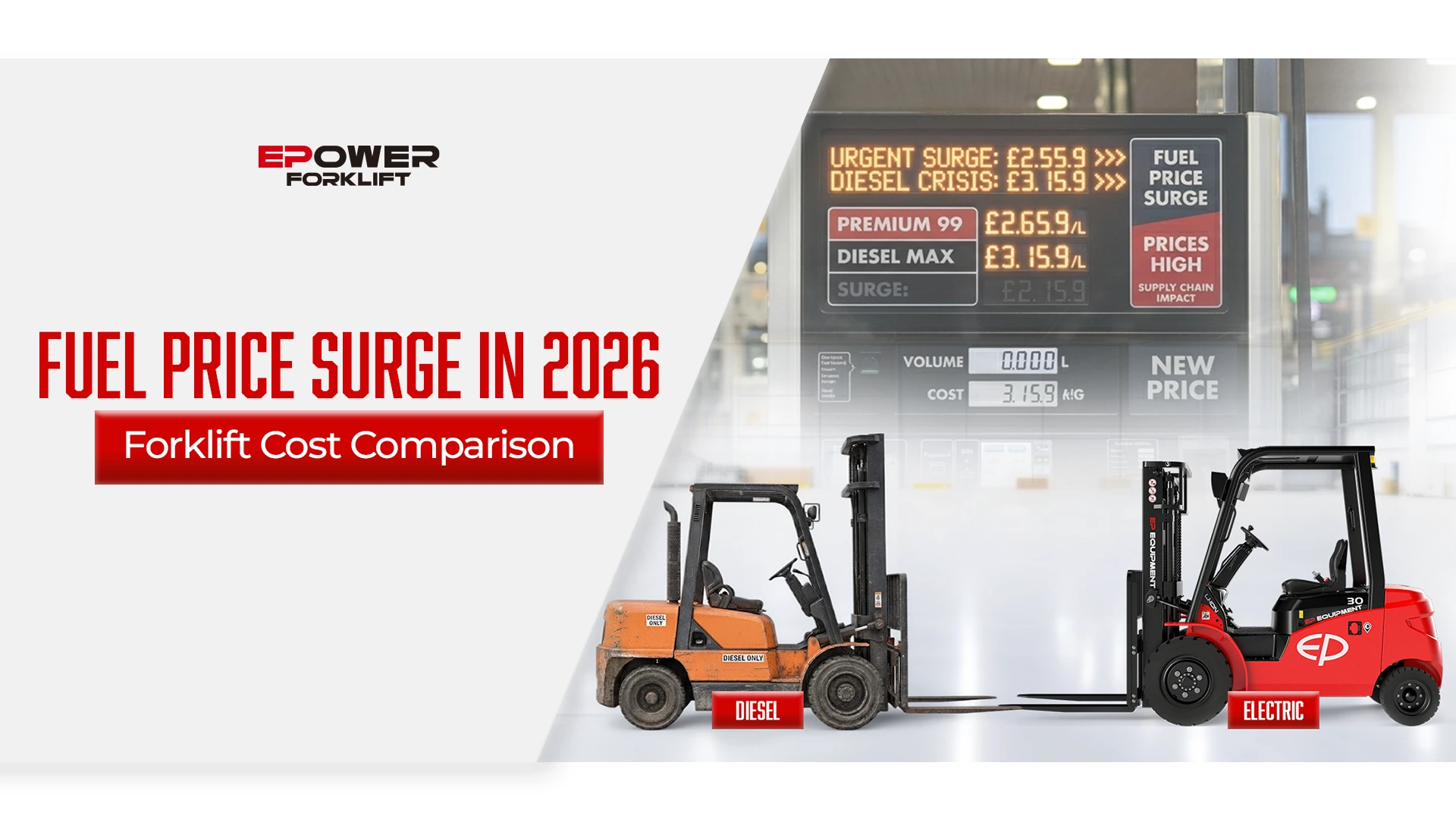
Fuel prices have surged sharply in early 2026, driven by global supply disruptions linked to escalating geopolitical tension in the Middle East. What was once considered a cyclical fluctuation has now evolved into a prolonged period of energy volatility, with diesel costs rising rapidly across global markets, including Australia.
This becomes a global energy crisis that has negative impacts on every industry, particularly the logistics and transportation sectors. In the material handling industry, they not only affect operating costs but also the total cost of ownership. Thus, mitigating reliance on fuel energy is the best way to escape from the escalating price surge and the opportunities to switch to electric alternatives. In this article, we will dig deeper into the impact of price volatility on operational costs while owning fuel-powered forklifts, and the urgency to shift toward electric solutions.
1. Fuel price volatility in 2026: How it impacts forklift operating costs
Middle East conflict is driving global oil price increase
Fuel price volatility in 2026 has been driven primarily by geopolitical disruptions, particularly the conflict affecting the Strait of Hormuz, a critical global oil transit route. The Hormuz closure has significantly constrained supply, creating persistent upward pressure on oil prices and triggering widespread fuel shortages.
As of mid-March 2026, Brent crude was already trading at around $102 per barrel, marking a sharp increase of roughly $30 year-on-year. Since then, prices have remained elevated, consistently above $100 per barrel, with some projections suggesting a surge toward $120–150 per barrel under continued supply disruption scenarios.
For forklift operations, this directly translates into rising and unpredictable diesel costs. Since fuel pricing tracks global oil movements, even short-term volatility can significantly increase day-to-day operating expenses and reduce cost stability.
Particularly, the global oil shock has translated directly into local markets. In Australia, diesel prices have increased by **up to 40%**, driven by supply shortages and panic buying, according to International Business Times. Fuel is now one of the most volatile cost components for logistics operations.
Direct impact of fuel price fluctuations on forklift operating costs
Diesel and LPG forklifts rely entirely on fuel as a primary operating input. As crude oil prices rise, diesel costs increase almost immediately, leaving businesses with limited ability to buffer or delay the impact.
This creates several cost implications:
- Unstable operating expenses: fuel costs fluctuate frequently, making monthly cost tracking inconsistent
- Scaling risk: higher utilization directly increases fuel consumption, amplifying exposure during peak operations
- Reduced cost predictability: budgeting and long-term cost planning become less reliable
At the fleet level, even marginal increases in fuel price can significantly raise total operating costs when multiplied across multiple units and extended operating hours. This makes the total cost of ownership for fuel-powered forklifts increasingly difficult to control.
Indirect cost pressure through transportation and supply chain volatility
Fuel price surge not only increases the direct cost of running forklifts but also reshapes transportation and supply chain dynamics. It also indirectly raises forklift operating costs for businesses that utilize diesel forklifts. As fuel prices are volatile, transport providers adjust their pricing structures, routes, and delivery frequency to protect margins. This often results in higher inbound and outbound logistics costs, less predictable delivery schedules, and greater variability in warehouse throughput.
For warehouse operations, this creates a more unstable working environment. Instead of handling consistent volumes, facilities must respond to irregular cargo flows, with sudden peaks followed by slower periods. Forklifts, as core handling equipment, are directly affected by these fluctuations. During peak periods, they are required to operate at a higher intensity, resulting in increased energy consumption, component wear, and higher maintenance frequencies.
Cost volatility and the challenge of operational control
The most significant impact of fuel price volatility is the loss of control over operating costs, which puts businesses in a challenging strategic position. When fuel prices increase unpredictably, companies are forced to choose between absorbing higher costs or passing them on to customers, both of which carry significant drawbacks.
If a business maintains stable pricing to remain competitive, the immediate consequence is margin compression. Over time, this can erode profitability to the point where operations become financially unsustainable, especially for companies with large, fuel-dependent forklift fleets running continuously. In practical terms, businesses are effectively absorbing external market shocks, which reduces their ability to reinvest in equipment, technology, or expansion. On the other hand, increasing service or product prices to offset rising fuel costs introduces commercial risk. In highly competitive logistics and warehousing markets, price sensitivity is high, and customers can shift to alternative providers offering more stable or lower-cost solutions.
This cost dilemma highlights a structural weakness in fuel-dependent operations. Energy, instead of being a controllable operating input, becomes an external variable that directly influences pricing strategy, profitability, and competitiveness. As a result, forklift operating costs are no longer just an internal efficiency issue. They become a strategic constraint that limits how businesses respond to market pressure.
2. Why is the shift to electric forklifts becoming urgent ?
Thus, how can we escape the volatile fuel market and reduce our exposure to geopolitical events far beyond our control? Electric handling solutions surge as one of the most promising alternatives for positive competitiveness.
How electric forklifts save your money over fuel price volatility
Apart from fuel, electricity prices are less volatile than the global oil market or geopolitical disruptions. Diesel forklifts run by diesel are tied to the global price fluctuation, meaning every price increase immediately raises operating expenses. In contrast, electric forklifts rely on grid electricity, which is generally more stable and can be managed through fixed tariffs or off-peak charging, especially in markets like Australia.
They also operate more efficiently. Electric drivetrains convert a higher share of energy into actual work, resulting in lower energy consumption per hour. With lithium-ion batteries, opportunity charging further improves utilization without adding downtime.
The result is a more predictable and controllable cost structure. Instead of reacting to fuel price fluctuations, businesses can stabilize operating costs and protect margins over the long term.
Opportunities for innovation and sustainability regulations
Regulatory pressure and industry standards are increasingly steering logistics operations toward lower emissions, particularly across developed markets. In response, electric forklift systems, integrated battery technologies, smart charging infrastructure, and warehouse automation are no longer optional upgrades but strategic investments in sustainability.
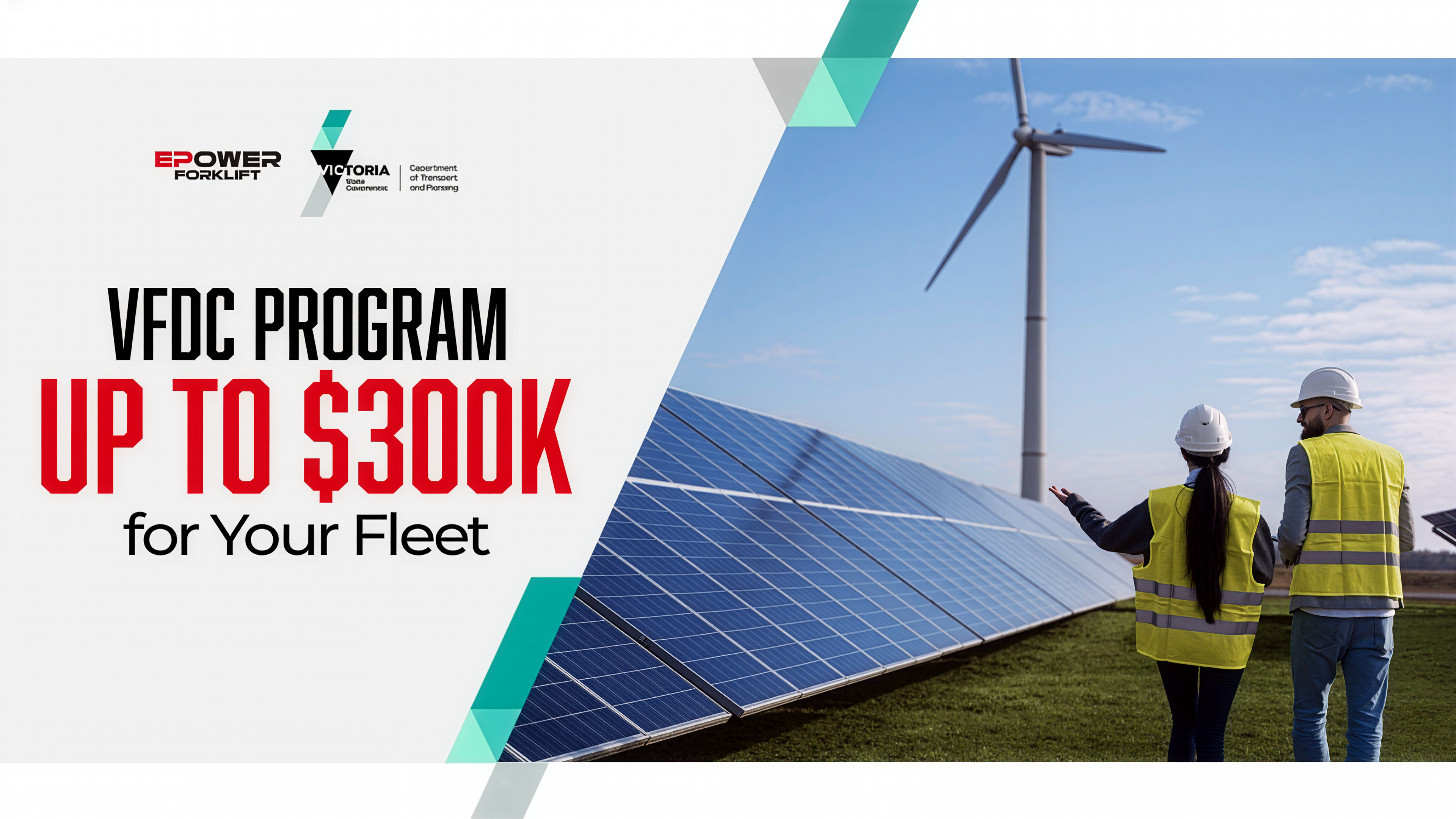
Moreover, the Victorian Government has launched the VFDC (Victorian Freight Decarbonisation Co-Investment) Program, supporting SMEs in modernizing their freight equipment from fuel-powered equipment to lithium-ion alternatives, applied within Victoria. Businesses adopting lithium-ion material handling solutions can access subsidies of up to $300,000 (ex GST), making the shift both economically and operationally compelling.
Beyond immediate cost benefits, the program is designed to accelerate long-term decarbonisation by encouraging SMEs to adopt cleaner energy solutions and reduce overall emissions.
To help businesses navigate the process, EPower offers full EOI support at no cost — from initial eligibility check through to final submission. EPower has received written confirmation from the Department of Transport and Planning (DTP) that lithium-ion forklifts and associated charging infrastructure are eligible under the VFDC Program.
We provide a comprehensive technical framework for your EOI submission:
- Carbon Comparison Reports: Precise data comparing current diesel/LPG emissions with new lithium-ion units.
- Guaranteed Delivery Commitment: Documented schedules ensuring project completion within the 18-month grant window.
- Grant-Compliant Quotes: Professionally structured to meet DTP audit standards.
The EOI deadline is 4:00 PM, 22 April 2026. Early preparation is critical — incomplete submissions are harder to assess favourably.
For businesses considering a transition from diesel to electric forklifts, this program offers a rare opportunity to align capital investment with rising fuel costs, reduce long-term operating expenses, and access significant government co-funding.
👉 Contact us before April 22 to get started. If you'd like to understand whether your business qualifies, we'll walk you through each step.
3. Diesel vs electric forklift cost comparison
The difference between diesel and electric forklift costs is primarily driven by energy consumption and maintenance intensity, which behave very differently between the two technologies.
Fuel and electricity cost: the key cost driver
Energy cost is the most immediate and visible difference between diesel and electric forklifts. Diesel-powered models rely on fuel that is not only expensive but also highly volatile due to global supply disruptions. As fuel prices rise, operating costs increase almost instantly. Electric Forklifts, by contrast, use electricity, which is generally more stable and cost-efficient. In practical terms, diesel forklifts can cost around $8-9 per hour to operate, while lithium-ion models typically range from $1-2 per hour. This helps businesses save $6-8 per hour. As a result, operating lithium forklifts can get annual savings of approximately $8,000-10,000. Over time, this gap results in substantial savings, particularly for warehouses that operate multiple shifts or have large fleets.
Energy and fuel consumption costs
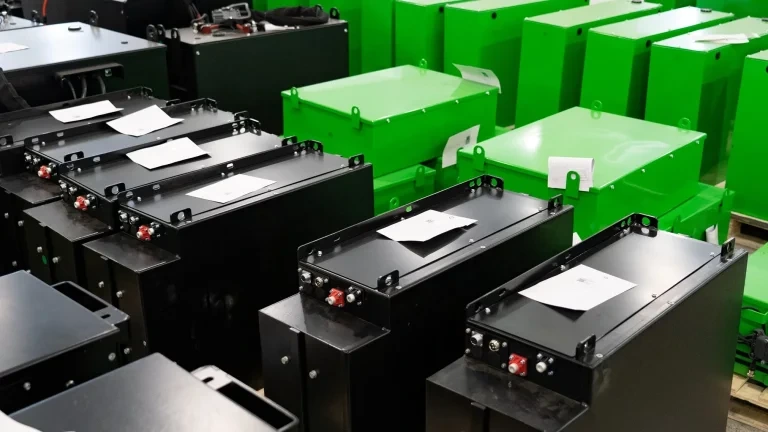
Fuel cost is a major component of forklift operating expense. Diesel and LPG forklifts depend on continuous fuel purchases, and these costs are subject to market volatility, regional supply conditions, and fluctuations in energy pricing. Over time, rising fuel prices can significantly increase the total cost of ownership for internal combustion forklifts. By contrast, lithium forklifts operate on electricity, which is generally more stable and cost-efficient than diesel or LPG. Lithium-ion battery systems also convert energy more efficiently, helping businesses reduce daily operating costs. Moreover, common battery specifications such as 51.2V / 304Ah and 80V / 460Ah provide approximately 15.6 kWh and 36.8 kWh of energy capacity, making them suitable for daily warehouse use with lower and more predictable energy costs.
Maintenance costs
Fuel-powered forklifts generate significantly higher maintenance expenses due to engine-related servicing — oil changes, filter replacements, fuel system checks, and exhaust maintenance. These are scheduled costs that recur every 250–500 operating hours, regardless of how well the machine is running. On top of that, unplanned failures add unpredictable downtime costs that are difficult to budget for.
Electric forklifts operate differently. With no internal combustion engine, no oil changes, and far fewer moving parts, the scope of required maintenance is fundamentally smaller. Servicing intervals are less frequent, and the risk of unexpected breakdowns is significantly lower. At April 2026 diesel prices of $3.29/L — among the highest recorded in Australia — a single 2-ton diesel forklift now costs over $13,000 per year in fuel alone. That figure does not include a single dollar of maintenance.
To illustrate the full cost difference, here is a direct comparison using a 2-ton diesel forklift against a 2-ton EP lithium-ion model.
| Cost component | 2-ton diesel forklifts | 2-ton ithium-ion forklifts |
|---|---|---|
| Energy source | Internal combustion engine (Diesel fuel) | Lithium-ion battery (Electric power) |
| Annual energy cost(single shift, 250 days) | $13,000–$16,500 | $2,000–$4,000 |
| Maintenance& servicing | High frequency, complex engine service (oil, filters, engine components)— every 250–500 hrs | Less maintenance costs due to fewer moving parts, no engine, no oil |
| Annual maintenance cost | $3,000–$5,000 | $500–$1,500 |
| Fuel/battery system life | Engine overhaul: 8,000–12,000 hrs(~4–6 yrs) | Battery modules: 10,000 hrs or 5 years (EP warranty-backed) |
| Total cost of ownership | Higher due to fuel expenses, frequent maintenance and increased downtime risks | Lower due to more stable energy costs, minimum downtime, fewer maintenance costs |
Energy cost estimates based on AU diesel average $3.29/L (April 2026) and standard commercial electricity tariffs. A 2-ton diesel forklift consumes approximately 2–2.5 litres per hour under typical warehouse operating conditions. Maintenance cost estimates based on industry averages for 2-ton class forklifts in the Australian market. Battery warranty figures based on EP EFXZ Series Warrant Policy 2025. Individual results may vary depending on operating conditions and shift patterns.
Total cost of ownership
At first glance, a lithium-ion forklift costs more — typically $6,000–$8,000 above a comparable diesel model. But with Australian diesel at $3.29/L in April 2026, that difference is no longer the deciding factor. The real question is how quickly the savings close the gap.
For a typical 2-ton forklift on a single shift, the numbers work out as follows:
| Low Case | High Case | |
|---|---|---|
| Price premium *(electric over diesel)* | $8,000 | $6,000 |
| Annual energy saving(at $3.29/L diesel, Apr 2026) | $9,000/yr | $14,000/yr |
| Annual maintenance savings | $2,000 | $3,500 |
| Total annual saving | $11,000 | $18,000 |
| Payback period | ~9 months | ~4 months |
At current Australian diesel prices, the additional upfront cost of switching to a lithium-ion forklift can typically be recovered within 4 to 9 months — well within the first year of operation.
4. How EPower Forklift helps businesses cut down fuel costs
Reducing fuel costs is not simply about switching energy sources. It requires a combination of the right equipment, battery technology, and operational design. This is where EPower Forklift focuses its value proposition, delivering practical solutions that directly address cost volatility in material handling operations.
EPower’s lithium forklift solutions
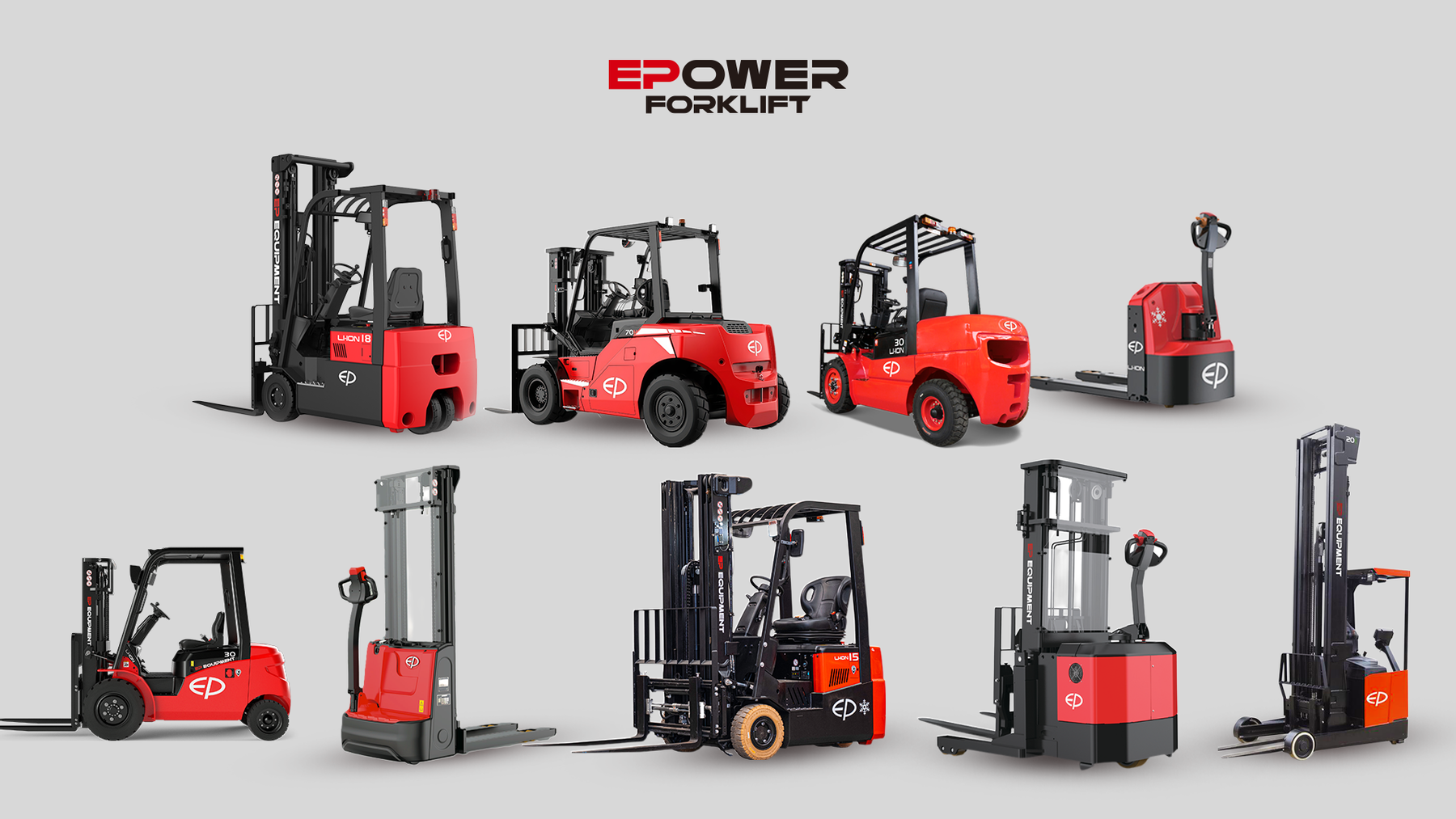
EPower Forklift provides lithium-ion powered forklifts designed to replace diesel models in high-usage warehouse environments. The key advantage is not only lower energy costs, but also the ability to stabilize and control them over time.
EPower’s solutions are built around several operational principles:
- Lithium-ion battery systems: enable opportunity charging, allowing forklifts to be charged during short breaks without interrupting operations. This eliminates the need for battery swapping and reduces downtime.
- Energy-efficient drivetrains: optimize power consumption per cycle, resulting in lower costs per operating hour compared to diesel alternatives.
- Consistent performance across shifts: unlike fuel-powered forklifts, electric models maintain stable performance without efficiency loss due to idling or partial loads.
- Low total cost of ownership: Although the upfront cost is higher than that of diesel forklifts, lithium-ion models can operate with lower long-term operating costs and maintenance requirements, due to their fewer moving parts compared to diesel counterparts.
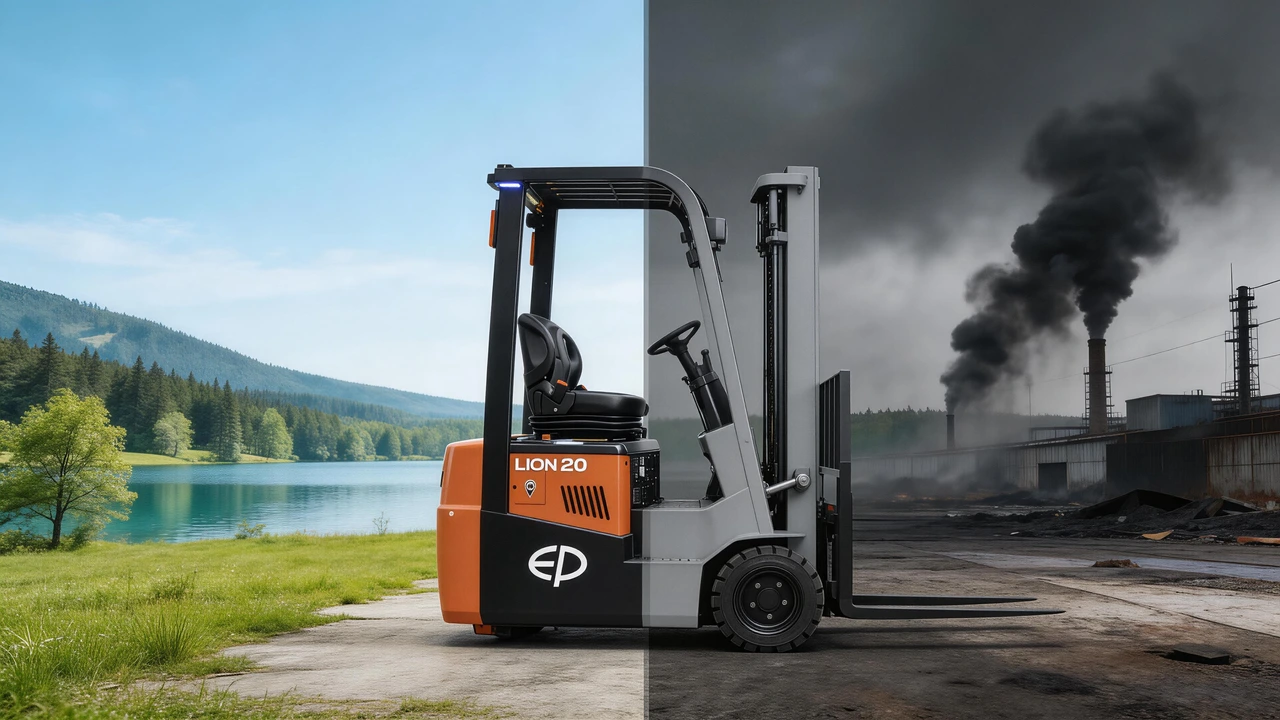
- Commitment to a sustainable environment: the shift to electric forklifts aligns with Australia’s commitment to achieving net-zero emissions by 2050. Our solutions support this transition by enabling zero-emission operations on-site, reducing reliance on fossil fuels, and preparing businesses for future regulatory and sustainability requirements.
These factors directly translate into lower and more predictable operating expenses, particularly for businesses running multi-shift operations where energy consumption is a major cost driver.
Read more: Why lithium forklifts are replacing fuel models in Australia
5. Conclusion
The continuing fuel crisis has made one thing clear: relying on diesel-powered forklifts is becoming increasingly expensive and unpredictable. Rising fuel costs, combined with supply chain disruptions and ongoing geopolitical risks, are placing significant pressure on warehouse and logistics operations.
In contrast, lithium-electric forklifts offer a more stable and cost-efficient alternative. With lower energy costs, reduced maintenance requirements, and greater cost predictability, they provide a clear advantage in managing long-term operating expenses. Thus, the shift towards electric forklifts becomes urgent.
Save your costs with an electric forklift now! *Contact EPower Forklifts* to get subsidy application support for your material handling transition.