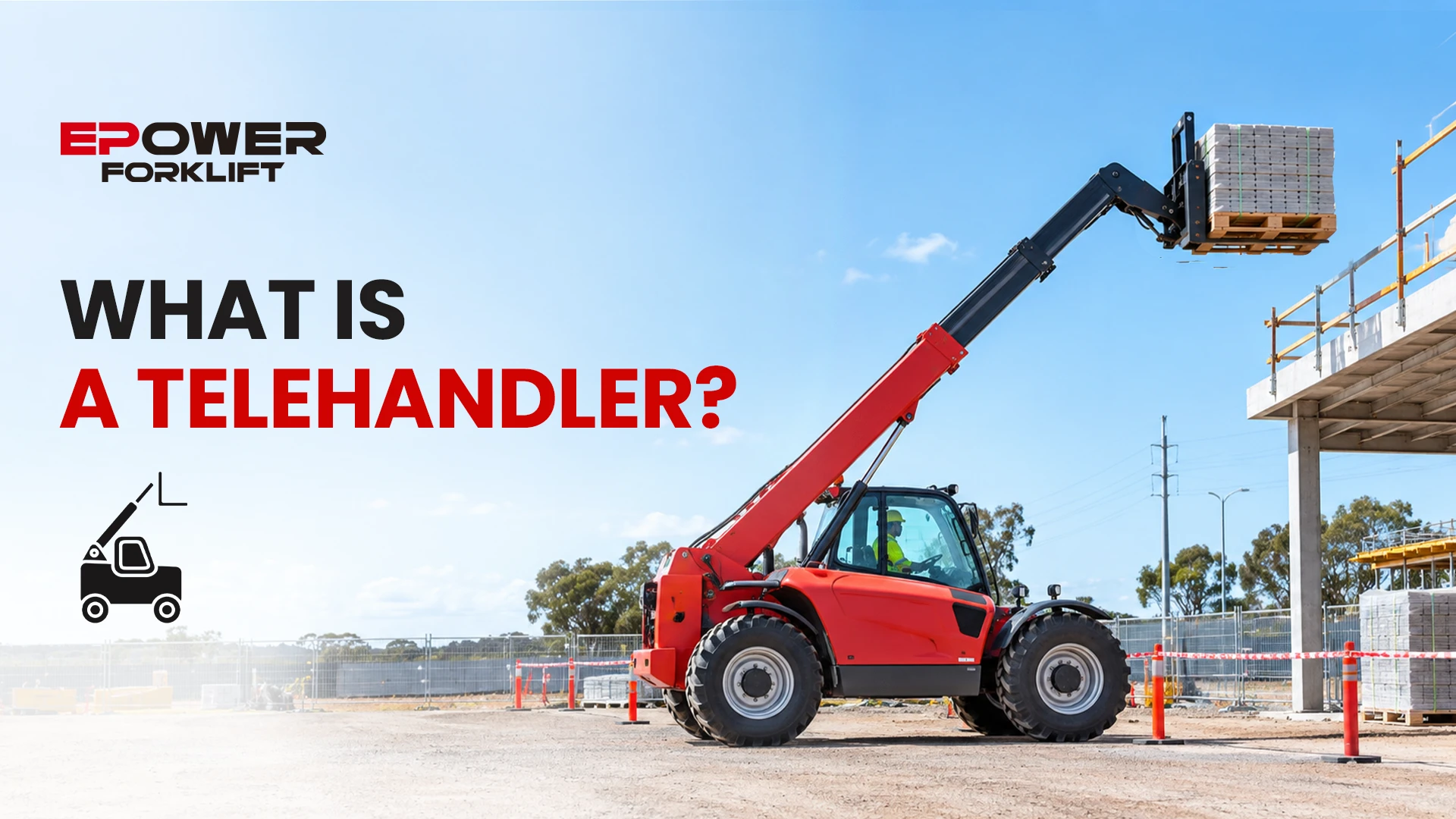
A telehandler is a mobile material-handling machine with a telescopic boom that extends forward and upward to lift and place loads at height and reach. The boom is what separates it from a forklift — it telescopes outward like an extended arm, allowing the machine to reach over obstacles, into building frames, across uneven ground, or onto elevated platforms that a conventional forklift’s vertical mast cannot access.
Also known as a telescopic handler, telehandlers are sometimes referred to as teleporters. They are commonly designed for outdoor and rough-terrain applications where a standard warehouse forklift may be unsuitable.
What Is a Telehandler and How Does It Work?
The operator sits in a cab beside the telescopic boom. The boom is hydraulically raised, lowered and extended to position the load. At the boom tip, the carriage can typically be tilted to adjust the angle of the forks or attachment.
The carriage at the boom tip accepts attachments:
- Fork tines: standard pallet and material handling at height
- Bucket: moving loose material such as aggregate, soil, grain or silage
- Jib crane attachment: suspended load lifting
- Bale grab: agricultural bale stacking and handling
Many telehandlers use quick-hitch systems that simplify attachment changes, although the exact procedure varies by model and attachment.
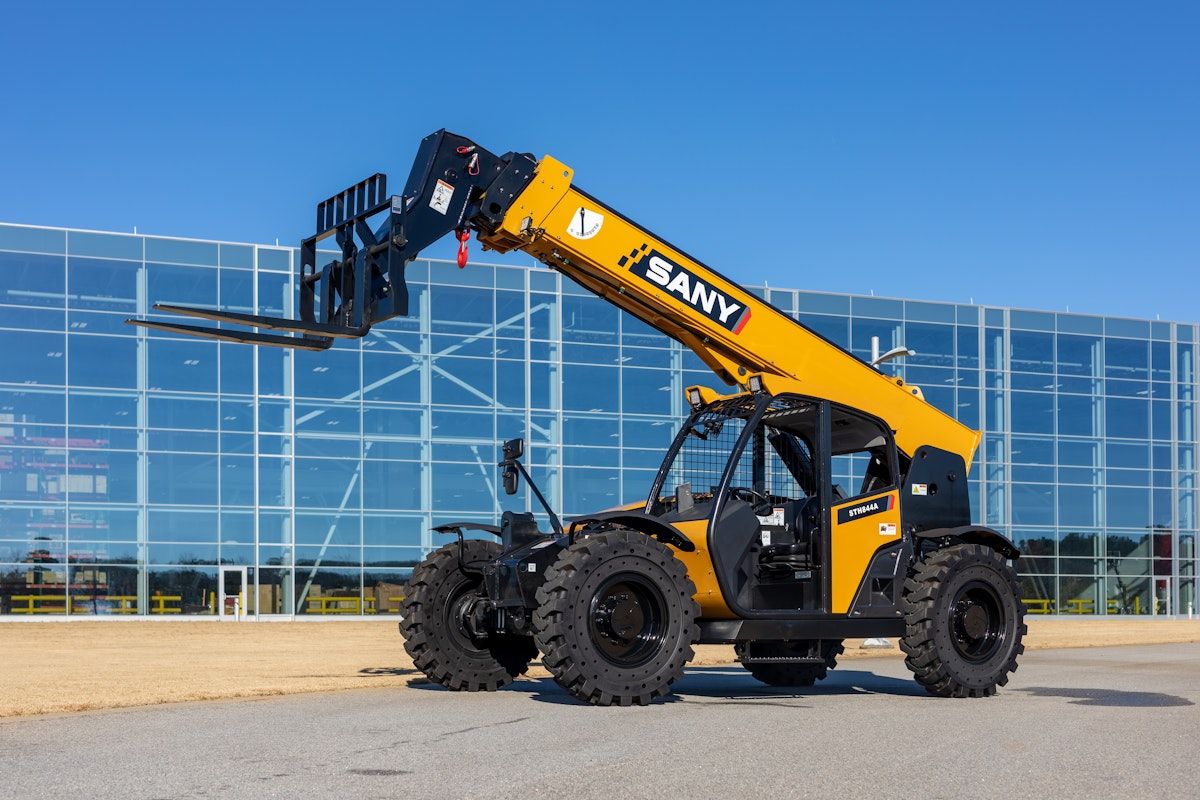
One specification buyers consistently underestimate is capacity at reach. A telehandler's maximum rated capacity does not apply throughout its entire working envelope. As forward reach increases, available lifting capacity generally decreases because the load creates greater leverage on the machine.
The exact limit depends on boom angle and extension, the attachment fitted, load centre and machine configuration. Always use the load chart for the specific model and attachment.
What Is a Telehandler Used For?
Construction sites
Lifting structural materials — blocks, steel, timber, scaffold components — to upper floor levels during the build. Placing loads over obstacles such as formwork, rebar, or scaffolding where a forklift needs direct access. Moving materials around site on unprepared ground.
Agriculture
Stacking hay bales to heights a standard forklift cannot reach. Loading grain or silage with a bucket attachment. Moving equipment and heavy inputs around farm yards with soft, rough, or uneven surfaces.
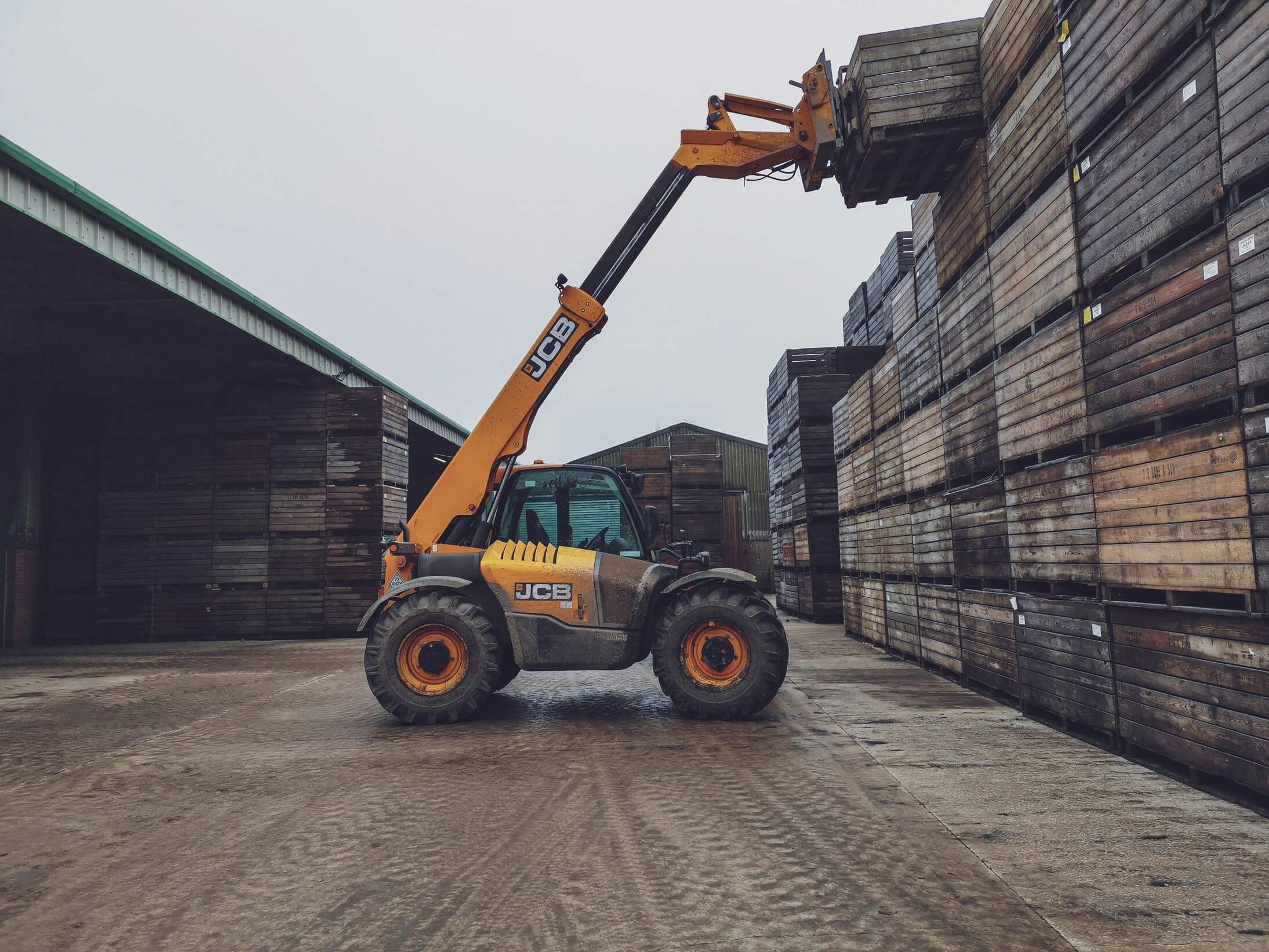
Industrial and outdoor logistics
Yards without level hardstand where standard forklifts may be unsuitable. Loading and unloading trucks in outdoor environments. Placing or retrieving materials from elevated outdoor storage.
When a telehandler may not be the right machine:
For repetitive pallet handling on flat, sealed surfaces, a counterbalance forklift is often more productive and less expensive to own and operate. For conventional indoor warehouse work, reach trucks, counterbalance forklifts, or order pickers are usually more appropriate. For heavy suspended loads or long-reach lifting beyond the telehandler’s rated envelope, a crane may be the correct machine.
How Does a Telehandler Differ from a Counterbalance Forklift?
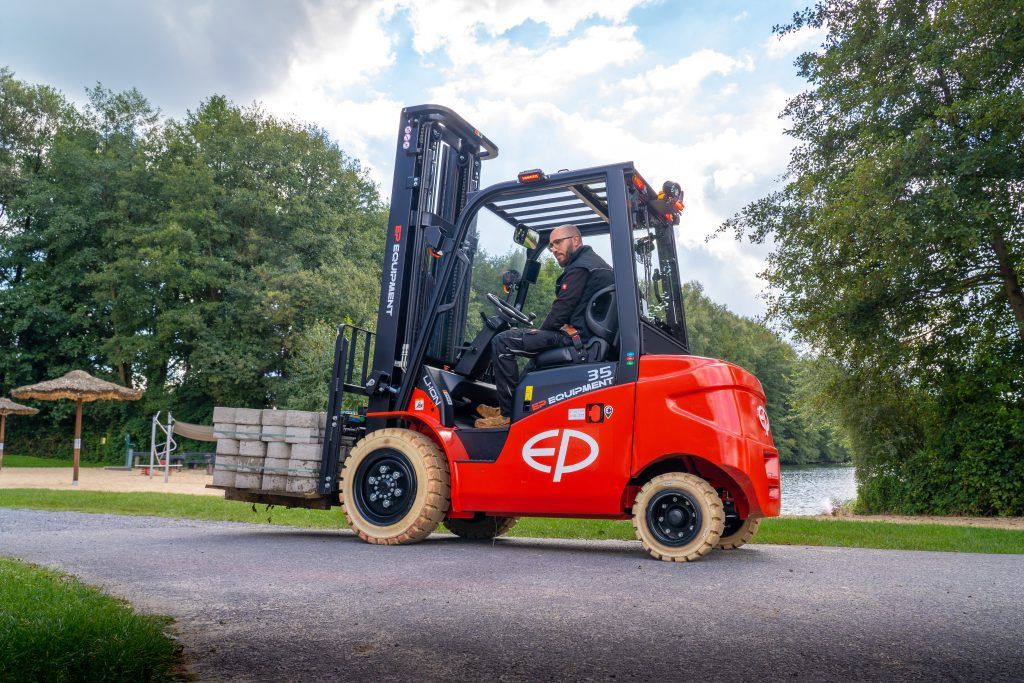
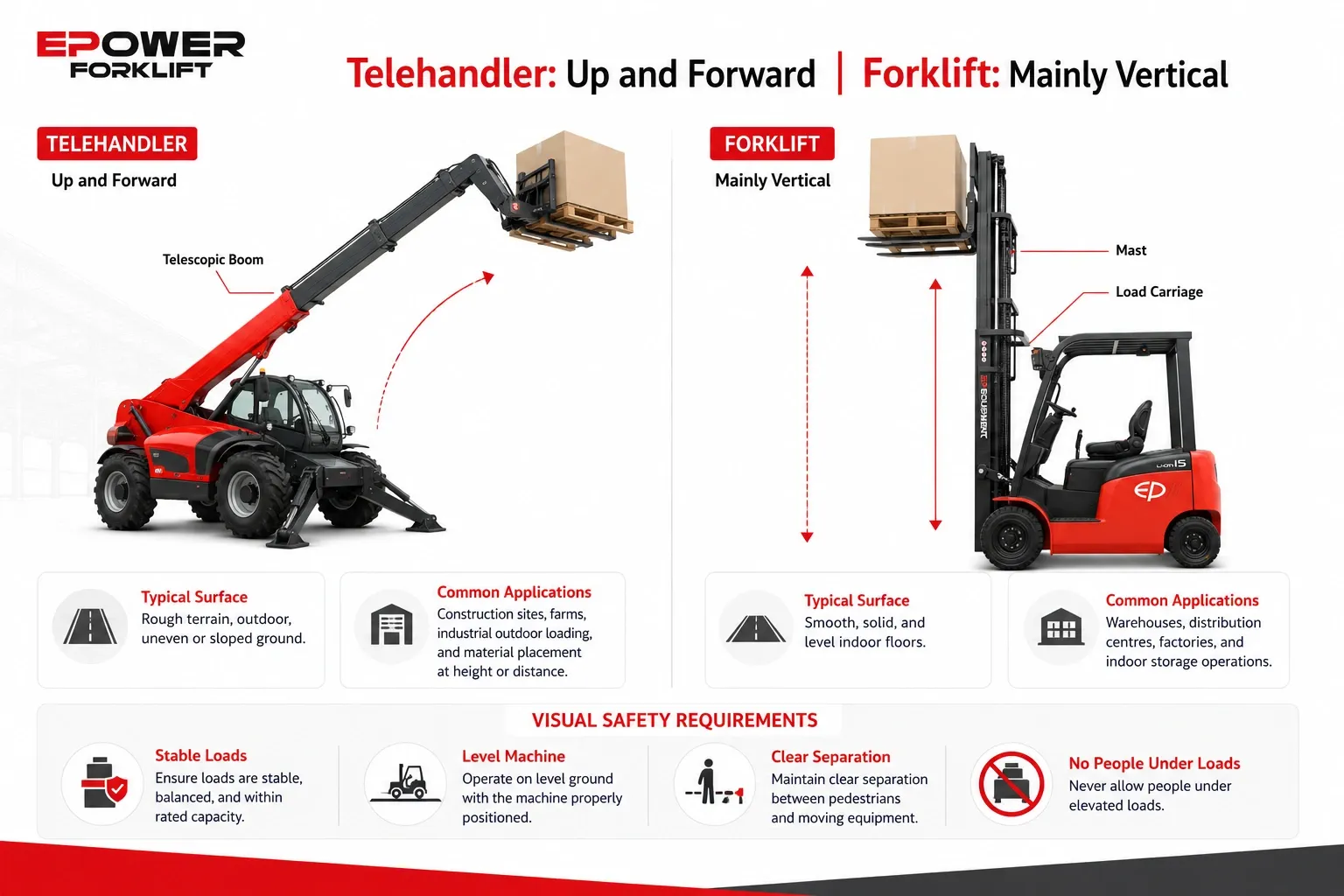
The main difference between a telehandler and a counterbalance forklift is how the load moves. A counterbalance forklift primarily raises loads vertically using a mast and carriage, while a telehandler uses a telescopic boom to both lift and extend loads forward.
| Feature | Telehandler | Counterbalance Forklift |
|---|---|---|
| Lifting system | Telescopic boom that raises and extends the load | Mast and carriage that primarily raise the load vertically |
| Forward reach | Significant forward reach; can place loads over obstacles | Minimal forward reach; generally requires direct access to the load position |
| Typical terrain | Uneven, unprepared and rough outdoor terrain | Primarily used on firm, prepared surfaces |
| Capacity at reach | Available capacity generally decreases as boom extension and forward reach increase | Rated capacity is determined by load centre, mast configuration and attachment |
| Attachments | Forks, buckets, jibs, bale-handling and other model-approved attachments | Forks and attachments such as side-shifters, clamps, rotators and fork positioners |
| Typical use | Construction, agriculture and outdoor load placement at height or reach | Warehousing, truck loading, yards and repetitive pallet handling |
| Best suited when | Loads must be placed at height, over obstacles or across rough terrain | Loads need to be moved repeatedly over short distances with direct access |
How Does a Telehandler Differ from a Rough-Terrain Forklift?
A rough-terrain forklift and a telehandler can both be used on uneven, unprepared outdoor ground, but they differ in how they position a load. A rough-terrain forklift uses a vertical mast, while a telehandler uses a telescopic boom that can extend the load forward as well as upward.
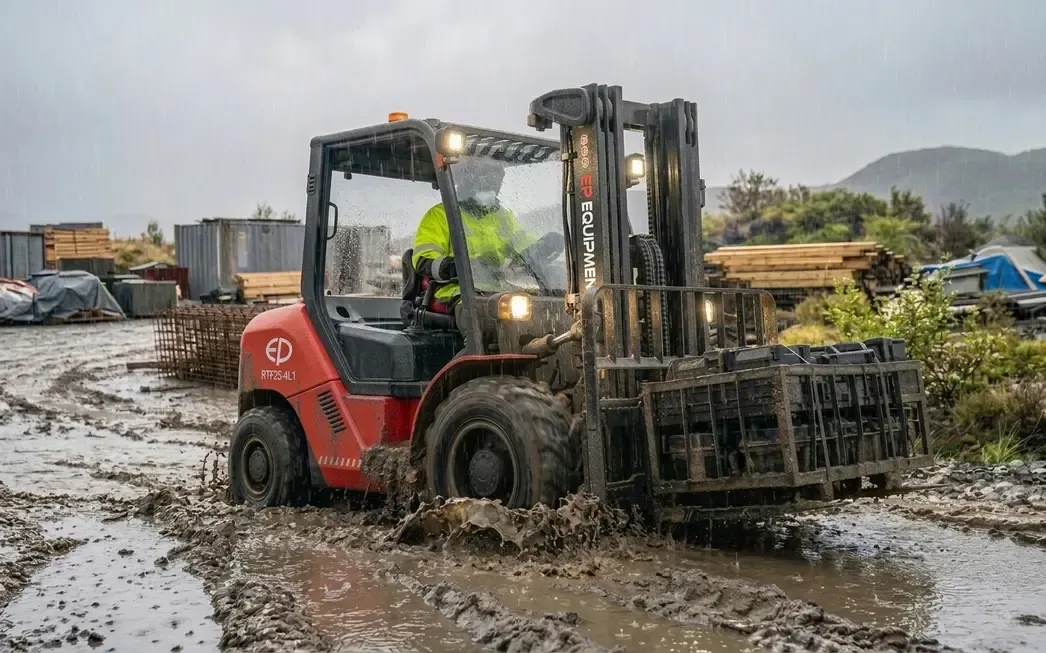
For outdoor construction or agricultural sites where the task is standard fork handling and significant forward reach is not required, a rough-terrain forklift may be the more straightforward option. Models such as the EP RTF25-4L1-HV combine rough-terrain capability with conventional forklift operation.
A telehandler is more suitable when loads must be placed over obstacles, into structures, or at a significant horizontal distance from the machine.
What Licence Do You Need to Operate a Telehandler in Australia?
Telehandler licensing depends on the state or territory, the machine’s rated capacity, whether it slews, and the attachment or task being performed.
A high-risk work licence (HRWL) is not always required just because a telehandler is fitted with forks. SafeWork NSW states that the telehandlers fitted with forks or a bucket do not require an HRWL solely for that configuration, although operators must still be trained and competent.
In Victoria, a non-slewing telehandler rated above three tonnes requires an appropriate HRWL. A specific TV class for non-slewing telehandlers has been available in Victoria since July 2024.
Where a telehandler is configured as a boom-type elevating work platform, a WP high-risk work licence is generally required when the boom length is 11 metres or more. Slewing telehandlers may require separate crane licences.
Industry competency programs such as the TSHA Gold Card may also be used by employers or worksites as evidence of operator training and competency, but they do not replace a statutory HRWL where one is required.
Licensing rules vary by state and are subject to change. Always confirm current requirements with the regulator in the state or territory where the telehandler will be operated.
Conclusion
A telehandler is designed for applications that require both lift height and forward reach, particularly on construction sites, farms and other outdoor environments where loads need to be positioned over obstacles or away from the machine.
Where the job only requires conventional fork handling, a counterbalance or rough-terrain forklift may be the simpler and more cost-effective option. Not sure which type of equipment your site needs? EPower can help assess the load, terrain, lift height and duty requirements to determine whether a counterbalance or rough-terrain electric forklift is suitable. Contact EPower to discuss your requirements.
Frequently Asked Questions
What are the main types of telehandlers?
Fixed (non-slewing) and rotating (slewing) telehandlers are the two main types. Compact, high-reach and high-capacity describe size or performance rather than separate operating types.
Do you need a licence to operate a telehandler in Australia?
It depends on the state or territory, rated capacity, slewing capability and machine configuration. A high-risk work licence may be required in some cases, so check the relevant regulator before operation.
Can a telehandler be used to lift people?
Yes, but only when the telehandler and an approved work platform are specifically designed and configured for personnel lifting. Never lift people on forks, pallets or improvised platforms.