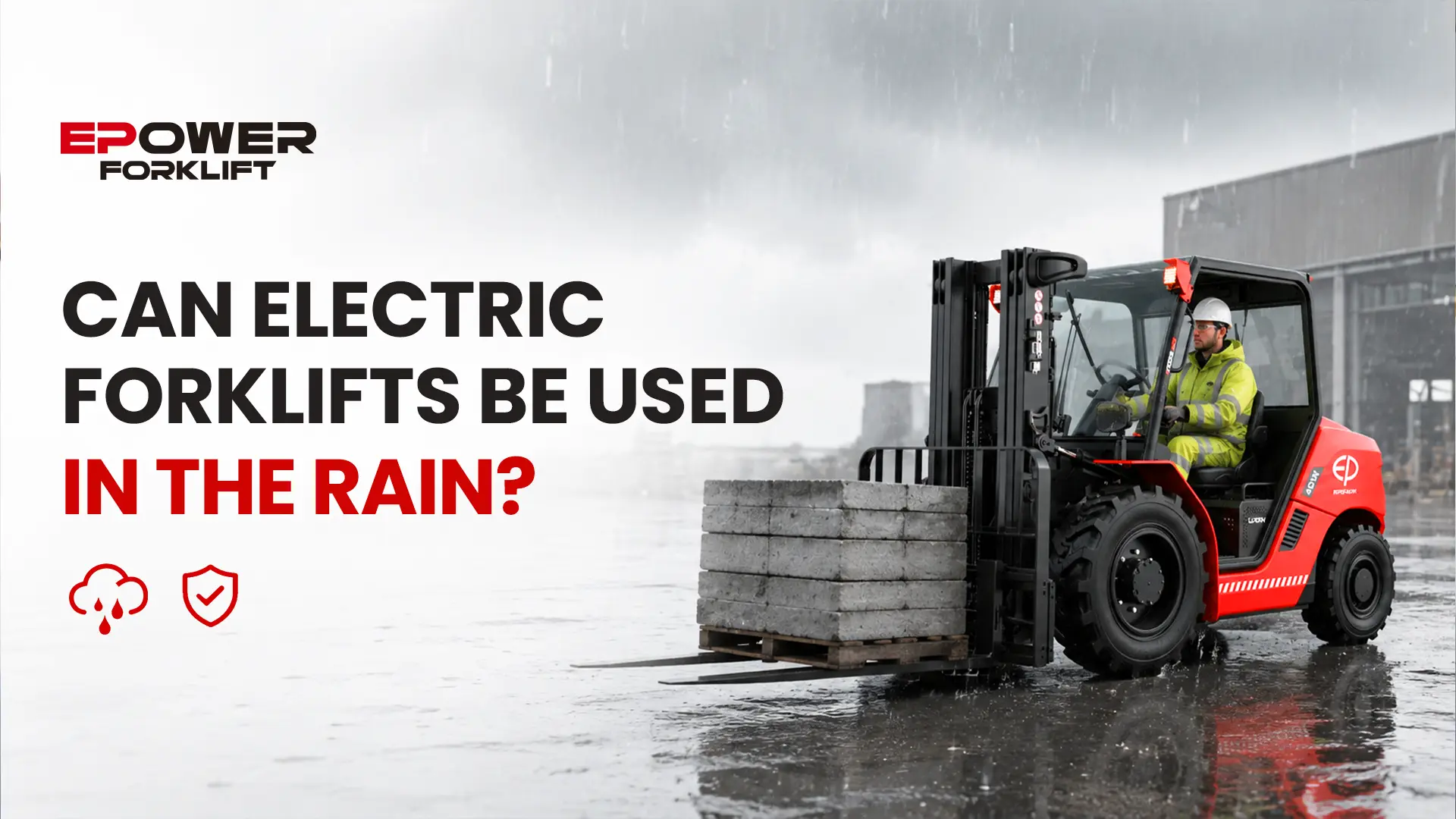
Some electric forklifts can operate in rain, but only when the specific model is approved for that environment and the site conditions remain within the manufacturer’s limits.
Before operating in rain, check the model’s outdoor-use designation, electrical protection, tyre and surface suitability, drainage, visibility and site controls. If the manufacturer does not approve the model for wet-weather operation, it should not be operated in rain.
Can Electric Forklifts Be Used in the Rain?
The answer is conditional. Not all electric forklifts are designed for outdoor use. Some warehouse-oriented electric forklifts, reach trucks and pallet trucks are designed primarily for indoor use and may not be approved for rain exposure. Using them in rain exposes electrical components to conditions outside their design limits.
The starting point is always the operator manual and the manufacturer's model-specific outdoor-use designation.
What Does an IP Rating Tell You?
An IP, or Ingress Protection, rating describes protection against splash and water jets under standardised test conditions — not unlimited exposure, standing water or long-term outdoor storage.
The first digit relates to solid-particle protection, while the second relates to water ingress. For wet-weather forklift applications, the second digit is usually the more relevant part.
| Rating | Water protection |
|---|---|
| IPX4 | Protection against splashing water |
| IPX5 | Protection against water jets |
| IPX6 | Protection against more powerful water jets |
| IPX7 | Protection against temporary immersion under specified test conditions |
Component IP ratings should not be used to decide whether the whole forklift is suitable for rain. Forklift outdoor suitability depends on overall design, component placement, enclosures, connectors, drainage design, and the manufacturer's operating instructions. Follow the manufacturer's model-specific outdoor-use designation.
How Do You Check Whether Your Electric Forklift Is Suitable for Rain?
1. Check the operator manual for outdoor-use designation
Start with the manufacturer’s intended operating environment. If the manual states indoor use only, stop there. Do not operate in rain regardless of IP ratings on individual components. If the manual explicitly permits outdoor or wet-weather use, follow the stated limits. If wet-weather use is not addressed, confirm suitability with EPower.
2. Confirm the model’s outdoor and wet-weather approval
Wet-weather suitability should be verified at model level. For EP Equipment models, EPower can confirm whether the specific model is approved for outdoor use and what operating conditions apply.
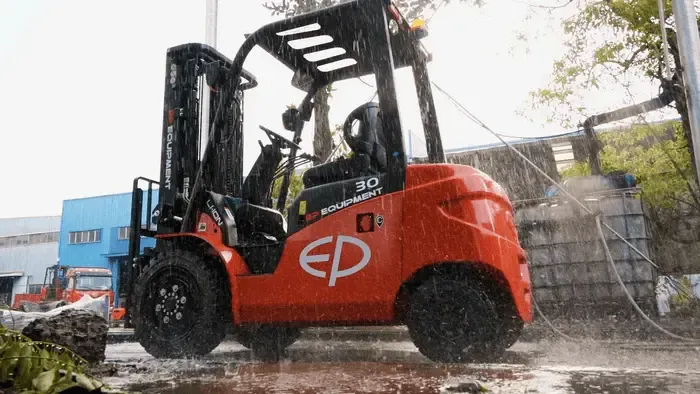
The table below summarises some EP models distributed by EPower that have manufacturer-stated suitability for outdoor or wet-weather operation. These descriptions indicate design intent and should be read alongside the model-specific operator manual and operating limits.
| EP Series | Model name | Note |
|---|---|---|
| EFL models | EFL181, EFL203, EFL253, EFL353 | Confidently handles uneven surfaces, gravel yards, and rain-exposed outdoor environments. |
| EFX models | EFX252, EFX302 | Demonstrate a compact and water-protected design, to maneuver in confined space and in the rain. |
| ICE models | ICE251, ICE301, ICE351 | Ideal for narrow aisles, while their IPX4-rated water-protected design allow outdoor use, even in the rain. |
| RTF model | RTF25-4L1-HV | Designed for muddy, steep, and rugged terrains. |
3. Check tyre suitability for the actual surface and conditions
Tyre type alone does not determine whether a forklift is approved for outdoor use, but in wet conditions, tyre condition, tread pattern and surface characteristics all influence traction, braking performance and directional control.
Confirm that the fitted tyres are suitable for the specific surface, drainage conditions, and ground conditions at the site. A forklift may have adequate grip on a wet textured yard but lose traction when the same wet tyres enter a smoother warehouse floor, loading dock plate or painted area.
4. Inspect electrical protection
Before wet-weather operation, visually inspect the accessible electrical protection points that help keep water away from sensitive components.
Look for cracked housings, loose or damaged covers, exposed conductors, corrosion, trapped moisture or other signs that water may reach electrical components.
These checks should remain visual only. Operators should not remove sealed covers, open electrical enclosures or attempt repairs to investigate suspected water ingress. If protection appears damaged or moisture is visible where it should not be, report the defect and have the forklift assessed before further wet-weather operation.
5. Assess the route and visibility
Even when the forklift and tyres are suitable for wet conditions, the travel route itself may become unsafe in rain.
WorkSafe Victoria identifies changes in surface condition and visibility caused by rain and other weather as outdoor forklift hazards. These conditions should be considered when reviewing travel paths, pedestrian separation and site speed controls. Check whether:
- sightlines remain clear
- lighting is adequate
- pedestrian crossings remain visible
- vehicle and pedestrian routes remain separated
- loading docks, doorways and intersections remain controllable
- rain has created new obstructions or changed the normal traffic flow
If visibility or pedestrian separation can no longer be maintained, reassess the operation before continuing.
How Should an Electric Forklift Be Operated in Wet Conditions?
Manufacturer approval does not remove the need to adjust operating practices for rain.
Before Operation
Before using an electric forklift in wet conditions, confirm that both the forklift and the route are suitable for the expected exposure. Manufacturer approval is the first check, but the actual condition of the truck and site still determines whether operation should proceed. An outdoor-approved model should not be used in the rain if its protective systems are damaged.
If the forklift’s approval cannot be confirmed, water protection appears compromised, or the route no longer provides adequate traction or visibility, do not begin wet-weather operation.
The Complete Pre-Start Checklist for Forklift Operators: What to Check Before Every Shift
During Operation
Reduce speed to suit the reduced traction, visibility, and surface conditions, and allow more distance for stopping and turning. Wet surfaces can reduce tyre grip, increase stopping distance, and reduce lateral traction.
Do not drive through standing or flood water unless the manufacturer explicitly specifies that the model is suitable for that condition. If water depth could expose electrical, drive, or braking components, stop and reassess the route.
WorkSafe Victoria recommends assessing environmental risks including surface conditions and weather, and incorporating ground conditions, routes, and speed into the site's traffic management plan.
After Operation
After wet-weather operation, park the forklift in its designated area and follow any post-operation inspection specified by the manufacturer. Pay particular attention to areas where moisture can remain around electrical interfaces or enter through damaged protection.
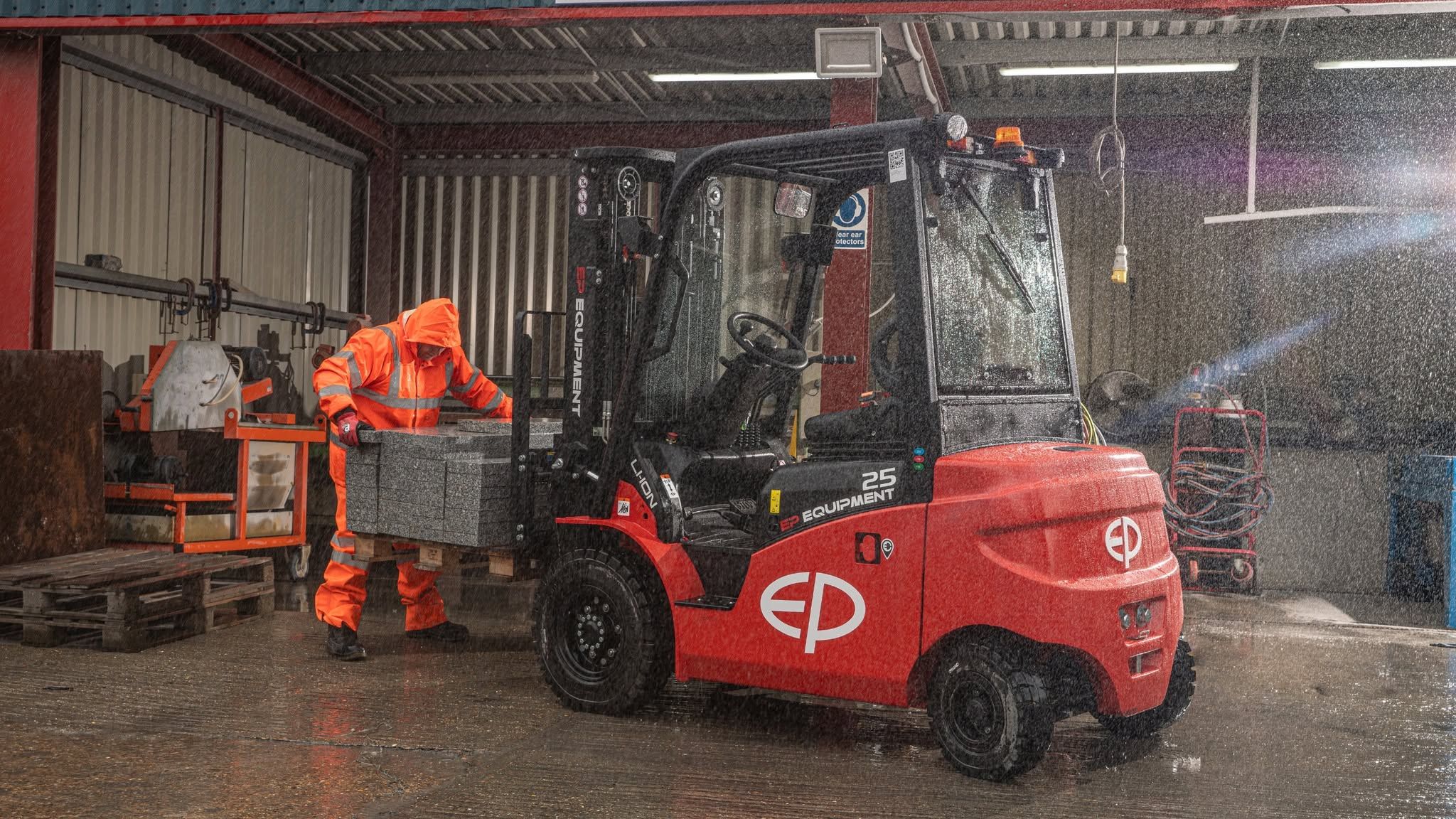
Normal external wetting on an outdoor-approved forklift does not indicate water ingress. The concern is moisture inside protected areas, damaged seals or enclosures, persistent fault warnings, or abnormal operation after exposure.
If water ingress is suspected, do not open sealed electrical components or attempt improvised drying. Follow the manufacturer’s inspection and drying procedure and arrange a competent technical assessment where required.
Note: Approval to operate a forklift in rain does not mean it can be stored outdoors in the rain for extended periods. Some EP models, including the ICE301, are described as suitable for operation in rain, but should not be left outdoors in wet weather year-round.
Can You Charge an Electric Forklift in the Rain?
Splash protection around the charging port indicates a level of water resistance, but charging should still take place in a designated dry area unless the manufacturer specifically approves otherwise.
For normal operation, charge the forklift in a designated dry charging area. Before connecting the charger, check that the charging port, plug, cable and connector are dry, undamaged and free from visible moisture or corrosion.
Moisture around charging connections can increase the risk of electrical faults, short circuits, corrosion and component damage. If the charging interface has been exposed to rain or suspected water ingress, follow the manufacturer’s inspection procedure before connecting the charger.
Always follow the charging and environmental limits specified for the forklift, battery and charger.
Electric Forklift Battery Charging Mistakes That Shorten Battery Life
Conclusion
Some electric forklifts can operate in rain, but wet-weather suitability must be confirmed for the specific model and application. Manufacturer approval, electrical protection, tyre and surface conditions, visibility and route control all need to be considered before outdoor operation.
Charging should be treated separately from operation. Do not charge an electric forklift in the rain or where the charging connection or surrounding area is wet.
For EP forklifts, EPower can help confirm model-specific outdoor-use information and suitable operating conditions for your site. Contact EPower team!
Frequently Asked Questions
Can electric forklifts be used in light rain?
Some electric forklifts can operate in light rain where the manufacturer specifically approves the model for that environment. Check the operator manual, outdoor-use designation, surface conditions and site controls before operation.
What IP rating does an outdoor electric forklift need?
There is no universal IP rating that automatically makes every forklift suitable for outdoor operation. Check what the IP rating applies to and follow the model-specific manufacturer approval.
Can you charge an electric forklift outside in the rain?
Charging in the rain is not recommended unless the complete charging system is specifically approved for those conditions. For normal operation, use a designated dry charging area and ensure the charging connection is dry before plugging in.
Can an electric forklift be left outside in the rain?
Not necessarily. A forklift approved to operate in rain may not be designed for prolonged outdoor storage. Check the model-specific storage requirements and use a dry or protected parking area where required.