Choosing the right forklift type is not simply a matter of selecting the highest load capacity or the most powerful machine available. In many warehouses and job sites, forklift problems start long before the equipment is delivered. A unit may look suitable on paper, but still perform poorly if the aisle is too narrow, the lift height reduces usable capacity, the floor surface is unsuitable, or the battery cannot support the required shift pattern.
This guide is written for those who are evaluating electric forklifts ahead of EOFY 2026. If you are replacing ageing diesel or LPG equipment, expanding an existing fleet, or equipping a new facility, the sections below are designed to help you identify the right forklift type for your working conditions — before the 30 June deadline.
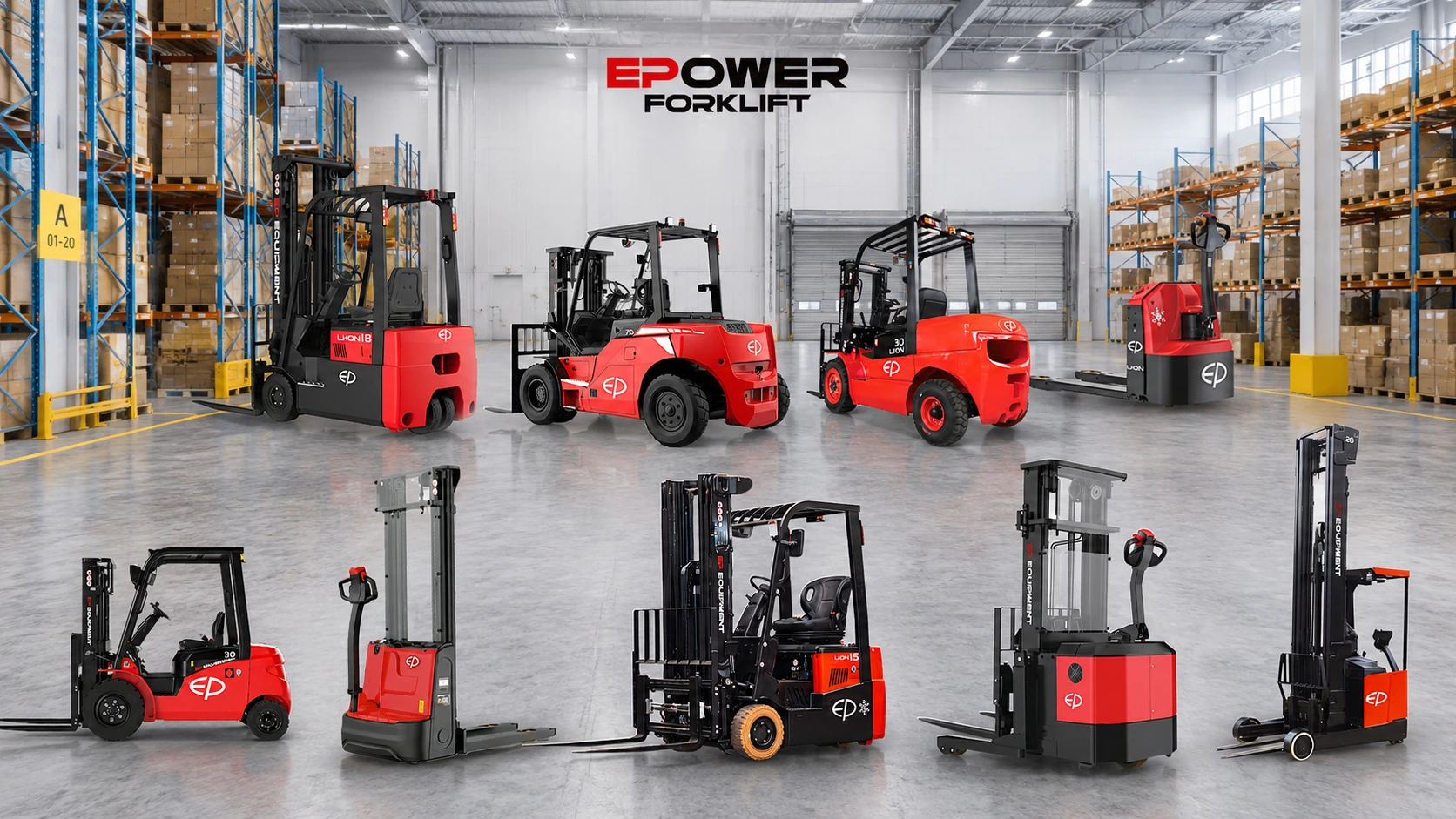
EPower Forklift distributes seven core electric forklift types: Counterbalance Forklift, Reach Truck, Pallet Truck, Pallet Stacker, Order Picker, Heavy Tonnage Forklift, and Rough Terrain Forklift. Each type is designed for a different operational profile. This guide explains how to choose the right electric forklift for your warehouse or job site, what technical details to check before buying or renting, and how to avoid the most common selection mistakes.
Why Choosing the Right Forklift Type Matters
Choosing the right forklift type directly affects productivity, safety, equipment lifespan, and total operating cost.
The wrong forklift doesn't fail obviously — it fails quietly. A counterbalance running in aisles that are too narrow loses shift time on every turn cycle. A pallet truck deployed on an uneven outdoor surface creates tipping risk that compounds across months of operation. A forklift running near its rated capacity daily wears out faster than its service schedule accounts for.
None of these problems show up in the spec sheet. They show up in downtime, repair bills, and operator complaints six months after delivery. Choosing correctly at the start is cheaper than correcting it later.
Start with the Working Environment Before Choosing the Forklift
Start with the environment, not the machine. The operating surface eliminates options immediately — a reach truck doesn't belong on a construction site, and a rough terrain forklift doesn't belong in a narrow-aisle warehouse. Get the environment wrong, and no amount of capacity or feature comparison fixes it.
EPower's selection process runs in this order: environment first, load second, lift height third, operating intensity fourth. Each step narrows the field. By the time you're comparing specific models, most of the wrong options are already off the table.
What Are the Seven Electric Forklift Types Epower Forklift Distributes?
Epower Forklift supplies seven main electric forklift categories, each designed for a different use case.
| Forklift Type | Best For | Typical Load Capacity | Typical Lift Height |
|---|---|---|---|
| Counterbalance Forklift | General warehouse, loading dock, manufacturing floor | 1.5 to 3.5 tonnes | 3 to 6 metres |
| Reach Truck | Narrow-aisle, high-rack warehouse | 1.2 to 2.5 tonnes | Up to 12 metres |
| Pallet Truck | Ground-level horizontal pallet movement | 1.5 to 3 tonnes | Ground level only |
| Pallet Stacker | Low-level stacking, compact storage spaces | 1 to 2 tonnes | Up to 5 metres |
| Order Picker | Case picking, item-level fulfilment | 300 to 1,000 kg | Up to 10 metres |
| Heavy Tonnage Forklift | Ports, steel, paper, heavy manufacturing | 5 to 25 tonnes | Standard height |
| Rough Terrain Forklift | Construction sites, outdoor yards, unpaved surfaces | 1 to 5 tonnes | Low to moderate |
The figures above should be treated as selection ranges, not final specifications. The correct model depends on load centre, residual capacity, mast type, battery size, attachment requirements, floor condition, and daily operating hours.
Counterbalance Forklift: Best for General Warehouse and Loading Dock Operations
A counterbalance forklift has front-mounted forks and a rear counterweight that balances the load. It does not require outriggers, allowing the operator to approach pallets, trucks, containers, and racking directly.
Counterbalance forklifts are commonly used for general warehouse handling, loading and unloading trucks, dock operations, manufacturing plants, and pallet movement between storage and production areas. Epower Forklift’s electric counterbalance models provide indoor-friendly, zero-emission operation while still delivering strong lifting performance for standard warehouse and logistics tasks.
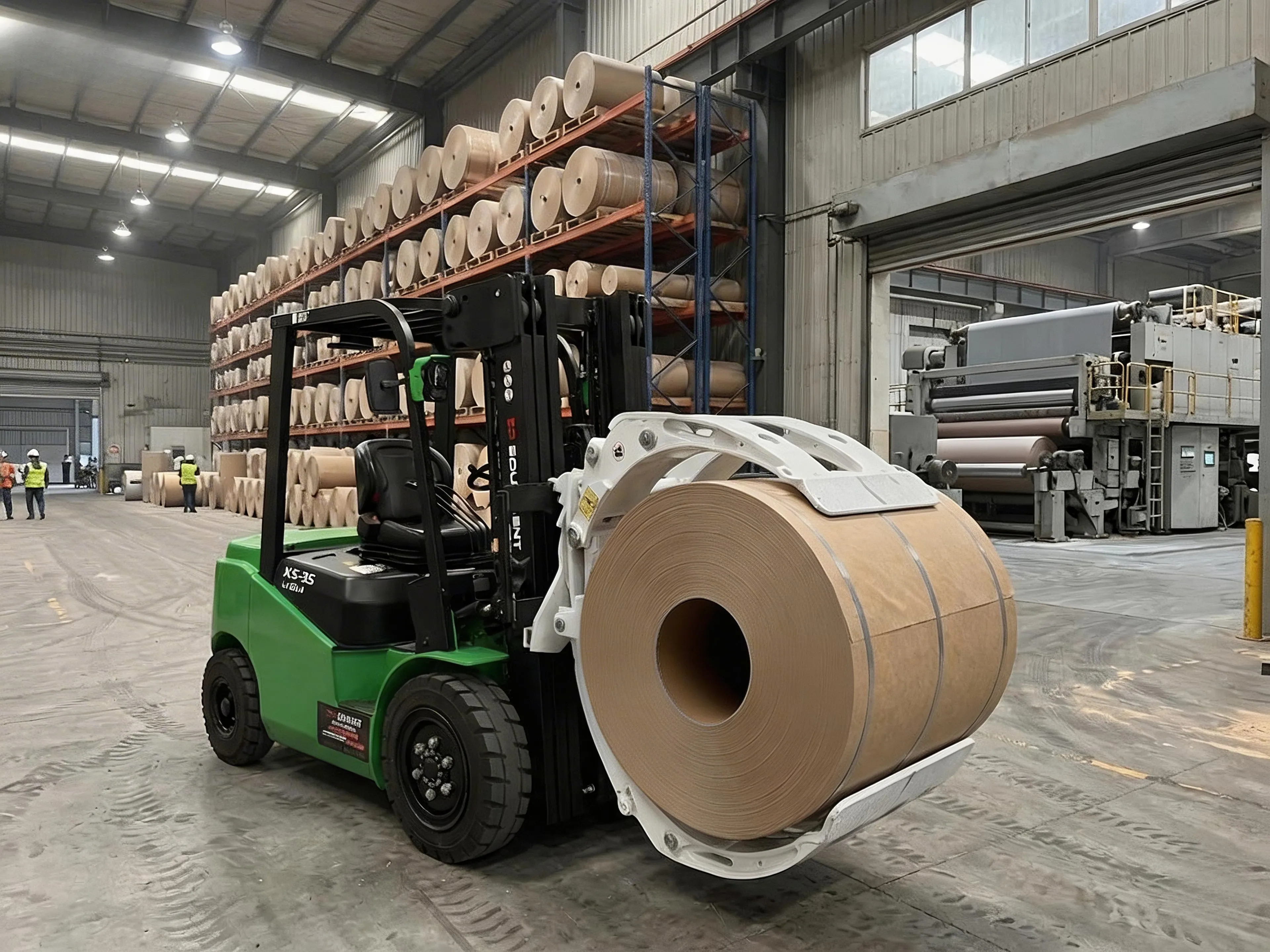
If your aisles run below 3 metres and your racking exceeds 6 metres, a counterbalance forklift is working against your layout, not with it. The turning cycle alone costs you throughput on every single pick. A reach truck in that environment changes the economics of the floor.
Reach Truck: Best for Narrow-Aisle and High-Rack Warehouses
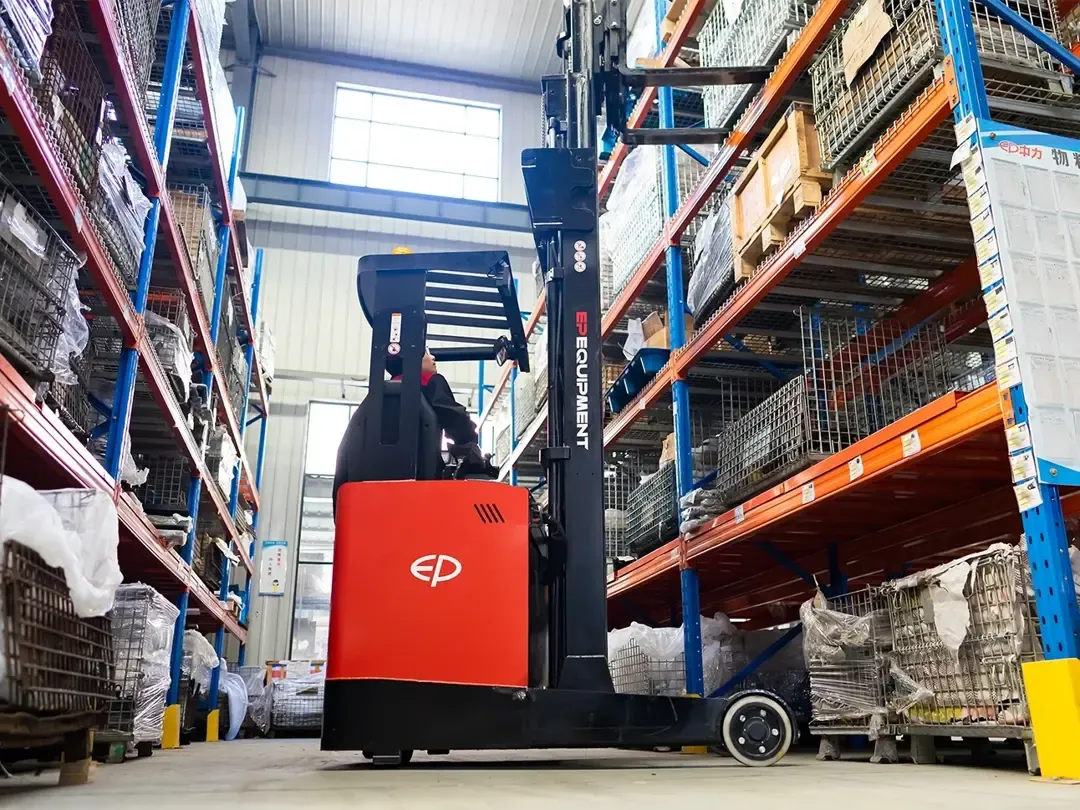
A reach truck is designed for high-density warehouse storage. Its mast can extend forward to place or retrieve pallets from racking without requiring the full machine to move into the rack face.
Reach trucks are best suited for narrow-aisle warehouses, high-rack storage, distribution centres, and indoor logistics operations where vertical storage density is a priority. You should consider a reach truck when racking exceeds 6 metres and the aisle width is below the practical turning space required by a counterbalance forklift.
Reach trucks require smooth, level concrete floors. They are not suitable for uneven outdoor ground, wet construction sites, or rough yard surfaces. For warehouse operations, the key advantage of a reach truck is space efficiency. It allows businesses to increase storage density without redesigning the entire warehouse around larger turning circles.
Pallet Truck vs Pallet Stacker: What Is the Difference?
Pallet trucks and pallet stackers are often confused because both are compact electric pallet-handling machines. However, they are designed for different tasks.
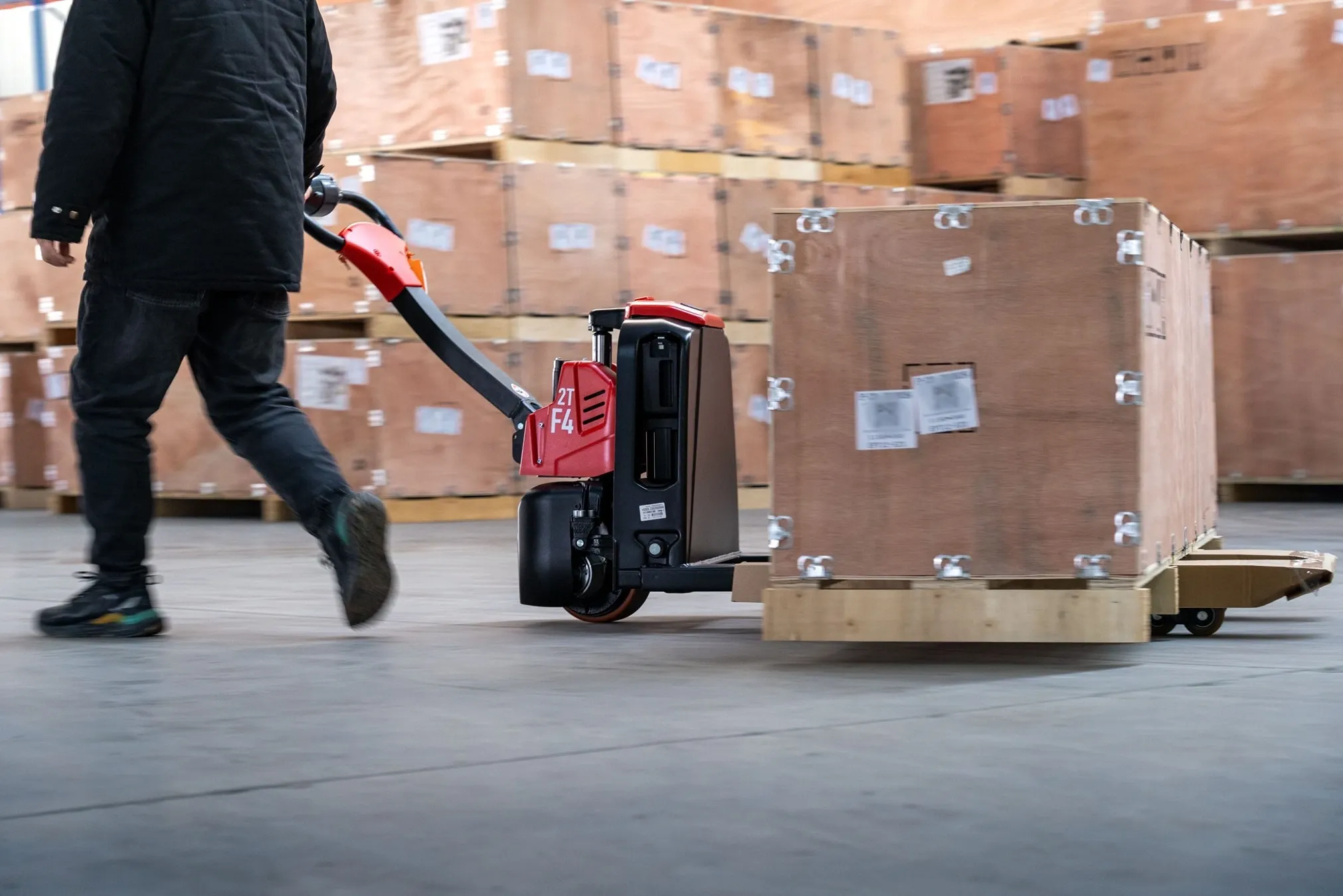
A pallet truck moves palletised loads horizontally at ground level.
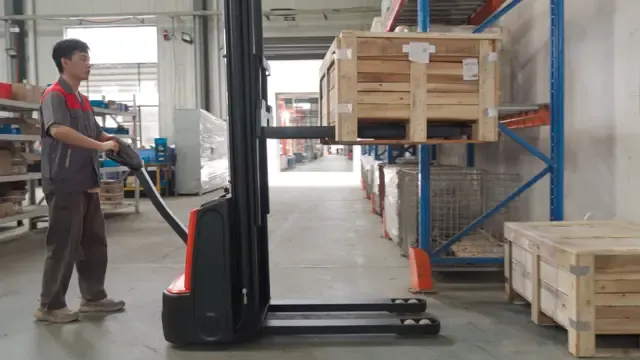
A pallet stacker lifts pallets onto shelving or low-level racking.
| Criteria | Pallet Truck | Pallet Stacker |
|---|---|---|
| Main function | Horizontal transport only | Lifting and stacking |
| Lift height | Ground level, usually 100 to 200 mm | Up to 5 metres |
| Typical load capacity | 1.5 to 3 tonnes | 1 to 2 tonnes |
| Best for | Docks, staging areas, warehouse floors | Compact storage rooms, retail, low-level racking |
| Operator requirement | Simple pallet movement | Pallet placement and stacking |
Pallet Truck
Pallet Stacker
Choose a pallet truck when the operation only needs to move pallets from one area to another on a flat surface. Choose a pallet stacker when the team needs to lift pallets onto shelves or racking in a compact space where a full-sized forklift is unnecessary.
For many small warehouses, retail back rooms, and light industrial facilities, pallet stackers offer a practical balance between compact size and vertical handling ability.
Order Picker: Best for Item-Level Picking and Fulfilment
An order picker lifts the operator together with the picking platform, allowing direct access to goods stored at height.
Order pickers are designed for operations where case-level or item-level accuracy is more important than full-pallet movement speed. They are commonly used in e-commerce fulfilment, pharmaceutical distribution, retail warehousing, spare parts storage, and other environments where operators need to access individual cartons, cases, or items from racking.
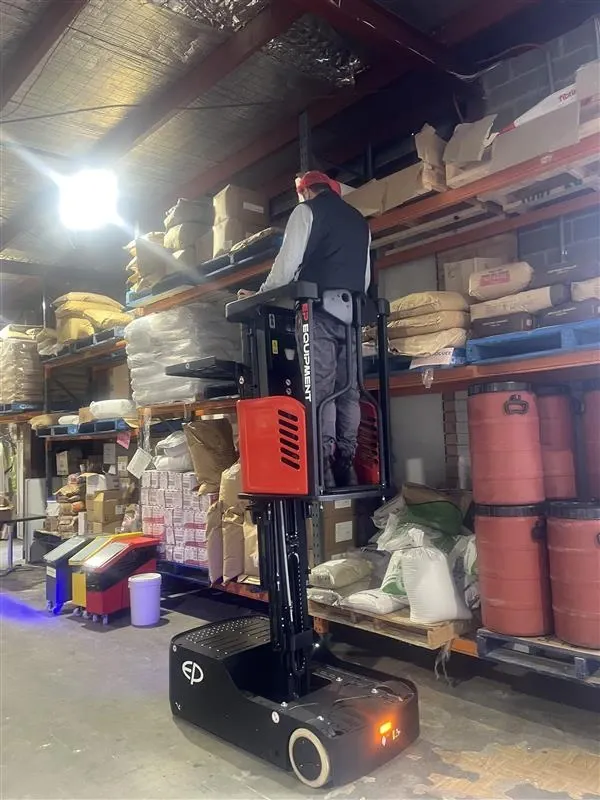
Operator safety is especially important with this equipment. Harnesses, fall-arrest systems, platform controls, and safe operating procedures are mandatory when working at elevation. An order picker should not be selected for heavy full-pallet handling; its strength is accurate picking at height, not bulk pallet transport.
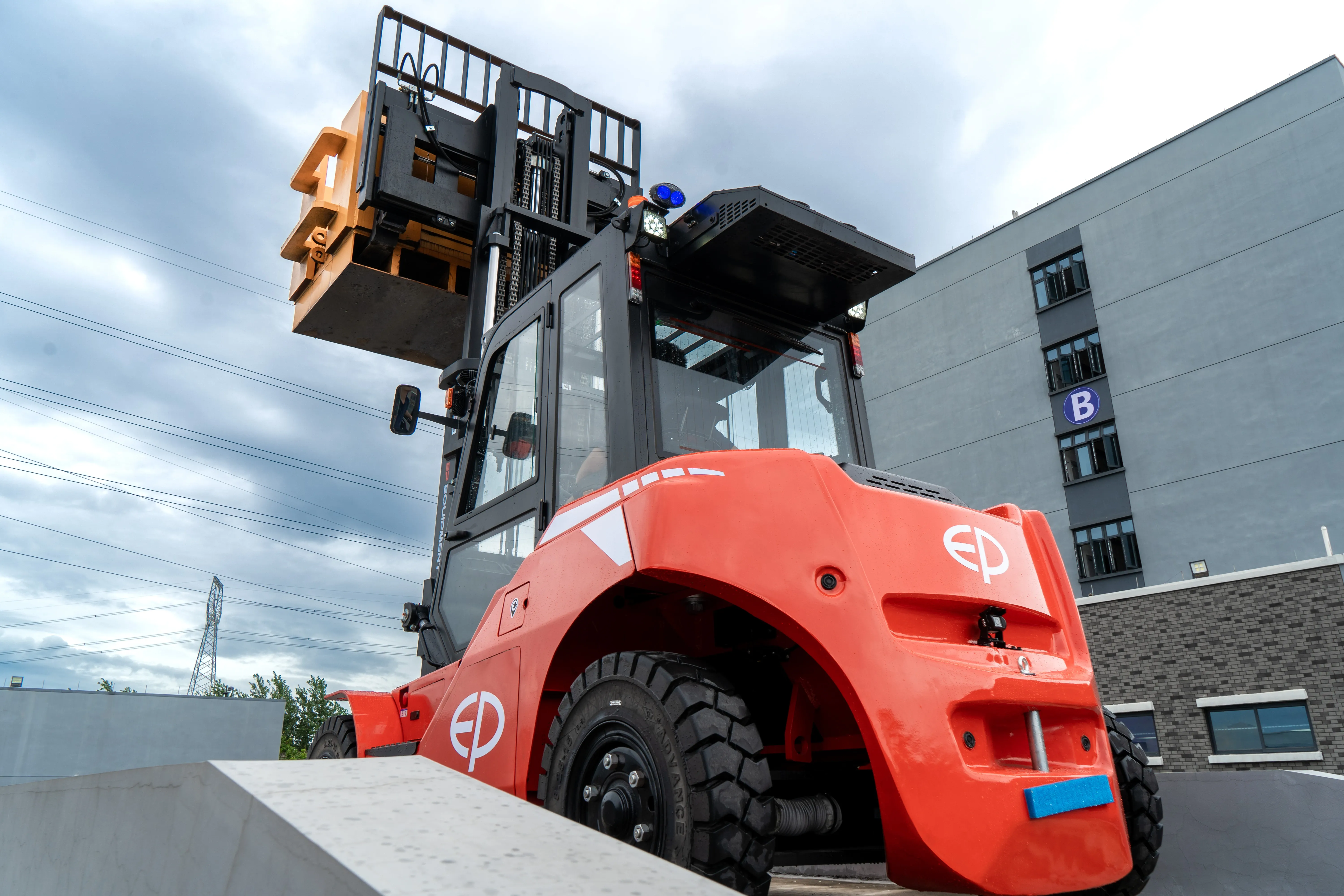
Heavy Tonnage Forklift: Best for Industrial and High-Capacity Loads
A heavy tonnage forklift is required when load weights exceed the capability of standard warehouse forklifts.
Heavy tonnage models are commonly used in ports, steel fabrication, paper mills, timber operations, heavy manufacturing, and large-scale industrial logistics. Epower Forklift’s electric heavy tonnage forklifts are designed for operations that require high lifting capacity while reducing reliance on diesel-powered equipment.
These machines require careful site assessment before deployment. Floor load rating, turning space, ground condition, mast configuration, attachment requirements, and charging infrastructure should all be checked before choosing a model. For heavy applications, rated capacity alone is not enough. The actual working capacity depends on load centre, attachment weight, mast height, and operating conditions.
Rough Terrain Forklift: Best for Outdoor and Uneven Ground
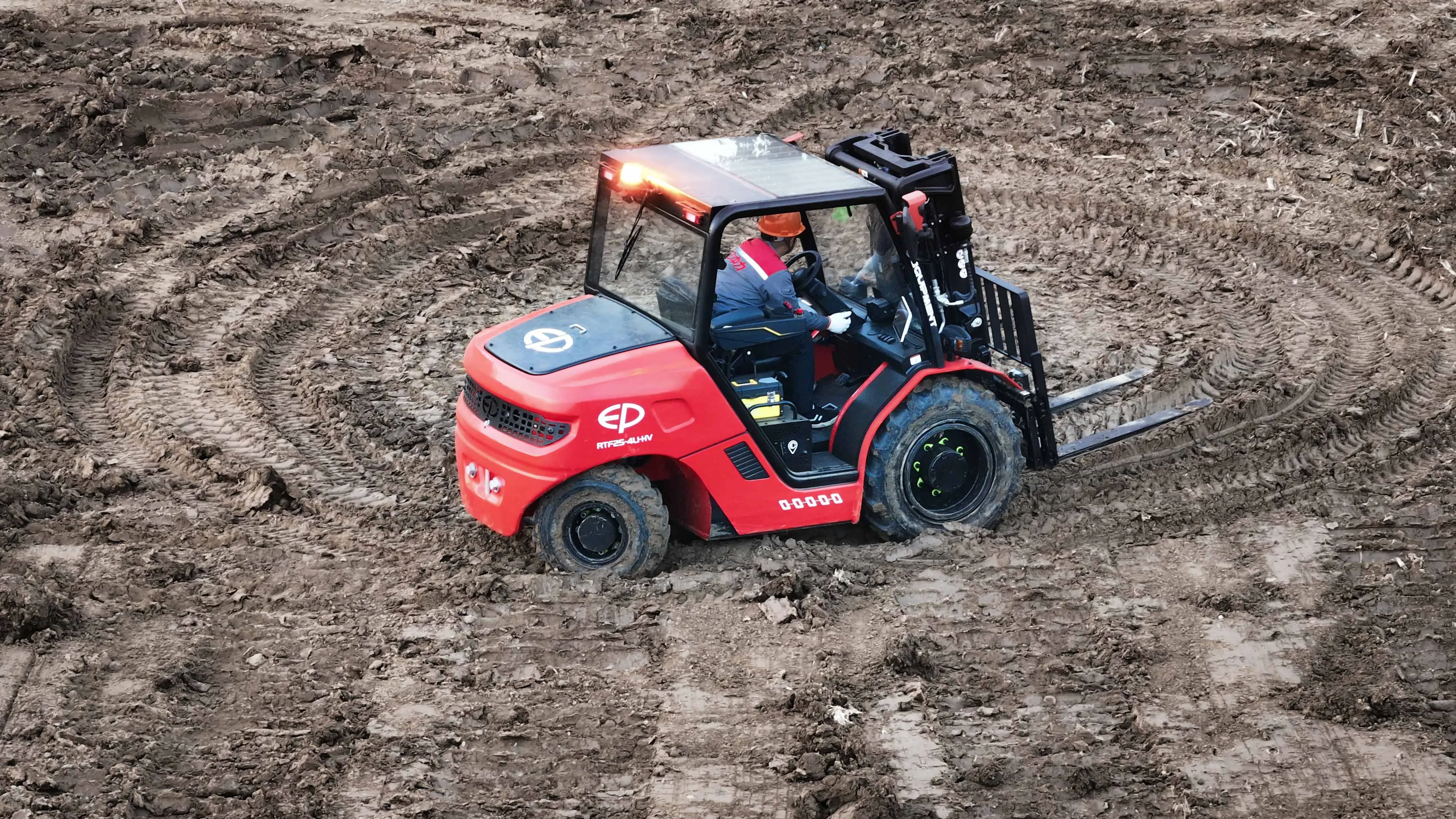
A rough terrain forklift is built for environments where standard warehouse forklifts cannot operate safely.
Typical applications include construction sites, outdoor yards, unpaved surfaces, wet or uneven ground, building material handling, and infrastructure or civil works.
Rough terrain forklifts usually feature pneumatic tyres, higher ground clearance, and a reinforced chassis design. These features allow the machine to operate in tougher site conditions than standard warehouse forklifts.
Epower Forklift’s electric rough terrain options support outdoor material handling while helping businesses reduce on-site emissions, particularly in urban construction and regulated work environments.
A rough terrain forklift should be selected when the ground surface is one of the main operational risks. If the site includes gravel, mud, uneven concrete, slopes, or temporary access paths, surface suitability should be checked before load capacity.
How to Choose the Right Forklift Type for Your Business?
The fastest way to narrow your options is to match the forklift type to load weight, lift height, and operating environment.
| Maximum Load | Lift Height Needed | Operating Environment | Recommended Type |
|---|---|---|---|
| Under 1 tonne | Ground level | Indoor flat floor | Pallet Truck |
| Under 1 tonne | Up to 5 metres | Compact indoor storage | Pallet Stacker |
| 1 to 3 tonnes | Up to 6 metres | Warehouse or loading dock | Counterbalance Forklift |
| 1 to 2.5 tonnes | 6 to 12 metres | Narrow-aisle warehouse | Reach Truck |
| 300 to 1,000 kg | 2 to 10 metres | Item-level picking | Order Picker |
| 5 tonnes and above | Standard height | Heavy industrial site | Heavy Tonnage Forklift |
| 1 to 5 tonnes | Low to moderate | Outdoor or uneven terrain | Rough Terrain Forklift |
This table provides a useful starting point, but it should not replace a full operational assessment. Two forklifts with the same rated capacity may perform very differently depending on mast height, battery size, tyre type, attachment weight, and working surface.
How Epower Forklift Helps You Choose the Right Electric Forklift
The right forklift is rarely the most obvious one. It is the one that fits your floor, your racking, your shift pattern, and your load — not the one with the highest capacity rating on the brochure.
Epower Forklift assesses real operating conditions before making any recommendation: load weight, load centre, lift height, aisle width, floor surface, shift hours, charging window, and whether the priority is outright purchase or rental. The forklift type follows from that data, not the other way around.
The following scenarios reflect the most common selection decisions we work through with Australian warehouse operators:
- E-commerce fulfilment, high-rack picking: If your team is manually reaching into racking above 4 metres, the bottleneck is not speed — it's the equipment. An electric order picker, rated to 8–10 metres, puts the operator at the pick face directly. Most e-commerce operators running counterbalance forklifts in this environment are using the wrong machine for the task.
- Container unloading, import distribution: Container entry constrains everything. A standard reach truck won't fit — outrigger width and collapsed mast height both exceed clearance. A 2.5–3 tonne electric counterbalance with a collapsed mast height under 2.2 metres is typically the correct starting point for operations receiving 20-foot and 40-foot containers regularly.
- Narrow-aisle cold storage: Sub-zero environments affect battery performance — lithium included. A reach truck selection for cold storage needs to account for battery configuration and charging schedule, not just lift height and aisle width. Getting the forklift type right and the battery spec wrong still results in a machine that underperforms mid-shift.
- Outdoor yards and construction sites: If the ground surface is uneven, wet, or unpaved, the operating environment has already eliminated most warehouse forklift options. A rough terrain electric forklift is not an upgrade from a counterbalance — it is a different category entirely, and substituting one for the other creates real stability risk.
With EOFY closing on 30 June 2026, fleet decisions that have been sitting on hold need a resolution. Epower Forklift provides on-site measurement and assessment across Victoria — so the recommendation is based on your actual facility, not a spec sheet approximation.
Get a Free On-Site Consultation →
Choose the Right Forklift Type: Match the Machine to the Operation
Choosing the right electric forklift is a process of elimination.
Start with the working environment. Remove any forklift type that cannot operate safely on the floor surface, within the aisle width, or under the job site conditions. Then narrow the choice by maximum load, load centre, lift height, residual capacity, duty cycle, battery requirement, and total cost of ownership.
Every forklift type in Epower Forklift’s range is purpose-built for a specific operational problem. A pallet truck is not a pallet stacker. A reach truck is not a rough terrain forklift. A counterbalance forklift is not always the best choice for narrow aisles. A heavy tonnage forklift requires more than just a high capacity rating; it requires proper site assessment.
If you're equipping a new facility, expanding an existing fleet, or replacing LPG and diesel equipment, EPower can work through the site requirements with you and recommend the right configuration — purchase or rental, single unit or full fleet. Most customers have a clear recommendation within one business day.
Talk to EPower's equipment team →
EPower is currently running an EOFY clearance across selected models until June 30 — if your timeline aligns, it's a practical window to move on equipment you already need.