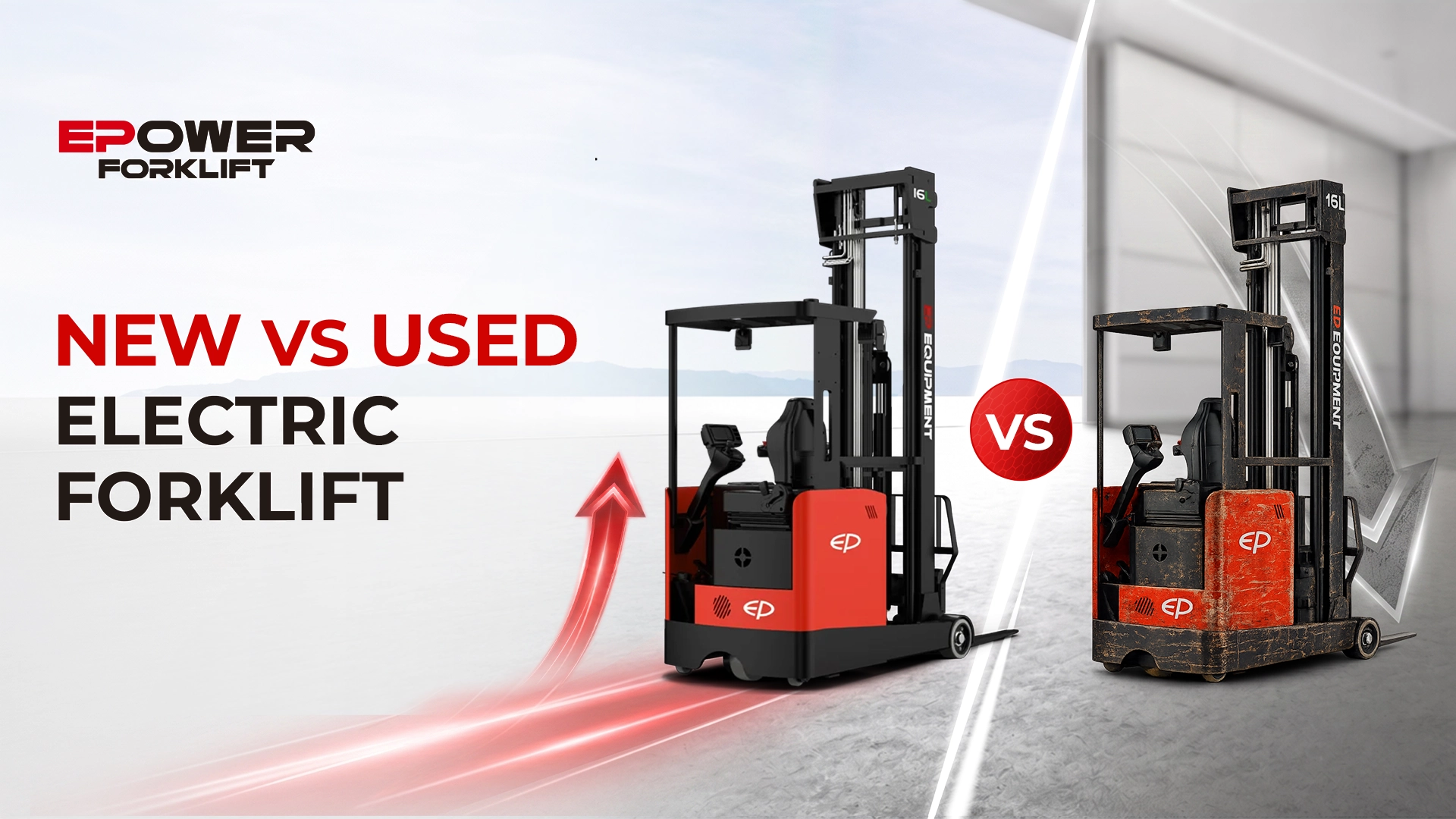
Choosing between a new and used electric forklift is not only about upfront price. The real decision depends on battery condition, warranty coverage, utilisation rate, downtime risk, and total cost over the next five years.
For Victorian warehouses, this decision is practical. A low-use warehouse may get good value from a verified used electric forklift. A Melbourne distribution centre running daily dispatch, container unloading, or multi-shift work usually needs stronger warranty protection, reliable battery support, and predictable uptime.
EPower supplies new EP Equipment electric forklifts, selected refurbished units, and rental options. This guide explains when each option makes sense, based on what matters most in electric forklift ownership: battery risk, service support, warranty, and operating conditions.
New vs Used Electric Forklift: Quick Comparison
New electric forklifts are stronger for warranty, battery certainty, and uptime. Used electric forklifts are stronger for lower upfront cost, faster availability, and lower capital exposure when battery condition is verifiable.
The table below summarises the main decision factors before comparing individual machines.
| Factor | New Electric Forklift | Used Electric Forklift |
|---|---|---|
| Upfront cost | Higher | Lower |
| Battery risk | Low, warranty-backed | Depends on BMS data and battery history |
| Warranty | Clearer and usually stronger | Limited, variable, or battery excluded |
| Availability | Depends on stock and configuration | Often faster if suitable stock exists |
| TCO certainty | More predictable | Wider risk range |
| Best suited for | Primary assets, high-use fleets, multi-shift work | Low-use sites, backup units, verified batteries |
A used electric forklift can be a good purchase when the battery, service history, charger, data plate, and warranty are all verifiable. If those records are missing, the lower price may not be a real saving.
Why Electric Forklifts Need a Different Buying Decision?
Buying a used electric forklift is different because the most expensive risk is the battery, not the engine. A clean exterior and low hour meter reading do not prove remaining battery life.
Combustion forklifts are usually assessed through engine condition, service history, oil, coolant, compression, and visible mechanical wear. Electric forklifts have fewer engine-related wear points, but they shift the risk toward the traction battery, charger, controller, and battery management system.
This is why the hour meter can mislead buyers. A low-hour electric forklift may still have poor battery history if it was charged incorrectly, stored poorly, overheated, or deeply discharged. In contrast, a higher-hour unit with documented BMS data and service records may carry less risk.
For used electric forklifts, BMS data is the equivalent of engine diagnostics. It can help confirm battery age, cycle count, fault history, charging behaviour, temperature events, and whether the battery has been replaced.
EPower’s view is simple: BMS cycle count is not just a technical number. It is a commercial risk indicator. If BMS data is available, the battery risk can be priced. If it is missing, the battery should be treated as unknown.
Why Lithium Forklifts Are Replacing Fuel Models in Australia
What Are the Advantages of Buying a New Electric Forklift?
A new electric forklift is usually the better choice when uptime, warranty, battery certainty, and long-term ownership matter more than the lowest upfront price.
The biggest advantage of buying new is predictability. The machine starts with zero accumulated battery cycles, known configuration, current documentation, correct charger compatibility, and clearer warranty terms.
For electric forklifts, battery warranty should be assessed separately from the truck warranty. This matters because the battery is often the highest-value uncertainty in the purchase. Selected new EP Equipment lithium-ion models supplied by EPower, including X5 Series models, carry an 8-year battery warranty.
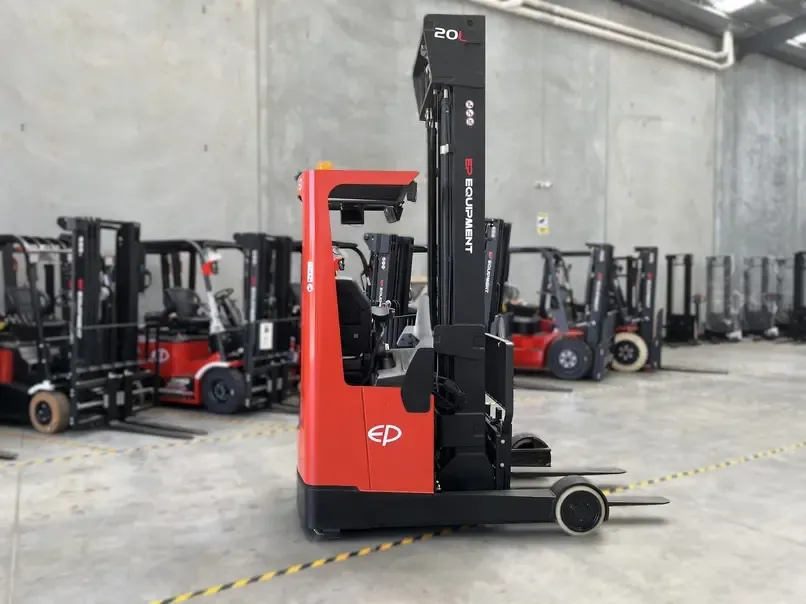
A new electric forklift also allows the buyer to configure the machine around the actual site. Mast height, fork length, tyre type, attachment, battery capacity, charger setup, and load profile can be matched before delivery.
New is usually the stronger option for:
- Primary operational forklifts
- Multi-shift warehouses
- High-throughput distribution centres
- Cold storage or food-grade facilities
- Sites where downtime is costly
- Businesses needing clear warranty coverage
- Buyers who want predictable five-year ownership costs
New is not always the cheapest option on day one. It is usually the lower-risk option when the forklift is critical to daily operations.
What Are the Advantages of Buying a Used Electric Forklift?
A used electric forklift can be the better financial choice when utilisation is low, battery condition is verified, and the price reflects remaining useful life.
The main advantage of used equipment is lower upfront cost. A used electric forklift may suit businesses that do not run the machine heavily every day or only need it for backup, seasonal demand, or light warehouse duties.
Used can work well for:
- Low-use warehouses
- Backup fleet roles
- Seasonal operations
- Short-term capacity needs
- Businesses testing a new application
- Sites running under 500 hours per year
However, used value depends on proof. A used electric forklift from a reputable dealer with documented battery condition is a very different purchase from a private-sale unit with no BMS data, no service history, and no warranty support.
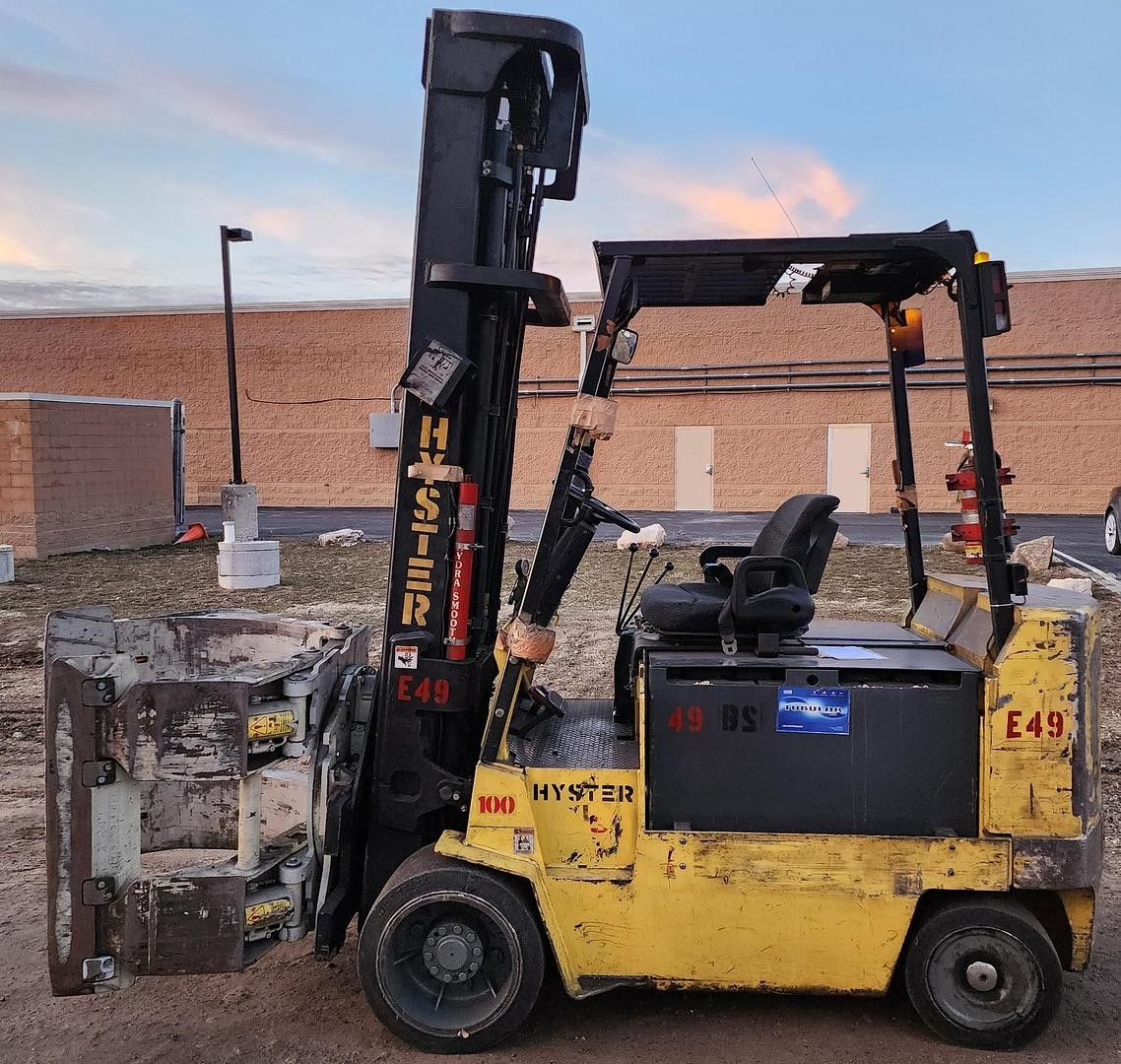
Used electric forklifts can be good value, but only when the risk is visible. If the seller cannot provide battery data, charger details, service records, or warranty terms, the price should reflect that uncertainty.
What Should Victorian Warehouses Consider Before Choosing New or Used?
Victorian warehouses should consider workload, battery risk, compliance basics, attachment ratings, and local support before choosing new or used.
A Melbourne distribution centre running daily dispatch has a different risk profile from a small regional warehouse using a forklift a few hours per week. The first operation needs uptime, service response, charger reliability, and battery warranty. The second may benefit more from lower capital cost.
The operating environment also changes the decision. Cold storage, food-grade facilities, timber yards, steel handling sites, outdoor loading areas, and mixed-surface operations place more stress on tyres, mast components, hydraulics, controllers, and batteries.
Used forklifts with attachments need extra care. If a side-shifter, fork positioner, clamp, or other attachment is fitted, the rated capacity should reflect the forklift and attachment combination. If the capacity plate or documentation does not match the actual configuration, the headline capacity should not be treated as reliable.
For Victorian buyers, the practical question is not only “Which forklift is cheaper?” It is “Which option can be placed into service safely, reliably, and with the least operating risk?”
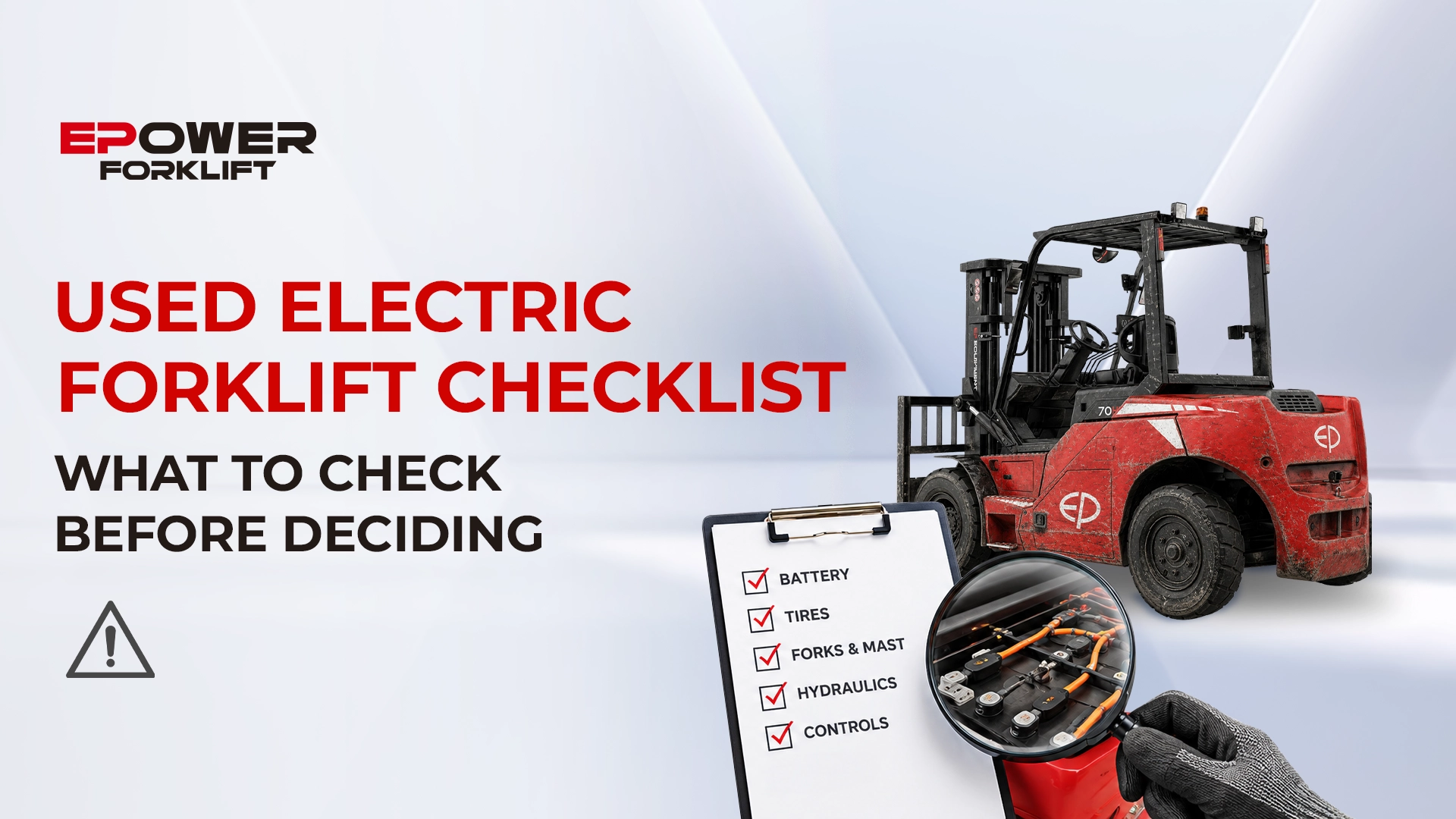
Used Electric Forklift Checklist: What to Check Before Deciding
How Do New and Used Electric Forklifts Compare on Total Cost Over 5 Years?
New electric forklifts usually have higher upfront cost but more predictable five-year TCO. Used electric forklifts can be cheaper only when battery condition and service history are verified.
The purchase price gap is real. However, electric forklifts introduce one major variable that can change the calculation quickly: battery replacement risk.
In EPower’s experience, the cheapest used electric forklift is not always the lowest-cost option once battery health, charger compatibility, parts availability, and downtime risk are included. The table below is illustrative only. Actual pricing varies by model, mast height, battery capacity, attachments, delivery location, warranty terms, usage intensity, electricity rates, and market availability.
| Cost Component | New EP Equipment 2.5T | Used Electric 3 to 5 Years Old | Notes |
|---|---|---|---|
| Purchase price | AUD 20,000 to 26,000+ | AUD 12,000 to 18,000 | Depends on model, spec, and condition |
| Battery warranty | Stronger, model dependent | Limited or excluded | Battery terms must be checked separately |
| Maintenance risk | Lower early-stage risk | Higher condition-dependent risk | Depends on previous use |
| Battery replacement risk | Lower under valid warranty | AUD 0 to low five figures | Depends on battery condition |
| TCO certainty | Higher | Lower | Used risk widens when records are missing |
A verified used unit can produce a lower five-year cost than new. That requires BMS data, battery history, service records, charger compatibility, and clear warranty terms.
An unverified used unit can cost more than new if the battery fails early, parts are delayed, or downtime affects operations. This is why EPower treats used electric forklift pricing as a risk calculation, not just a price comparison.
Which Should You Choose: New, Used, Refurbished, or Rental?
Choose new for high-use and uptime-critical operations, used for low-use verified units, refurbished when documentation is strong, and rental when demand is temporary or uncertain.
Use the table below as a practical decision guide.
| Your Situation | Recommendation | Reason |
|---|---|---|
| Primary operational asset | New | Uptime and warranty certainty matter |
| Two or more shifts per day | New | Battery cycles accumulate quickly |
| Low utilisation under 500 hours per year | Used with BMS verification | Lower use reduces battery risk |
| Short-term need under two years | Used or rental | Lower commitment may suit the timeframe |
| Seasonal demand | Rental or used | Avoids overcommitting capital |
| BMS data and full service history available | Used viable | Risk can be priced more accurately |
| Battery condition not verifiable | New or avoid | Risk is too wide |
| Need predictable monthly cost | Rental | Maintenance and battery risk remain with provider |
| Considering refurbished | Viable if documented | Battery condition and warranty must be clear |
Refurbished units sit between new and used. They can make sense when the refurbishment is documented, including battery condition, service work, charger compatibility, tyre condition, safety inspection, and warranty terms.
Rental removes much of the battery ownership risk. For seasonal peaks, temporary projects, or fleet trials, rental can provide access to current-generation electric forklifts without committing to long-term ownership.
For many EPower customers, the final decision is not simply new vs used. It is new vs verified used vs refurbished vs rental.
FAQs About New vs Used Electric Forklifts
The most important questions are battery condition, warranty, utilisation, and downtime. These factors determine whether new, used, refurbished, or rental is the better option.
Is it worth buying a used electric forklift?
Yes, a used electric forklift can be worth buying if BMS data, battery age, service history, charger compatibility, and warranty terms are verifiable. If those records are missing, the lower upfront price may not reflect the true cost.
Is hour meter reading enough for a used electric forklift?
No, hour meter reading is not enough. The hour meter shows operating time, but BMS cycle count gives better insight into battery usage and remaining battery life.
Is rental better than buying used?
Rental can be better when demand is seasonal, temporary, or uncertain. It gives access to working equipment without carrying battery replacement risk or long-term ownership risk. Check our Trusted Forklift Hire & Rental Services!
Conclusion
A used electric forklift can be a smart purchase when battery condition is verified, service history is complete, charger compatibility is confirmed, and the price reflects remaining useful life. Used is strongest for low-use, backup, seasonal, or short-term applications.
A new electric forklift is usually the better decision when the forklift is a primary operational asset. Multi-shift warehouses, cold storage sites, food-grade facilities, high-throughput distribution centres, and businesses that need predictable uptime should give more weight to warranty, battery certainty, configuration accuracy, and local support.
For Victorian businesses, the decision should be based on workload, battery risk, downtime tolerance, and service support, not purchase price alone.
If you are comparing new, used, refurbished, or rental electric forklifts, speak with the EPower team. We can help assess the decision against your real warehouse conditions and recommend the pathway that best matches your workload, budget, and risk profile. Contact us today!