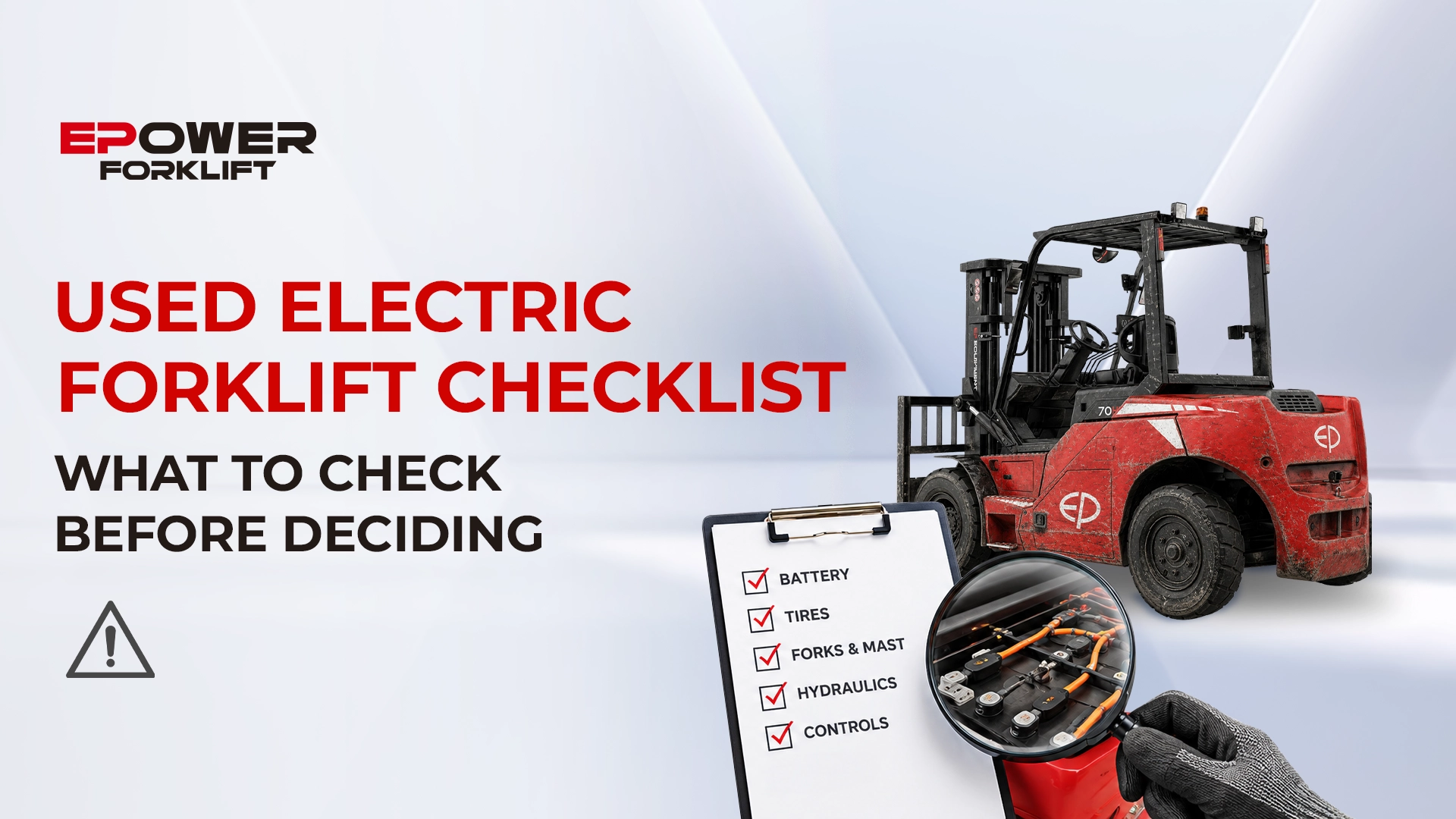
Buying a used electric forklift can save capital, but only when the battery, charger, service history, warranty, and safety documentation are verifiable. A clean-looking machine is not enough.
For electric forklifts, the biggest hidden risk is usually not the frame, mast, tyres, or paintwork. It is the battery. A used electric forklift with poor battery history can look acceptable during inspection but lose runtime quickly once placed into daily warehouse use.
This checklist from EPower team focuses on what Australian buyers, especially Victorian warehouse operators, should check before accepting a used electric forklift. It is designed to help buyers identify battery risk, compliance issues, mechanical wear, warranty gaps, and red flags before purchase.
Why Used Electric Forklifts Need a Different Inspection?
Used electric forklifts need a different inspection because battery health, BMS data, charger compatibility, and warranty coverage determine the real cost of ownership.
A combustion forklift can be assessed through engine condition, oil, coolant, compression, exhaust smoke, leaks, and service records. An electric forklift has fewer engine-related wear points, but the condition question shifts to the battery system, charger, controller, mast, hydraulics, tyres, and safety documentation.
The hour meter is useful, but it is not enough. A low-hour electric forklift may still have a heavily degraded battery if it has been poorly charged, stored incorrectly, overheated, or deeply discharged. A higher-hour unit with documented battery data may be less risky than a cleaner unit with no BMS record.
Before comparing price, check whether the seller can prove the condition of the battery and the machine. If they cannot, the forklift should be priced as an unknown-risk asset.
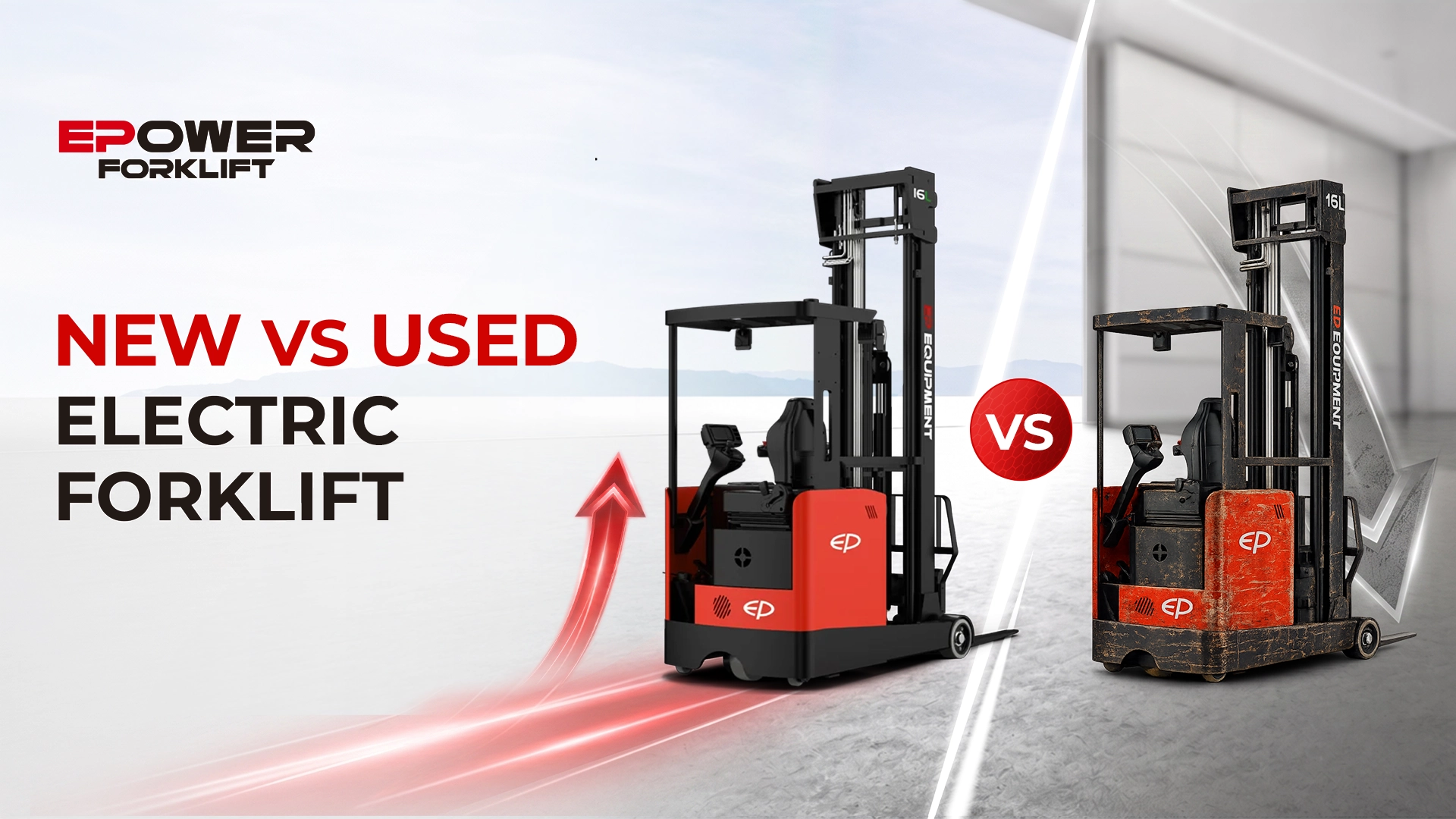
New vs Used Electric Forklift: Which Is Better for Your Warehouse?
Check 1: Ask for BMS Diagnostic Data
BMS diagnostic data is the most important record to request when buying a used electric forklift. It shows battery usage and battery risk more clearly than the hour meter.
BMS stands for Battery Management System. On a used electric forklift, BMS data plays a similar role to engine diagnostics on a combustion forklift. It helps show how the battery has been used, charged, protected, and stressed over time.
Ask the seller for:
- Battery cycle count
- Battery age
- Battery chemistry
- Fault history
- Charging history
- Temperature events
- Deep discharge events
- Battery replacement history
- Battery health or state-of-health data, if available
A seller who cannot provide BMS data is not automatically dishonest, but the risk changes. Without BMS data, battery condition is unknown. That uncertainty should affect the price, warranty expectation, and buying decision.
EPower’s practical view is simple: BMS data turns a used electric forklift from a guess into an assessable asset. Without it, the buyer is relying on appearance, hour meter reading, and seller claims.
Check 2: Verify Battery Type, Age, and Remaining Life
Battery type, age, and remaining life should be verified before price is accepted. The battery is often the most expensive uncertainty in a used electric forklift.
Start by confirming whether the forklift uses lithium-ion or lead-acid battery technology. Do not rely on visual appearance alone, because battery enclosures can look similar. Ask for battery documentation, charger details, and any replacement records.
For lithium-ion batteries, the key question is cycle life. A battery with high accumulated cycles may still operate, but its remaining working life may be limited. The buyer should confirm whether the battery is original or replaced, how many cycles it has completed, and whether it has recorded fault or temperature events.
For lead-acid batteries, check for signs of poor maintenance, undercharging, sulfation, corrosion, watering issues, and reduced capacity. A lead-acid battery can still charge and discharge while delivering significantly less usable runtime than expected.
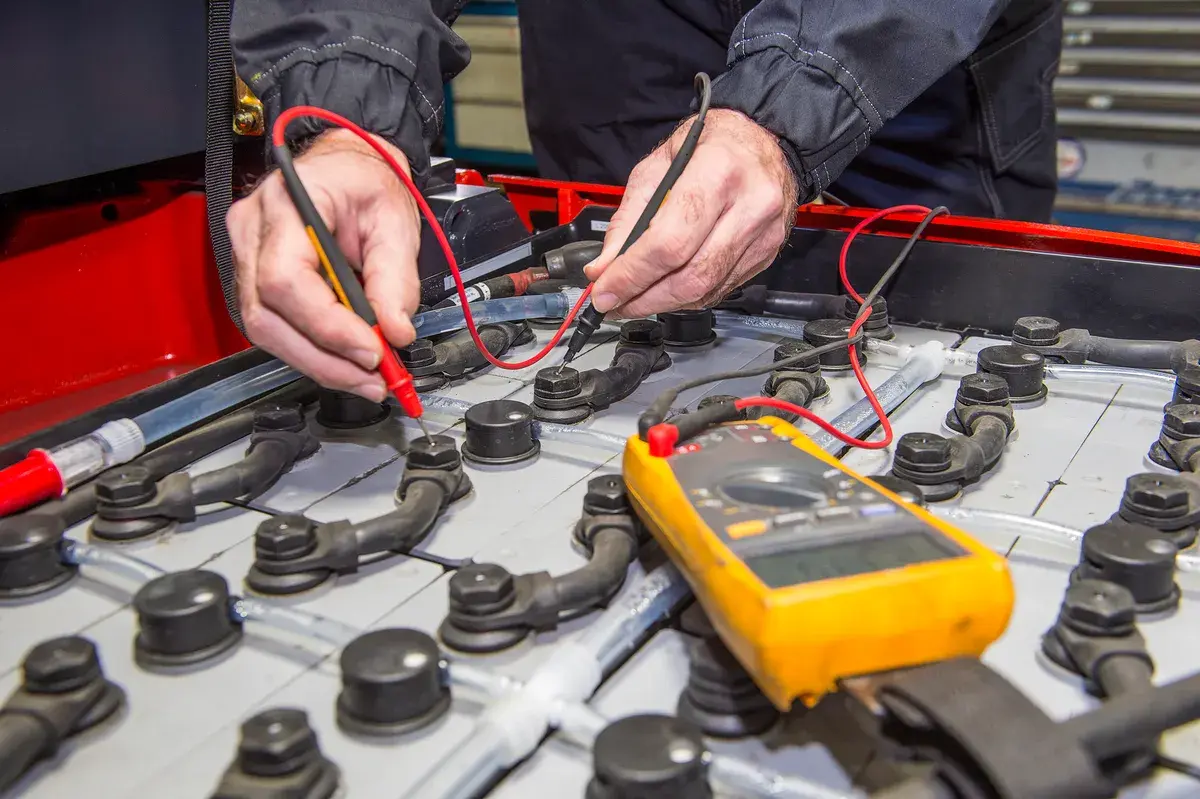
Reject or pause the purchase if you see:
- Battery swelling or deformation
- Burn marks or heat damage
- Corroded terminals
- Leaking battery cells
- Repeated battery fault codes
- Battery documentation that does not match the forklift
- Seller unable to confirm battery age or replacement history
A used electric forklift is only a good deal if the battery condition supports the price.
Check 3: Confirm Charger Compatibility
Charger compatibility must be confirmed because the wrong charger can damage the battery, reduce performance, or create recurring faults.
A charger that fits the plug is not always the correct charger. The charger should match the battery voltage, battery chemistry, charging profile, communication requirements, and manufacturer recommendations.
For lithium-ion forklifts, charger compatibility is especially important. Some lithium systems require communication between the charger and the battery management system. A voltage match alone does not prove compatibility.
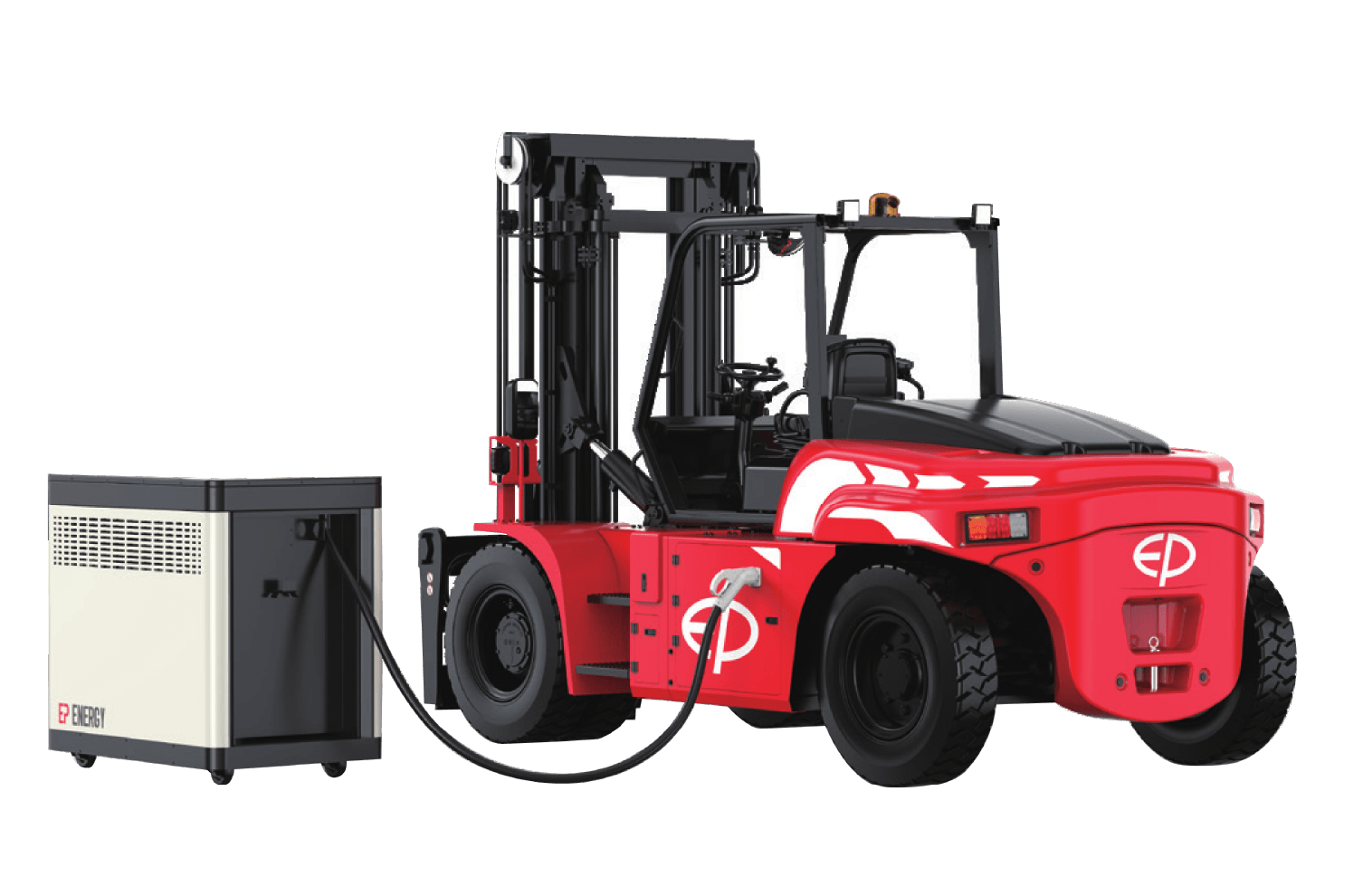
Ask the seller:
- Is the charger included?
- Is it the original charger supplied with the forklift?
- Does it match the battery chemistry?
- Does it match the battery voltage and charging profile?
- Has the charger recorded faults?
- Has the battery ever been charged with a non-original charger?
- Are charger manuals or specifications available?
If the forklift is sold without the correct charger, factor the replacement cost and downtime into the buying decision. A cheap used forklift can become expensive if the charger is missing, incompatible, or unsupported.
Electric Forklift Battery Charging Mistakes That Shorten Battery Life: How to Avoid Them
Check 4: Separate the Truck Warranty from the Battery Warranty
Truck warranty and battery warranty should be checked separately because a used forklift warranty may not cover the battery properly.
This is one of the most common mistakes when buying used electric equipment. A seller may advertise a limited warranty, but the battery may be excluded, shortened, non-transferable, or covered under different conditions.
Before buying, ask for written answers to these questions:
- What does the truck warranty cover?
- What does the battery warranty cover?
- Is the battery warranty transferable?
- Are labour and transport included?
- Are charger faults included?
- Are BMS faults included?
- What conditions void the warranty?
- Who provides the warranty: dealer, manufacturer, or third party?
- What is the claim process if the battery fails?
A 30-day or 90-day general warranty may not protect the buyer from battery degradation under real warehouse use. If the battery is the main financial risk, the warranty must address the battery directly.
If the seller cannot explain the battery warranty clearly, treat the warranty as limited protection.
Check 5: Check the Data Plate and Attachment Rating
A used electric forklift should not be accepted if the data plate is missing, illegible, or inconsistent with the actual configuration.
The data plate shows the forklift’s rated capacity, load centre, mast information, and key configuration details. It helps operators understand what the machine can safely lift under specified conditions.
Used forklifts often come with attachments already fitted. These may include side-shifters, fork positioners, clamps, jibs, or other handling attachments. When an attachment is fitted, the rated capacity can change. The data plate or supporting documentation should reflect the actual forklift and attachment combination.
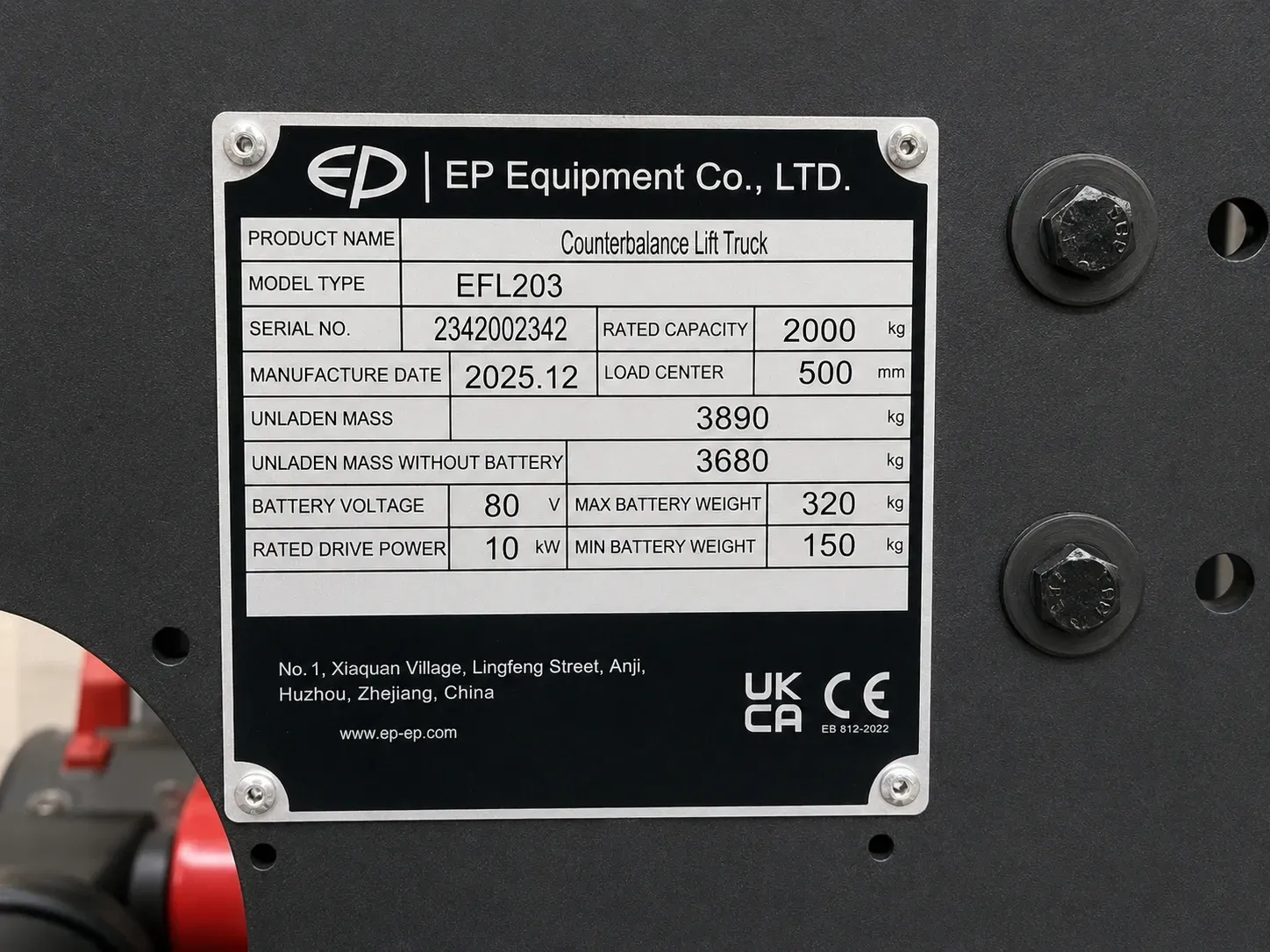
Check:
- Data plate is present
- Data plate is legible
- Rated capacity is suitable for your load profile
- Attachment rating is documented
- Mast height matches your requirement
- Load centre matches your actual loads
- Any attachment is approved and reflected in capacity information
Do not rely on the original headline capacity if the forklift has been modified or fitted with attachments. If the rating cannot be verified, the forklift’s safe operating capacity is uncertain.
Check 6: Review Service Records and Repair History
Service records are essential because they show whether the forklift has been maintained consistently or only cleaned for resale.
Ask for the full service history, not just the most recent invoice. A well-maintained used forklift should have records showing scheduled servicing, repairs, replacement parts, fault investigations, and any major component work.
Review records for:
- Scheduled maintenance intervals
- Battery or charger repairs
- Hydraulic leaks
- Mast chain inspection or replacement
- Tyre replacement
- Brake service
- Controller faults
- Fork inspection
- Attachment installation
- Previous accident or impact repairs
A low-hour forklift with missing service records can be riskier than a higher-hour forklift with consistent maintenance documentation.
Look for repeated faults. A single repair may not be a concern, but repeated controller faults, recurring battery warnings, repeated hydraulic leaks, or unresolved charger issues should change the buying decision.
Check 7: Inspect Tyres, Mast, Hydraulics, and Forks
Tyres, mast, hydraulics, and forks should be inspected because these components show how the forklift was actually used.
A used electric forklift may look clean from the outside but still show wear in high-stress areas. Focus on components that affect safety, stability, and daily reliability.
Tyres
Check for uneven wear, chunking, cracking, flat spots, and damage from rough surfaces. Worn tyres affect stability, vibration, braking, and operator comfort.
Mast and Chains
Check for smooth lifting, mast jerking, chain rust, tight links, damaged rollers, and uneven movement. A mast that does not lift smoothly may indicate wear, poor lubrication, or previous overloading.
Hydraulics
Inspect cylinders, hoses, fittings, and lift functions. Look for oil residue, weeping seals, cracked hoses, slow lift response, or uneven lowering.
Forks
Check fork heel thickness, cracks, bends, mismatched fork markings, and uneven fork tips. Forks should be matched, identifiable, and suitable for the load profile.
These checks do not replace a competent inspection, but they help buyers identify whether the unit deserves further assessment or should be rejected early.
Check 8: Confirm WHS and WorkSafe-Related Basics in Victoria
Victorian buyers should confirm basic safety condition before accepting a used electric forklift into operation.
This does not require turning the purchase process into a legal audit, but the buyer should confirm that the forklift can be placed into service safely and responsibly.
Check:
- Horn works
- Lights work
- Reverse alarm works
- Seatbelt works
- Safety interlocks function
- Data plate is legible
- Controls operate correctly
- Emergency stop works, if fitted
- Tyres and brakes are serviceable
- Operators are trained and familiar with the unit
- Charger setup is safe for the site
If the forklift has attachments, operators should be familiar with the attachment and the revised capacity. If the forklift uses a different control layout or battery system from the current fleet, allow time for familiarisation before putting it into daily work.
For Victorian warehouses, the practical question is whether the forklift can be accepted, charged, operated, and maintained safely from day one.
Check 9: Confirm Parts Availability and Local Support
Parts availability should be checked before buying because a cheap used forklift can become expensive if key components are hard to source.
Used electric forklifts may depend on older battery systems, controllers, chargers, sensors, or mast components. If parts are not available locally, downtime can extend from days to weeks.
Ask the seller:
- Are parts available in Australia?
- Who can service the forklift locally?
- Are battery components still supported?
- Is the charger still supported?
- Are controller parts available?
- Are mast and hydraulic parts available?
- What is the expected lead time for critical components?
This matters most for businesses using the forklift as a primary asset. If one failed controller, charger, or battery component can stop warehouse movement, parts support should carry more weight than the initial purchase price.
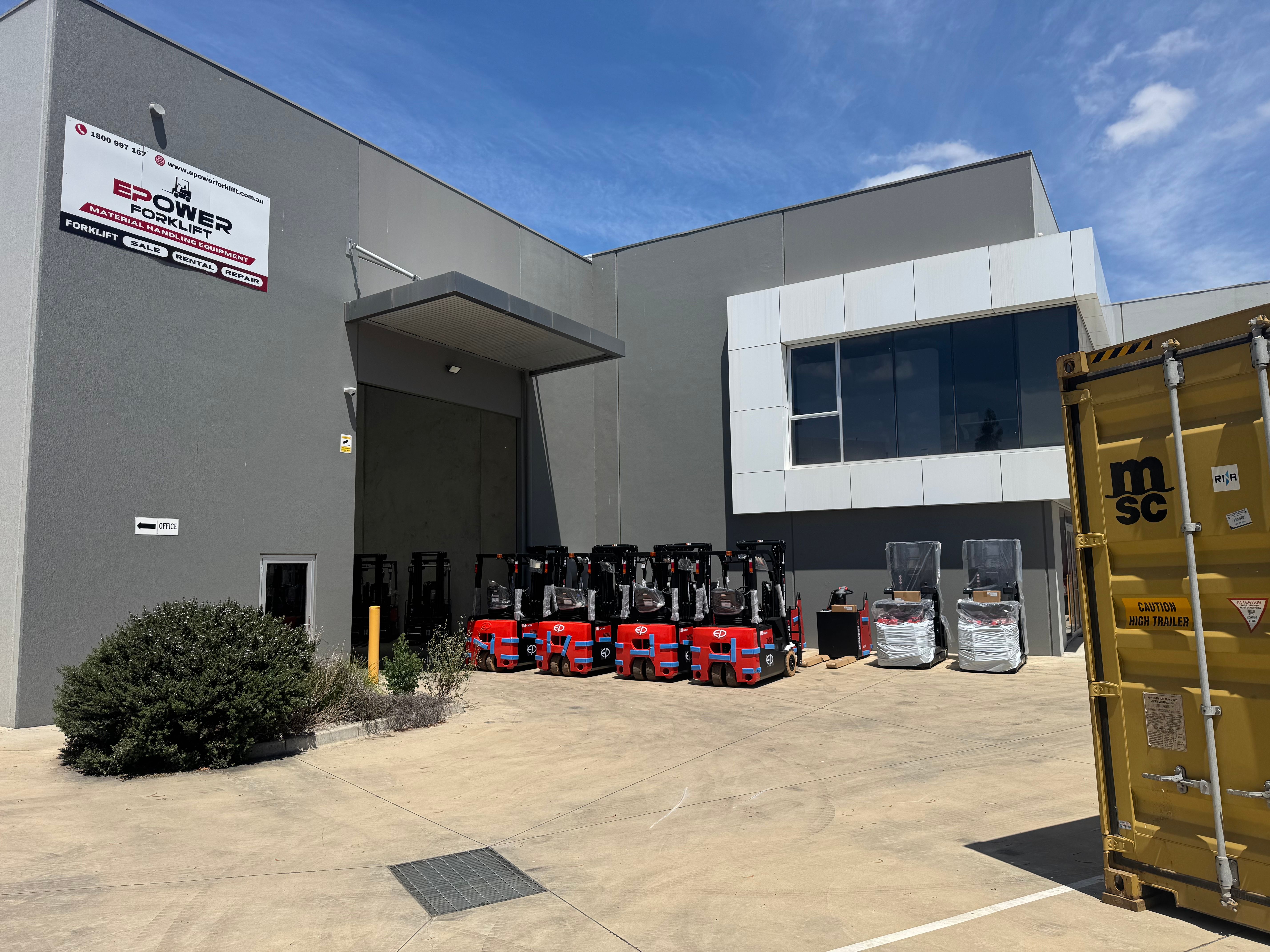
Epower Forklift warehouse addresses:
Dealer, Private Sale, or Refurbished: What Documentation Should You Ask For?
A dealer-supplied used electric forklift with documentation is a different purchase from a private-sale unit with no records.
The source of the forklift changes the risk. A reputable dealer should be able to provide inspection records, service history, warranty terms, and battery information. A private seller may offer a lower price, but the buyer usually carries more risk after delivery.
For a dealer-supplied used unit, ask for:
- Service history
- Battery data
- Charger details
- Warranty terms
- Inspection report
- Delivery condition report
- Parts and service support
For a private sale, be more cautious. If there is no BMS data, no service record, no warranty, and no support pathway, the price should be significantly lower to reflect the risk.
For refurbished electric forklifts, ask exactly what “refurbished” means. It should be documented, not assumed.
A proper refurbished record should show:
- Battery condition or battery replacement date
- Current cycle count
- Service work completed
- Tyre condition
- Mast and hydraulic inspection
- Charger compatibility
- Safety checks
- Warranty terms
- Any exclusions
If “refurbished” only means cleaned, painted, and resold, it should be treated as used.
View Refurbished Electric Forklift selling on EPower:
&
Red Flags Before Buying a Used Electric Forklift
The strongest red flags are missing BMS data, unknown battery condition, unclear warranty, incompatible charger, missing data plate, and no service history.
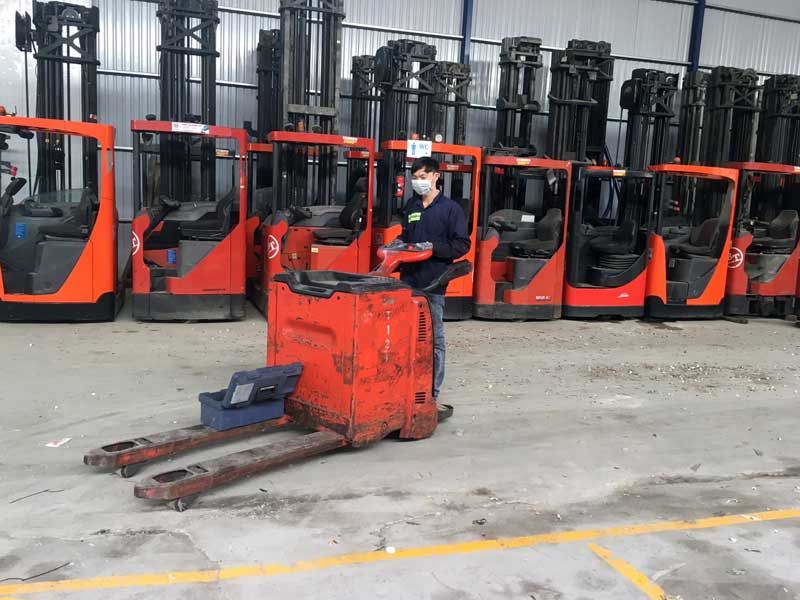
Walk away or renegotiate if you find:
- No BMS cycle count or battery diagnostic data
- Battery age cannot be confirmed
- Battery swelling, deformation, or overheating signs
- Repeated BMS or charger faults
- Charger compatibility not confirmed
- Missing, damaged, or illegible data plate
- Attachment fitted with no revised capacity documentation
- No service history
- Hydraulic leaks
- Mast jerking or uneven lift movement
- Chain rust or tight links
- Worn tyres or visible flat spots
- Visible chassis, mast, or overhead guard damage
- Forks worn, cracked, bent, mismatched, or unidentifiable
- Warranty excludes the battery
- Seller cannot confirm parts availability in Australia
One red flag does not always mean the forklift is unusable. But several red flags together usually mean the lower price is hiding future cost.
What to Do If the Seller Cannot Provide BMS Data
If the seller cannot provide BMS data, treat the battery as unknown and adjust the buying decision accordingly.
There are three practical options.
First, request an independent inspection before purchase. A competent technician may be able to assess the battery, charger, and system condition more accurately than a visual check.
Second, renegotiate the price to reflect battery uncertainty. A used electric forklift without battery data should not be priced like a verified unit.
Third, choose a different pathway. If the forklift is mission-critical, buying new, choosing a documented refurbished unit, or renting may be safer than accepting unknown battery risk.
For EPower, this is the core principle: if the battery cannot be verified, the risk has not disappeared. It has only moved from the seller to the buyer.
New vs Used Electric Forklift: Which Is Better for Your Warehouse?
Conclusion
A used electric forklift can be a smart purchase when the battery condition, BMS data, charger compatibility, service history, warranty, and data plate are verifiable. Used is strongest for light-use warehouses, backup roles, seasonal demand, or short-term capacity needs.
A used electric forklift becomes risky when the battery is unknown, the charger is not confirmed, the warranty excludes key components, the data plate is unclear, or the service history is missing. In those cases, the lower upfront price may not reflect the real cost.
Before buying used, check the evidence, not just the appearance. If you are unsure whether a used, refurbished, rental, or new electric forklift is the right option, speak with the EPower team. We can help assess the machine, the battery risk, and the best pathway for your warehouse workload.