1. Reach Truck vs Forklift: Understanding the Core Functional Roles
Before comparing technical specifications, it is important to understand the fundamental role each machine plays in material handling operations. While both are forklifts, they are designed with different operational priorities in mind.
What is a reach truck designed for?
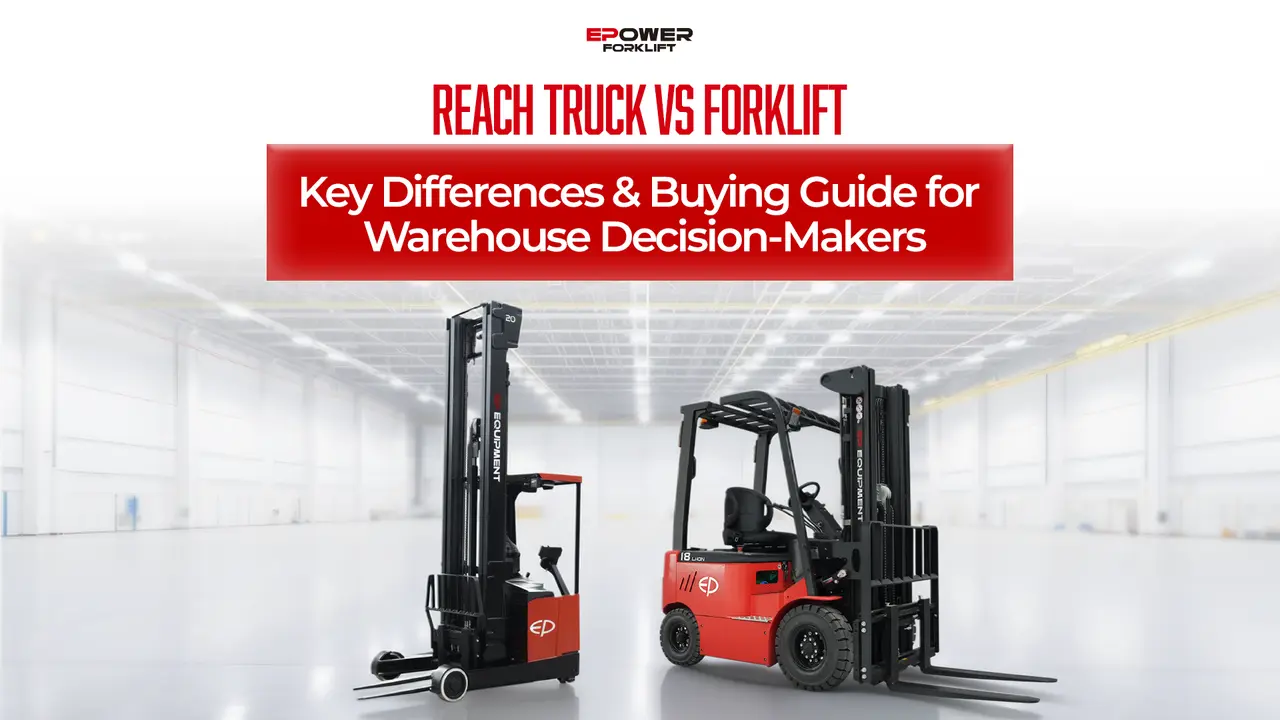
Reach truck is a specialized type of forklift developed for high-density indoor warehousing. Its defining feature is the ability to extend its forks forward to access deep racking systems while keeping the chassis compact. Rather than serving as an all-purpose vehicle, the reach truck is engineered to maximize vertical storage capacity in controlled warehouse environments.
It is commonly selected for:
- High-bay warehousing operations
- Facilities prioritizing storage density over open floor space
- Narrow-aisle pallet racking systems
- E-commerce and retail distribution centers
- Cold chain logistics requiring organized, high-level stacking
In essence, reach trucks are strategic tools for businesses where warehouse cubic capacity directly affects profitability.
What is a counterbalance forklift designed for?
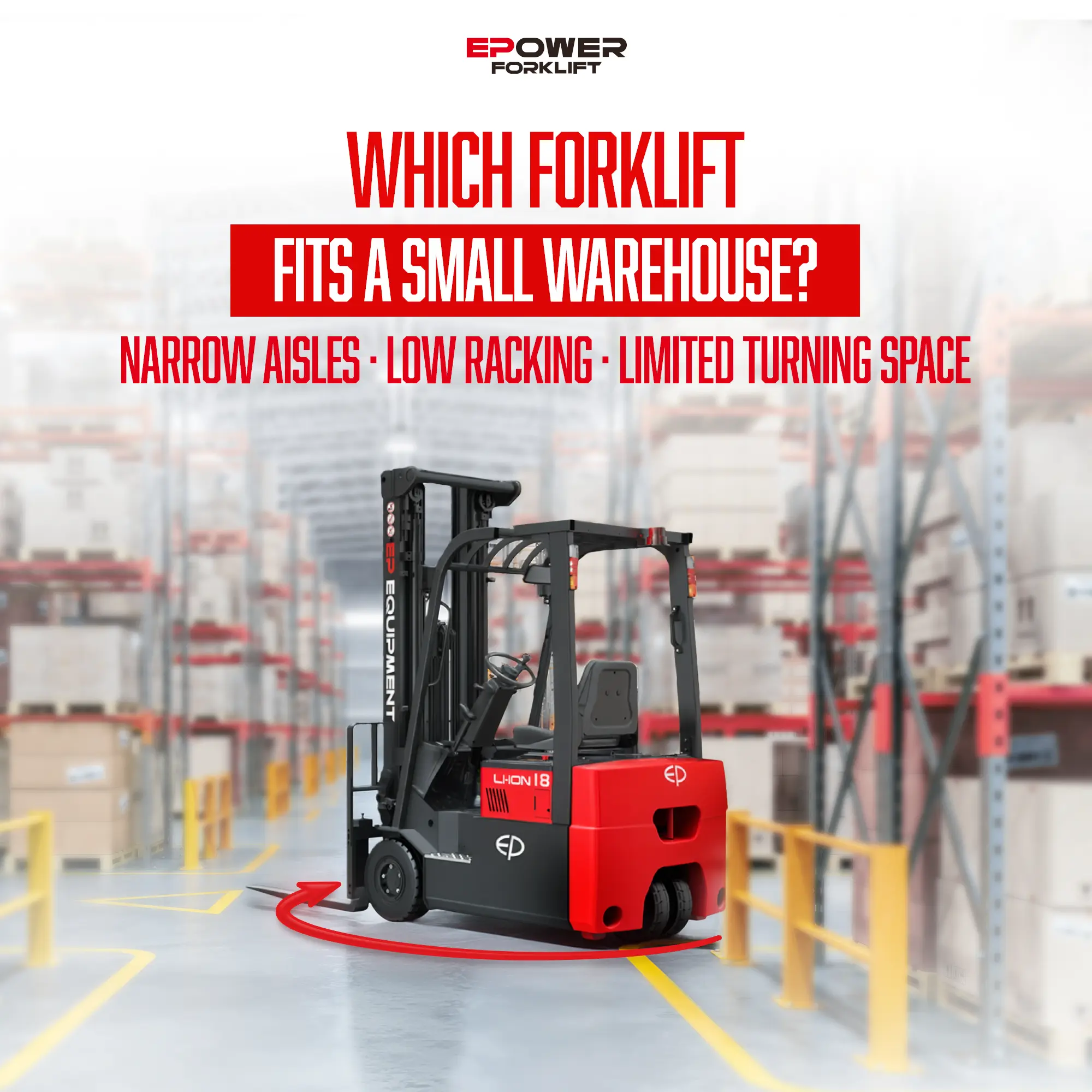
Counterbalance forklifts represent the most widely used category of material handling equipment. Their rear counterweight design allows them to handle a broader range of loads and work across diverse environments.
Unlike reach trucks, counterbalance forklifts are not limited to specialized racking systems. They are general-purpose machines capable of supporting multiple tasks within a facility.
They are commonly used in:
- Manufacturing and assembly operations
- 3PL and distribution hubs with mixed workflows
- Food & beverage production facilities
- Construction sites and outdoor yards
- Loading docks requiring frequent truck handling
Forklifts are the backbone of general material handling operations, offering strength, adaptability, and multi-environment capability.
Comparison Table
| Criteria | Reach Truck | Counterbalance Forklift |
|---|---|---|
| Space & aisle width | Narrow aisles, high storage density | Wider aisles, more flexible layouts |
| Lifting heights | Up to 12.0m | 3.0 to 6.0m |
| Load capacity | 1.6 to 2.0t | 1.5 to 5t and more |
| Operating environment | Prioritize indoor use | Construction yards & mixed indoor/outdoor sites |
| Industries & Applications | • High-racking warehouse • Retail distribution • Cold chain and food logistics • E-commerce fulfillment |
• 3PL & e-commerce warehousing • Manufacturing & assembly lines • Food & beverage / cold chain • Retail distribution centres |
| Battery warranty (Lithium-ion battery) | 5 years or 5,000 operating hours | 7 years or 10,000 operating hours |
2. Reach Truck vs Forklift: How to Choose the Right One?
When comparing reach trucks and counterbalance forklifts, the differences extend far beyond lift height and rated capacity. The real decision lies in how each machine aligns with warehouse layout, load profile, operational flow, and long-term cost efficiency. Selecting the wrong equipment can result in underutilized storage space, safety risks, or unnecessary capital and operating expenses.
The following questions will help clarify which option best supports your layout, load profile, and long-term operational efficiency:
Should you prioritize storage density or operational flexibility?
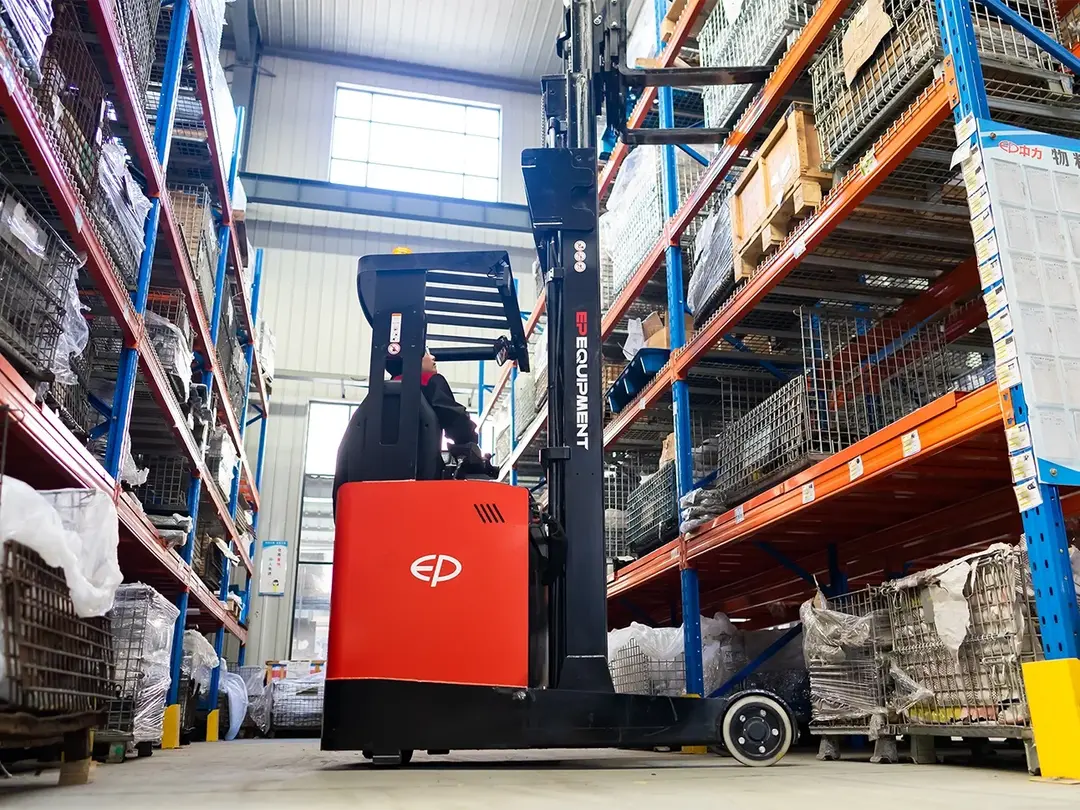
Reach Trucks – Optimized for High-Density Storage
Reach trucks are purpose-built for narrow-aisle warehouse environments, where maximizing pallet positions per square meter directly impacts profitability. Their compact chassis, small turning radius, and forward-reaching mast allow operations in aisles typically ranging from 2.7 to 3.0 meters, significantly narrower than those required by counterbalance forklifts.
Typical configurations include:
- Capacity: 1.6 – 2.0 tons (or higher depending on model)
- 3-stage mast up to 12.0 meters
- Optional height camera systems for improved visibility at high lift
- Designed for smooth indoor flooring
By reducing aisle width by even 30–40 cm per row, warehouses can increase storage density by 10–20% without expanding floor space. This makes reach trucks particularly valuable in high-rent urban logistics centers and cold storage facilities.
However, their design prioritizes vertical efficiency over multi-directional flexibility.
Counterbalance Forklifts – Flexibility Over Density
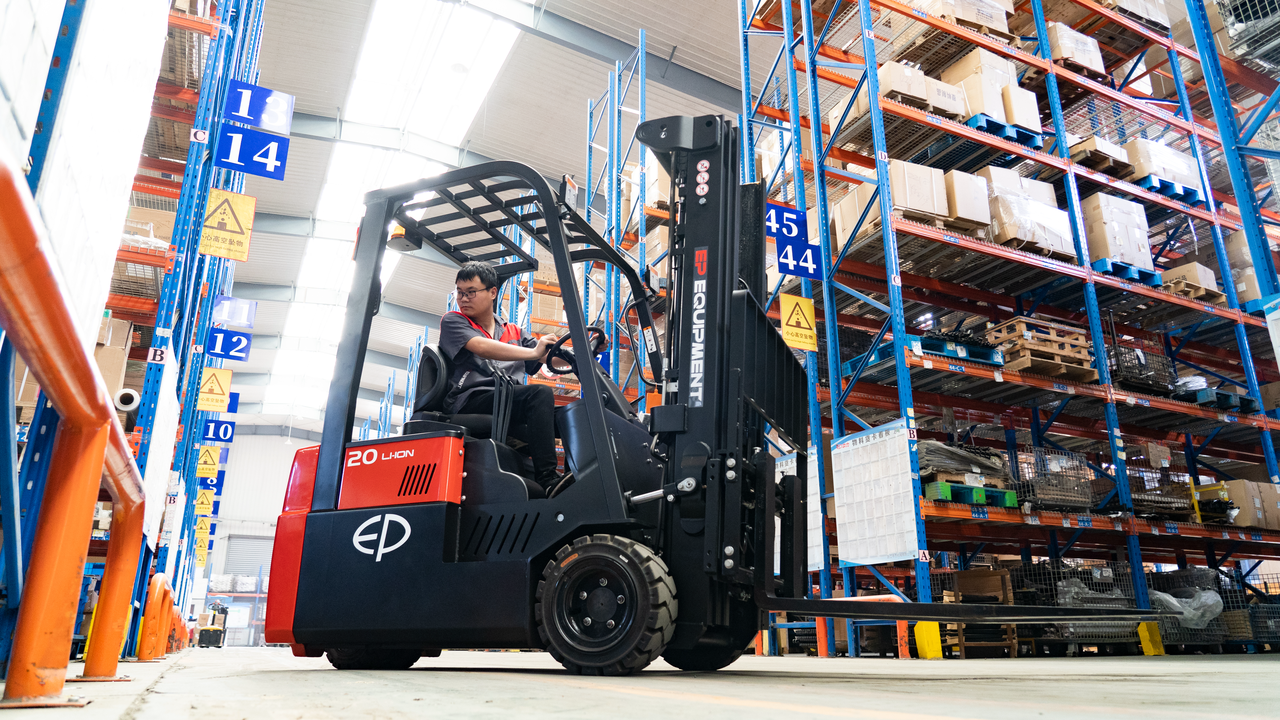
Counterbalance forklifts require wider aisles to maneuver safely, particularly when turning with loads. Typical aisle widths range from 3.5 to 4.0 meters or more, depending on truck size and pallet dimensions.
While this reduces total pallet density, it offers greater operational versatility. These forklifts can:
- Load and unload trucks directly
- Perform horizontal transport over longer distances
- Operate across multiple warehouse zones
- Adapt to evolving workflow layouts
Common specifications include:
- Capacity: 1.5 – 5.0 tons (and higher)
- Mast options: 2-stage or 3-stage
- Attachments available: side shift, fork positioner, clamps, rotators, roll prongs
For facilities with mixed tasks or frequently changing layouts, counterbalance forklifts provide adaptability that reach trucks cannot match.
Do you need greater lift height or higher load capacity?
Reach Trucks - Built for Vertical Performance
Reach trucks excel when your primary requirement is achieving significant lift heights in narrow spaces. Their design is optimized for:
- Reaching heights up to 12 meters
- Operating in confined, high-density storage environments
- Maximizing vertical warehouse utilization
- Reducing overall warehouse footprint
Counterbalance Forklifts - Strength and Load Versatility
Counterbalance forklifts offer superior load-handling capabilities and operational versatility:
- Load capacity ranging from 1.5 to 5+ tons
- Flexible height options (3.0 to 6.0 meters)
- Ability to handle diverse pallet types and loads
- Greater stability and power for demanding applications
Do you need indoor precision or outdoor versatility?
Reach Trucks are precision instruments designed for controlled indoor environments with smooth flooring and organized racking systems. They excel in:
- High-bay warehouses
- Climate-controlled storage facilities
- E-commerce fulfillment centers
- Cold storage operations
Counterbalance Forklifts are built for rugged versatility and can operate in:
- Outdoor yards and construction sites
- Rough or uneven surfaces
- Mixed indoor/outdoor operations
- Loading docks and diverse work environments
3. Reach Truck vs Forklift: Which Option Delivers Better Long-Term Value?
The decision between reach trucks and counterbalance forklifts ultimately depends on your specific operational requirements:
Choose a Reach Truck if:
- Your warehouse prioritizes storage density
- You operate in narrow-aisle environments
- Your loads are relatively light (under 2 tons)
- You need to maximize vertical storage in a limited footprint
- You operate primarily in climate-controlled indoor spaces
Choose a Counterbalance Forklift if:
- You need operational flexibility and adaptability
- Your facility handles diverse load types and weights
- You require outdoor capability or rough-terrain operation
- Your workflow involves multiple material handling tasks
- You need a versatile, multi-purpose material handling solution
Both machine types represent valid investments for warehouse operations—the key is aligning your equipment choice with your facility's specific demands, layout constraints, and long-term operational strategy.
Conclusion
The difference between a reach truck and a counterbalance forklift is not simply a matter of lift height or load capacity — it is a matter of operational strategy. If your priority is maximizing vertical storage density within a controlled indoor warehouse, a reach truck provides clear advantages in space optimization and high-level stacking efficiency. It is the right solution for businesses where every square meter of storage directly impacts revenue. On the other hand, if your operation requires handling heavier loads, operating across mixed environments, or performing diverse tasks such as truck loading, yard transport, and production support, a counterbalance forklift offers greater strength and flexibility. The most effective choice is the equipment that aligns with your workflow, storage strategy, and total cost of ownership goals. With a solution-oriented approach and a comprehensive product range, EPower Forklift supports businesses in selecting material handling equipment that delivers efficiency, safety, and sustainable long-term value. Find EPower Forklift location near you, or contact our team to request a quote today!