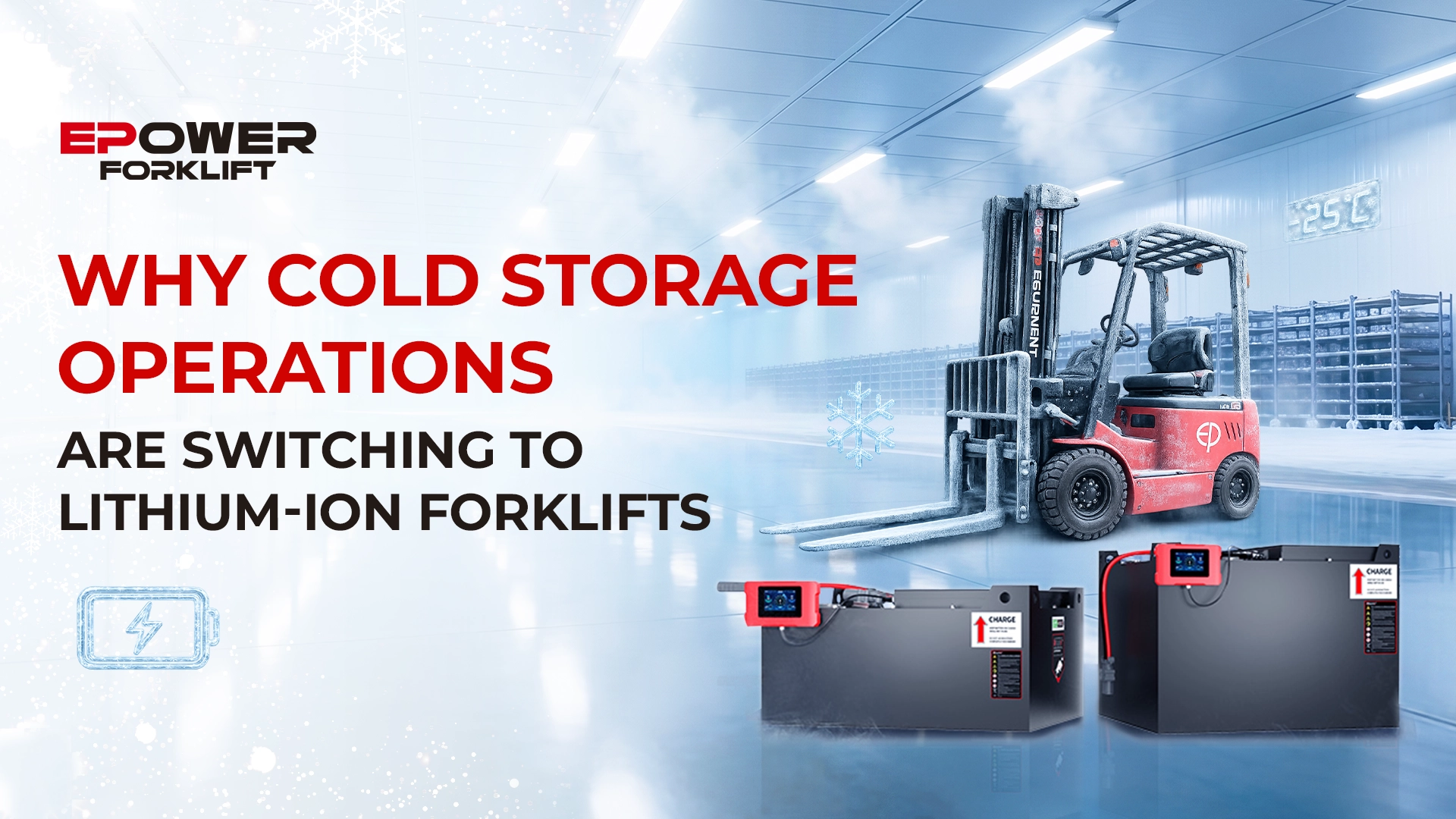
Cold storage is one of the clearest applications where lithium-ion forklifts can outperform lead-acid forklifts. The difference is not only charging speed. It is whether the forklift can maintain usable power, stay inside the cold zone, avoid battery swaps, and complete a full shift without losing productivity.
In EPower’s experience, cold storage buyers usually face the same problem: the forklift is not always the issue on paper, but the battery system, charger setup, condensation protection, and charging process are not matched to the temperature range. That is where many performance problems begin.
For multi-shift cold storage, frozen food distribution, and deep-freeze operations, switching to lithium-ion can change the entire operating model. For low-use cold rooms, the case may be weaker. The right decision depends on temperature, shift pattern, charging location, battery process, and whether the forklift is specified for cold storage from the start.
Why Cold Storage Is Hard on Forklifts and Batteries?
Cold storage is not one operating condition. Fresh goods such as dairy, meat, seafood, fruit and vegetables are commonly handled around 2°C to 8°C. Frozen food and ice cream are commonly stored at -18°C or colder. Deep-freeze applications can run below -20°C.
The colder the environment, the more important the forklift specification becomes. Battery performance, hydraulic oil, wiring protection, connectors, tyres, charger location, and operator comfort all matter.
The issue is not only low temperature. Repeated movement between freezer and ambient areas creates condensation on cold surfaces, including connectors, wiring, motors, seals, and battery terminals. Over time, this can increase corrosion risk, electrical faults, visibility issues, and mechanical stress.
That is why a cold storage forklift should not be selected as a standard warehouse forklift with a different battery. The whole unit must be suitable for the operating environment.
Reach Truck Vs Forklift: Key Differences & Buying Guide for Warehouse Decision-Makers
What Cold Temperature Does to Lead-Acid Batteries?
Cold temperature reduces the usable capacity and charging performance of lead-acid batteries. As temperature drops, the chemical reaction inside the battery slows down and the battery delivers less usable power.
For operators, this usually appears as a forklift that starts the shift normally, then becomes slower or less responsive later in the day. The battery may still show charge, but the machine cannot deliver the same usable performance in cold conditions.
Approximate lead-acid capacity loss varies by battery age, discharge rate, electrolyte condition, maintenance history, and working temperature. As a practical guide, lead-acid capacity can drop significantly in freezer environments.
This creates three operational problems.
First, more batteries are needed. In multi-shift operations, lead-acid fleets often require two or three batteries per forklift to cover charging, cooling, and battery change cycles.
Second, charging is more difficult. Lead-acid charging is poorly suited to freezer environments and is typically moved to a controlled battery charging area to protect charging performance, battery life, and safety.
Third, battery maintenance adds work. Watering, equalisation charging, acid handling, ventilation, and battery changing all add labour and process risk. In food cold storage, these tasks can also create additional hygiene and contamination control points.
For a single-shift, low-use cold room, this may be manageable. For a high-throughput freezer warehouse, it can become a major productivity problem.
How Lithium-Ion Forklifts Change the Operating Model?
Lithium-ion forklifts change cold storage operations because they reduce battery swapping, support opportunity charging, and deliver more consistent power through the shift.
This is the real reason cold storage operators are switching. The benefit is not just that lithium-ion charges faster. The benefit is that the forklift can stay closer to the work, spend less time outside the cold zone, and avoid the operational drag of lead-acid battery handling.
Opportunity Charging Reduces Battery Swaps
Lithium-ion batteries can be charged during breaks, shift changes, dock waiting time, or other short idle periods. This is especially useful in multi-shift cold storage where forklifts need to remain available for most of the day.
With lead-acid, battery changes can interrupt the workflow. Each round trip to a battery room can add 15 to 30 minutes of downtime depending on facility layout, travel distance, battery handling process, and queue time.
With the right lithium-ion cold storage setup, the forklift can be opportunity charged during natural downtime. This reduces the need for spare batteries and battery changing infrastructure.
Fewer Temperature Transitions Reduce Condensation Risk
When a forklift repeatedly moves from a -18°C freezer into a warmer charging room, condensation forms on cold surfaces. This can affect connectors, wiring, motors, battery terminals, seals, and visibility.
A lithium-ion setup can reduce these transitions if the forklift can remain inside or near the cold zone during charging. Fewer cold-to-warm movements can reduce condensation exposure and improve long-term reliability.
This is one reason EPower checks charging location early when advising cold storage customers. A good battery choice can still underperform if the charger layout forces unnecessary temperature transitions.
Battery Room Requirements Can Be Reduced
Lead-acid multi-shift fleets often require battery rooms, battery racks, ventilation, spill controls, watering processes, and battery changing equipment. In cold storage, that space can be expensive because refrigerated or temperature-adjacent warehouse space is valuable.
Lithium-ion opportunity charging can reduce or remove the need for a traditional battery room. The exact saving depends on fleet size, facility layout, charger placement, and whether charging can be done inside or near the cold zone.
For large fleets, this is often one of the strongest financial reasons to move away from lead-acid.
Consistent Power Supports Shift Throughput
Lead-acid performance can fade as the battery discharges, and the effect becomes more noticeable in cold environments. Operators may feel slower travel, reduced responsiveness, or weaker performance in the second half of the shift.
Lithium-ion systems deliver more consistent voltage across most of the discharge cycle. In cold storage, where every pick, pallet move, and loading cycle affects throughput, that consistency can be more valuable than the energy saving alone.
Battery Monitoring Helps Prove the Result
For multi-shift cold storage fleets, battery monitoring is important. Managers should track charging behaviour, runtime, battery utilisation, fault events, and downtime patterns.
Without this visibility, it is difficult to prove whether the switch to lithium-ion is delivering the expected productivity gain. EPower recommends reviewing the current battery process before switching, then comparing runtime and downtime after installation.
What Must Be Specified for Cold Storage Lithium Forklifts?
Lithium-ion is not automatically cold-storage-ready. Battery chemistry is only one part of the specification. The forklift, battery heater, charger, wiring, connectors, hydraulic oil, IP protection, tyres, and operator environment must match the temperature range.
This is where many buying mistakes happen. **A standard lithium-ion warehouse forklift may work well in ambient conditions but still be the wrong machine for a freezer environment.**
Cold Storage Rating
Always confirm the forklift’s cold storage rating, not just the battery type. A lithium-ion forklift and a cold-storage-specified lithium-ion forklift are different products.
For EPower customers, this is one of the first specification checks. We confirm the operating temperature, whether the forklift will remain in the cold zone, and whether it will move between cold and ambient areas during the shift.
Battery Thermal Management
LFP lithium-ion systems generally retain more usable performance than lead-acid in cold storage, especially when the battery includes insulation, BMS protection, and thermal management. Exact performance depends on the battery model, discharge rate, temperature range, and operating profile.
Charging protection is especially important. LFP batteries should not be charged below 0°C unless the system includes suitable thermal management. A proper BMS protects the battery from low-temperature charging conditions.
In cold-storage-specified equipment, battery heating should be controlled by the system rather than running continuously. The heater activates when needed to keep the battery within the correct operating or charging temperature range.
Charger Operating Temperature and Placement
The charger must be specified for the environment. A forklift may be rated for cold storage while the charger is not suitable for freezer operation.
Charging layout should be decided before installation. In some cold storage facilities, the forklift remains inside the cold zone while the charger is placed in a warmer protected area and connected through a suitable charging cable. This can protect the charger while reducing unnecessary forklift movement between temperature zones.
For EP Equipment units supplied by EPower, charger selection should be matched to the model, temperature range, shift pattern, and charging location.
IP Rating and Moisture Protection
Cold storage forklifts operate in moisture-prone environments. Condensation, door cycles, washdown areas, and temperature transitions all affect the level of protection required.
Confirm the IP rating of the specific model and key components. IP54 may be acceptable in some refrigerated environments, while higher protection such as IP65 may be preferred where condensation, washdown, or frequent temperature transitions are expected.
Hydraulic Oil, Wiring, Tyres, and Operator Comfort
Cold storage specification should also consider hydraulic oil, sealed wiring, connector protection, corrosion resistance, and tyre choice. Non-marking tyres may be required in food and cold chain environments.
Operator comfort also matters. Heated cabins, clear visibility, glove-friendly controls or charging connectors, and reduced temperature transitions can improve productivity across long freezer shifts.
Battery performance is only one part of a properly specified cold storage forklift.
Does the Switch Make Financial Sense for Your Operation?
The switch to lithium-ion makes the strongest financial sense in multi-shift cold storage, deep-freeze operations, and high-throughput food logistics.
In multi-shift cold storage, lead-acid often requires multiple batteries per forklift. Lithium-ion can reduce battery inventory, battery handling, charging-room space, and maintenance labour. Payback can fall within a few years when these savings are included, but the exact return should be calculated from the facility’s shift pattern, current battery process, and charging infrastructure.
Deep-freeze operations also make a strong case for lithium-ion. At very low temperatures, lead-acid usable capacity can fall sharply. If a forklift cannot complete a shift or loses performance during the day, the issue is no longer just battery cost. It becomes a throughput problem.
Food cold storage has another consideration: maintenance and hygiene. Lead-acid systems involve watering, acid handling, ventilation, and battery charging controls. Lithium-ion batteries are sealed and maintenance-free, which can simplify contamination control points around battery handling.
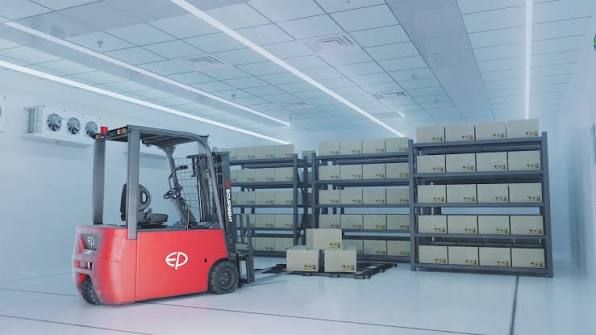
However, lithium-ion is not always an urgent replacement. For single-shift, low-utilisation cold rooms, the case is weaker. If forklifts run only a few hours per day, overnight charging outside the cold zone is feasible, and the existing lead-acid fleet is not near replacement, switching immediately may not deliver a strong payback.
EPower’s view is practical: lithium-ion is strongest where cold temperature, shift length, battery swapping, and downtime are already costing the operation money.
Epower Forklift warehouse addresses:
What Should Australian Cold Storage Operators Check Before Buying?
Before ordering a cold storage lithium forklift, Australian operators should confirm the full operating environment, not just the forklift capacity.
Use this checklist before making a purchase decision:
- operating temperature range
- fresh, chilled, frozen, or deep-freeze application
- shift pattern and daily runtime
- whether the forklift stays inside the cold zone
- number of cold-to-ambient transitions per shift
- whether charging will happen inside or outside the cold zone
- charger operating temperature and placement
- battery heater or thermal management
- BMS low-temperature charge protection
- cold storage rating of the forklift
- hydraulic oil specification
- wiring and connector protection
- IP rating
- tyre type
- cabin or operator comfort requirements
- expected battery monitoring and service support
For Victorian cold storage facilities around Melbourne’s west, Dandenong South, Laverton, Truganina, and regional food distribution corridors, the decision should be based on actual freezer temperature, door cycles, shift pattern, and charging infrastructure.
Which EP Electric Forklift Model Fits Cold Storage Applications?
EPower supplies EP Equipment electric forklifts configured for Australian warehouse and cold storage applications. For operations requiring cold-zone protection down to -20°C, the EP CPD15TVL includes the special feature Cold Storage Protection (-20°C), making it suitable for selected refrigerated and freezer applications where the unit specification matches the operating environment.
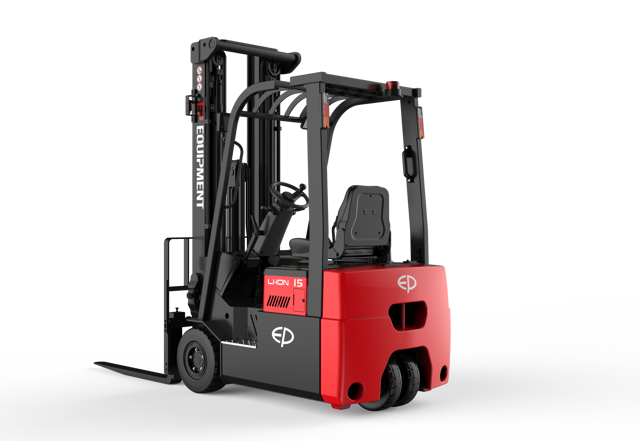
For deeper or more demanding freezer applications, EPower can help confirm whether a dedicated cold storage model, additional thermal protection, or a different charging setup is required.
Conclusion
Cold storage operations are switching to lithium-ion forklifts because the benefit is operational, not just technical. The right lithium-ion setup can reduce battery swaps, support opportunity charging, limit cold-to-warm transitions, remove battery-room complexity, and deliver more consistent power through the shift.
The switch makes the most sense for multi-shift cold storage, deep-freeze operations, and high-throughput food logistics where battery downtime already affects productivity. It is less urgent for low-use, single-shift cold rooms where the existing lead-acid process still works and replacement timing is not yet justified.
The key is correct specification. Lithium-ion alone does not make a forklift cold-storage-ready. The forklift, battery thermal management, charger, IP protection, hydraulic oil, tyres, and operating process must match the temperature range.
If you are evaluating lithium-ion forklifts for a cold storage facility, speak with the EPower team today!
Frequently Asked Questions
Can a standard electric forklift be used in a cold storage warehouse?
Not always. A standard electric forklift may perform well in ambient warehouse conditions but still be unsuitable for refrigerated or freezer applications. Cold storage forklifts should be specified with the correct battery thermal management, hydraulic oil, wiring protection, charger configuration and operating temperature rating for the intended environment.
Do lithium-ion forklifts need battery heaters in freezer applications?
Often yes. LFP lithium-ion batteries should not be charged below 0°C unless the battery system includes appropriate thermal management. For freezer applications, confirm that the forklift includes battery heating, a suitable battery management system (BMS) and the correct charging strategy for the operating temperature.
Can lithium-ion forklifts be charged inside a cold storage facility?
It depends on the charger specification, operating temperature and facility layout. In many installations, the charger is located outside the freezer while the forklift remains inside or near the cold zone. The charging layout should always be planned as part of the overall cold storage design.