Electric forklifts have already changed how many warehouses move goods. EP Equipment believes the next change will go much further.
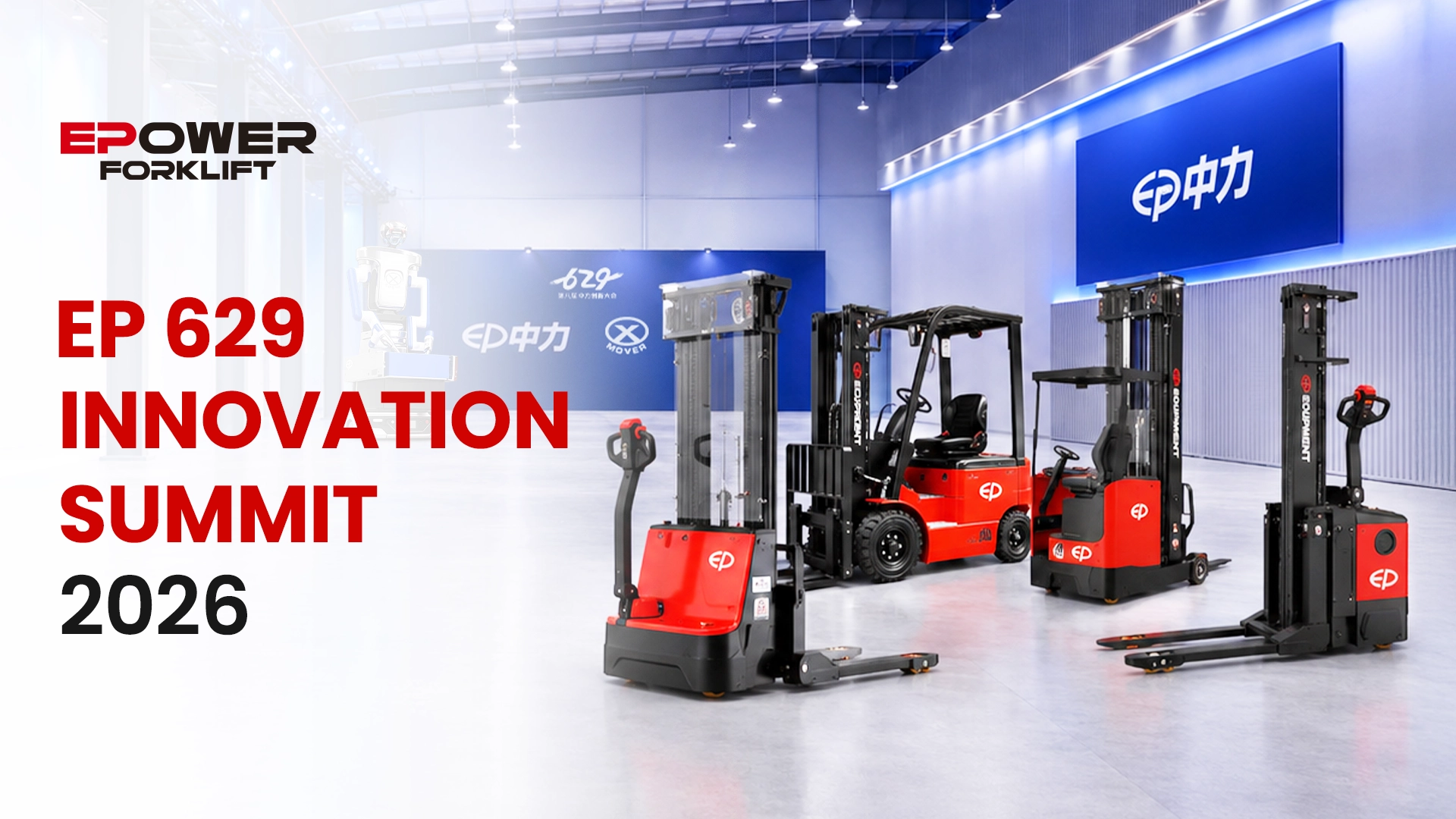
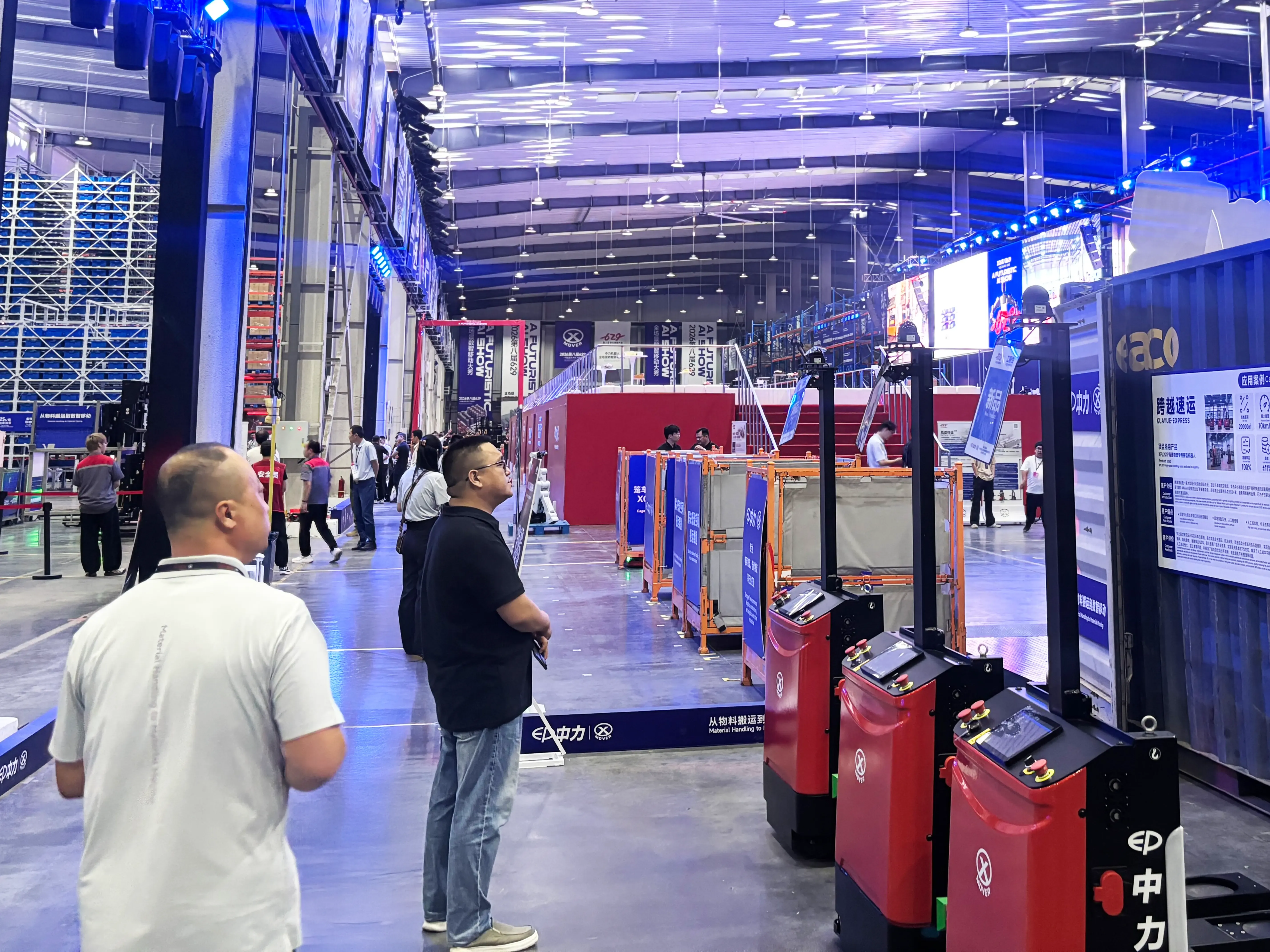
At the 8th EP 629 Innovation Summit, held in Anji, China on June 29-30, 2026, EP presented its latest work in artificial intelligence, robotics, autonomous transport and smart warehousing, under the theme "A Futuristic AI Show".
In the presentation, EP demonstrated equipment working across four connected parts of an operation: loading and unloading, internal transport, warehousing, and picking. It also set out five changes it expects to shape the industry, giving a clear view of where electric forklifts, warehouse robots and automated logistics are heading.
From Individual Equipment to Complete Working Scenarios
Businesses have traditionally selected material handling equipment one machine at a time: a counterbalance forklift for loading, a pallet truck for ground-level transport, a reach truck for high racking, an order picker for item-level fulfilment.
EP's approach starts with the complete operation instead. With a 120-year industry history, more than 2.4 million units installed globally across six equipment categories, and all six now moving into autonomous operation, EP argued the working scenario must become the focus rather than the machine. At the summit, EP recreated full workflows covering loading, transport, storage and picking, with each area designed to feed the next.
Loading and unloading
Spatial perception is the core technical challenge. Uncertain vehicle positions, variable weather, non-standard carriers and random stacking all create difficulty. EP's response combines:
- Lidar point-cloud recognition
- Autonomous path planning
- Vision-language model learning
The company stated that autonomous loading is now commercially viable.
Side loading
Non-standard carriers and the motion limits of smart forklifts create recognition difficulty and time cost. EP's answers include:
- An omnidirectional loading vehicle that eliminates steering time
- An industry-first fork-reach steering loader for small-angle adjustment
- Multi-vehicle collaboration targeting
Containers and rail boxcars
Tight interiors create their own constraints. EP showed:
- Short-wheelbase and omnidirectional counterbalance trucks
- Side-shift pallet trucks
- Planar and stacked four-fork designs to minimise body movement in confined spaces
This connects directly with the EPower Forklift range in Australia, where businesses already select different EP forklifts across transport, stacking, high-rack storage, order picking, heavy loads and outdoor work. The shift is less "which forklift should we buy?" and more "how should goods move through the whole site?"
From Moving Loads to Managing Intelligent Movement
A standard forklift moves a load from one place to another. An intelligent system also understands information about that load: its size, weight, material code, location, destination, timing, available route, and where an empty storage position sits.
Once that information is part of the process, the machine is no longer following a fixed instruction. EP framed this as the point where the industry stops moving objects and starts moving data, shifting material handling from an equipment business towards a service business.
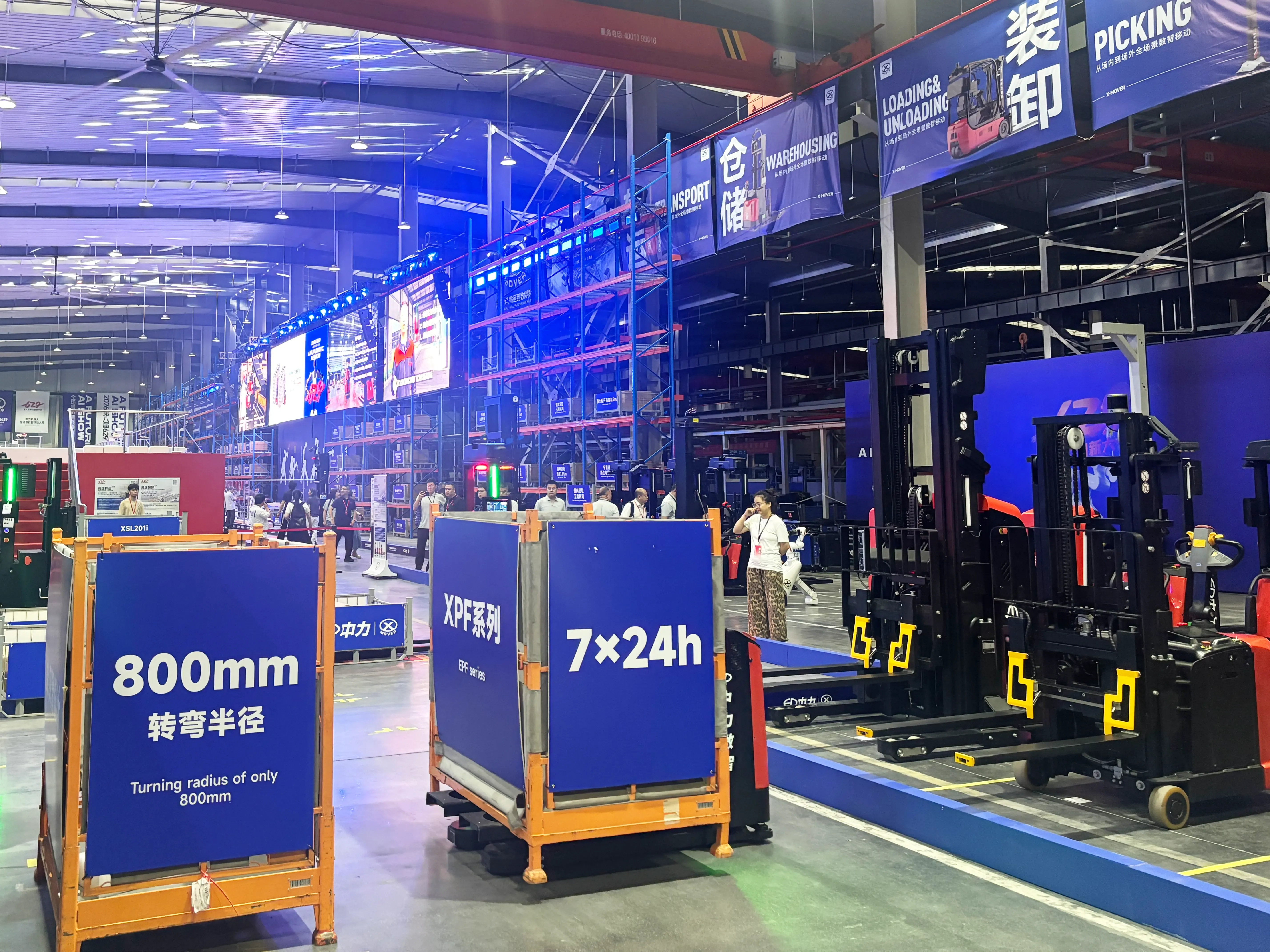
EP demonstrated transport from entry-level point-to-point units through to high-speed pallet trucks, narrow-aisle robots, towing units and omnidirectional machines. Aisle performance was a particular focus:
| Model | Narrowest aisle | Turning radius |
|---|---|---|
| XP1203 | 2,241 mm | 1,450 mm |
| XPF101 | 1,800 mm | 770 mm |
| XCD101 | 1,015 mm | 1,190 mm |
| XCP101E | 1,465 mm | 1,465 mm |
EP stressed that embodied AI means a robot must locate goods at the pickup point, find an empty slot at the destination, choose its own path and communicate directly with people. In particular, low-cost, low-disruption deployment was presented as the entry point to unmanned transport.
The scale is already significant, as EP cited one deployment running 194 vehicles across 30,000 square metres, handling 9,000 pallets per shift and peaking at 1,500 pallets per hour.
Furthermore, its X-MOVER dense-storage tower was shown with a 50 square metre footprint, 5,000 boxes per unit, 10 metre storage height, seven-day deployment and 25 seconds per box outbound.
For Australian operators, the message is that the future of forklifts for warehouse operations is not only electric. Equipment is becoming more connected and capable of working with other machines, and lithium-powered electric forklifts provide the foundation through their drive systems, charging flexibility and lower maintenance requirements.
From Moving Pallets to Picking the Goods Themselves
Most warehouse equipment is designed to move goods by pallet, cage or box. But the job does not end when the pallet reaches its destination. Individual cartons, components and products still need to be picked, sorted, placed or fed into the next process.
EP used this gap to frame robotics as the next frontier in material handling. If loading, transport and storage are becoming unmanned, then grasping is the logical next stage.
Its position was not that humanoid robots are the future of every warehouse. Instead, EP focused on mobile industrial robots with robotic arms. The argument is straightforward: task-specific tool-hands can be more useful than human-like hands, wheels can be more efficient than legs on warehouse floors, and industrial bodies can reach higher, lift heavier and repeat demanding movements beyond normal human capability.
All of this comes down to one goal: build a smart forklift directly instead of a humanoid.
- Tiny Spirit (UHX-01) is an industry-first integrated body-and-arm assistant for production stations, moving through tight areas to collect materials and deliver components. EP described its variable centre of gravity as the solution to balancing low self-weight against wide motion.
- Titan (XORD1-25 and XORD1-05) handles heavier picking. EP stated the telescoping-arm design extends working radius from 0.5 to 1.5 metres, with the body able to reach while leaning. Configurations cover single items under 10 kilograms for low-rack picking and box grasping up to 40 kilograms.
- Optimus (XORD2-8500) has a stated maximum working height of 10 metres, built for high-position tasks that carry real risk for human workers.
These products show EP extending beyond conventional electric forklifts, connecting pallet movement with item-level handling where work is repetitive, physically demanding or performed at height.
EP Equipment vs Toyota Electric Forklift: Which Is Better Value for Australian Warehouses?
From Internal Warehouse Movement to Connected Logistics
Warehouse equipment has traditionally operated within a defined site, with road transport treated separately. EP's fourth shift connects the two, presenting unmanned logistics as an irreversible trend driven by workforce pressure. Specifically, EP pointed to approximately 17 million drivers in its home market, with the age distribution implying that by 2030 a large share will no longer be able to drive, leaving a shortfall running into the millions.
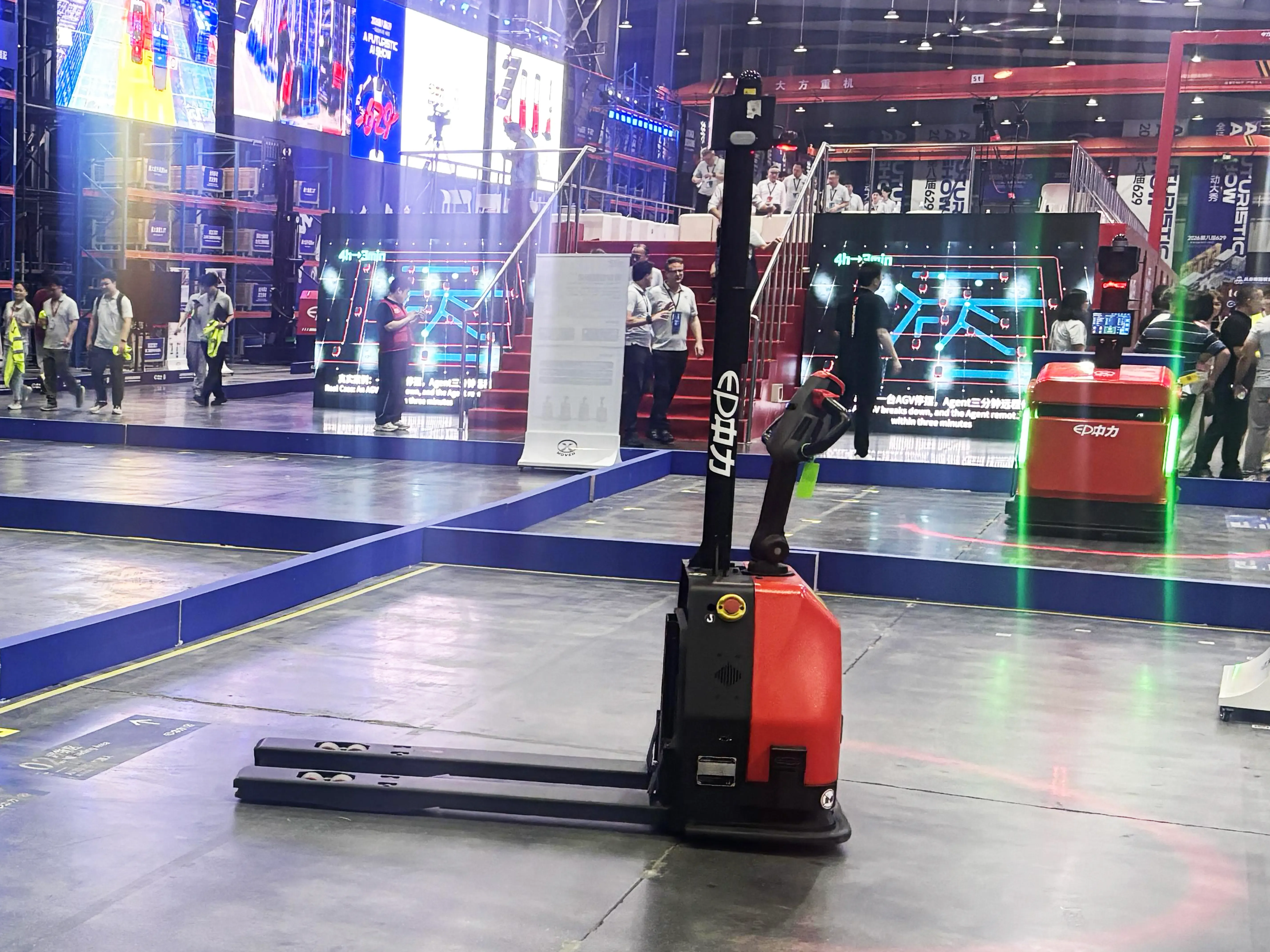
Meanwhile, the enabling technology is arriving at the same time. Map-less operation, end-to-end models, available compute and large volumes of Level 4 on-road data are clearing the barriers for unmanned trucks. Moreover, night-time unmanned logistics, with rail as the intercity trunk, is emerging as the new model.
As a result, loading docks, storage zones, production lines, outdoor yards and transport vehicles are becoming one continuous process.
From Human-Controlled Processes to AI-Supported Operations
The final shift is not simply about replacing operators with autonomous machines.
EP's argument is that machines are advancing far faster than the organisations around them. While material-moving intelligent agents develop at speed, the structures governing development, manufacturing, sales and service have barely changed. EP's position is that outdated ways of working will hold back the technology unless they change alongside it.
Yet, intelligent equipment still needs practical support. For example, a warehouse robot cannot deliver value if it is difficult to configure, service or integrate into daily operations.
That aligns with EPower Forklift's position in Australia. EPower matches equipment to the actual application, including load, racking, floor, aisle width, operating hours and charging window.
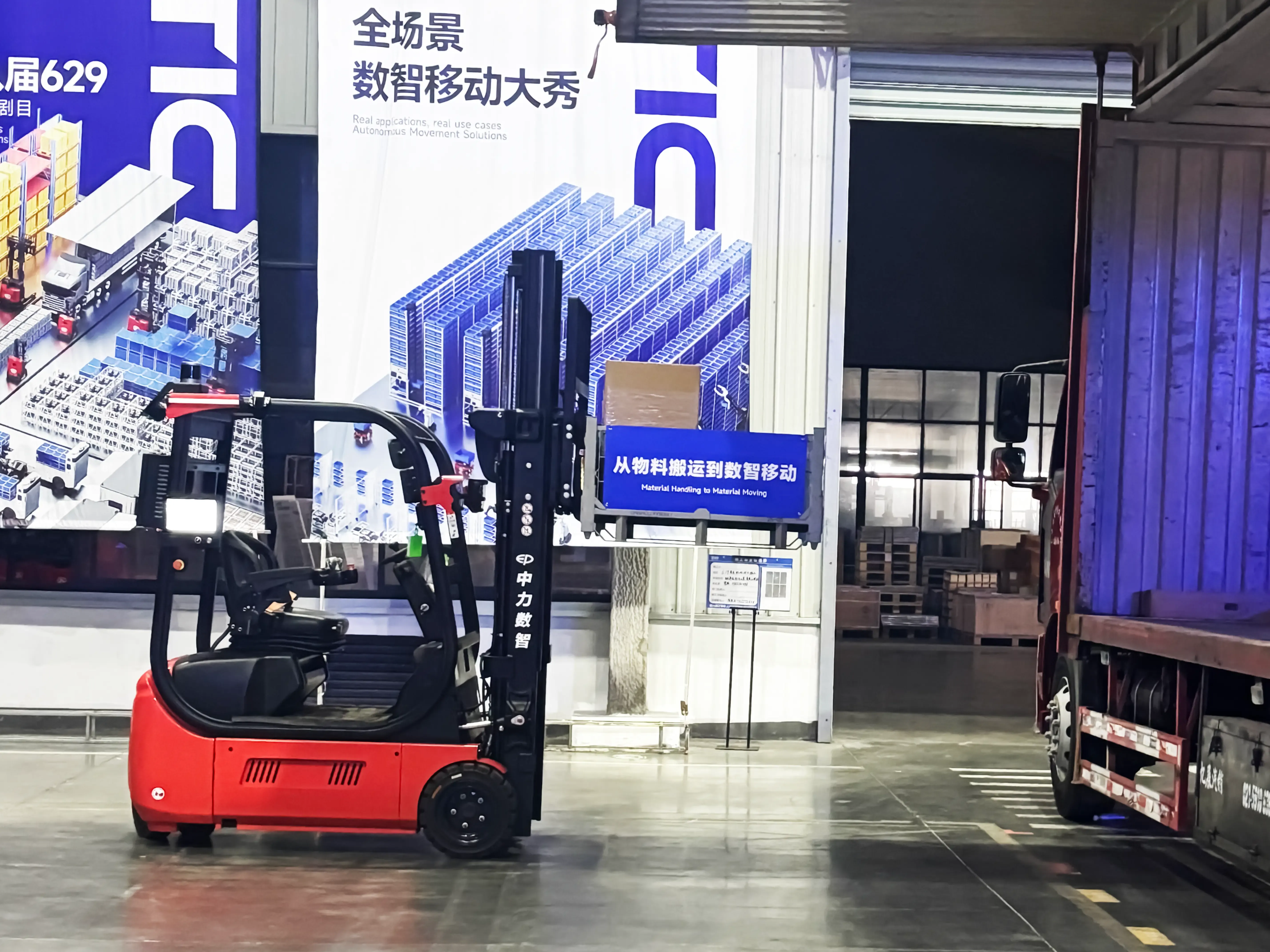
What This Means for Australian Businesses
EP closed by announcing increased investment in intelligent material movement through a new company, Hangzhou Unimover Technology, with the stated ambition of becoming the world's largest material-movement intelligent-agent company.
These technologies represent EP's global direction. They do not mean every model shown is currently available in Australia. But the summit gives a clear picture of the next stage:
- Electric equipment works as part of complete systems
- Goods and movements managed through real-time data
- Robots supporting difficult picking tasks
- Indoor and outdoor logistics becoming connected
- AI assisting with planning, deployment and service
EP describes this as moving from material handling to material moving, building on the electric-first strategy already visible across EPower's Australian range of counterbalance forklifts, reach trucks, pallet trucks, stackers and order pickers.
For businesses reviewing their operations, the first step does not need to be full automation. It may begin with replacing an ageing diesel forklift, selecting a lithium counterbalance forklift, or choosing equipment that better fits the site.
EPower Forklift can assess your load requirements, lift height, aisle width, operating environment and shift pattern to identify the right EP Equipment solution.
Speak with EPower Forklift to explore electric material handling equipment for your warehouse, logistics site or industrial operation.
[]{.lark-record-clipboard}