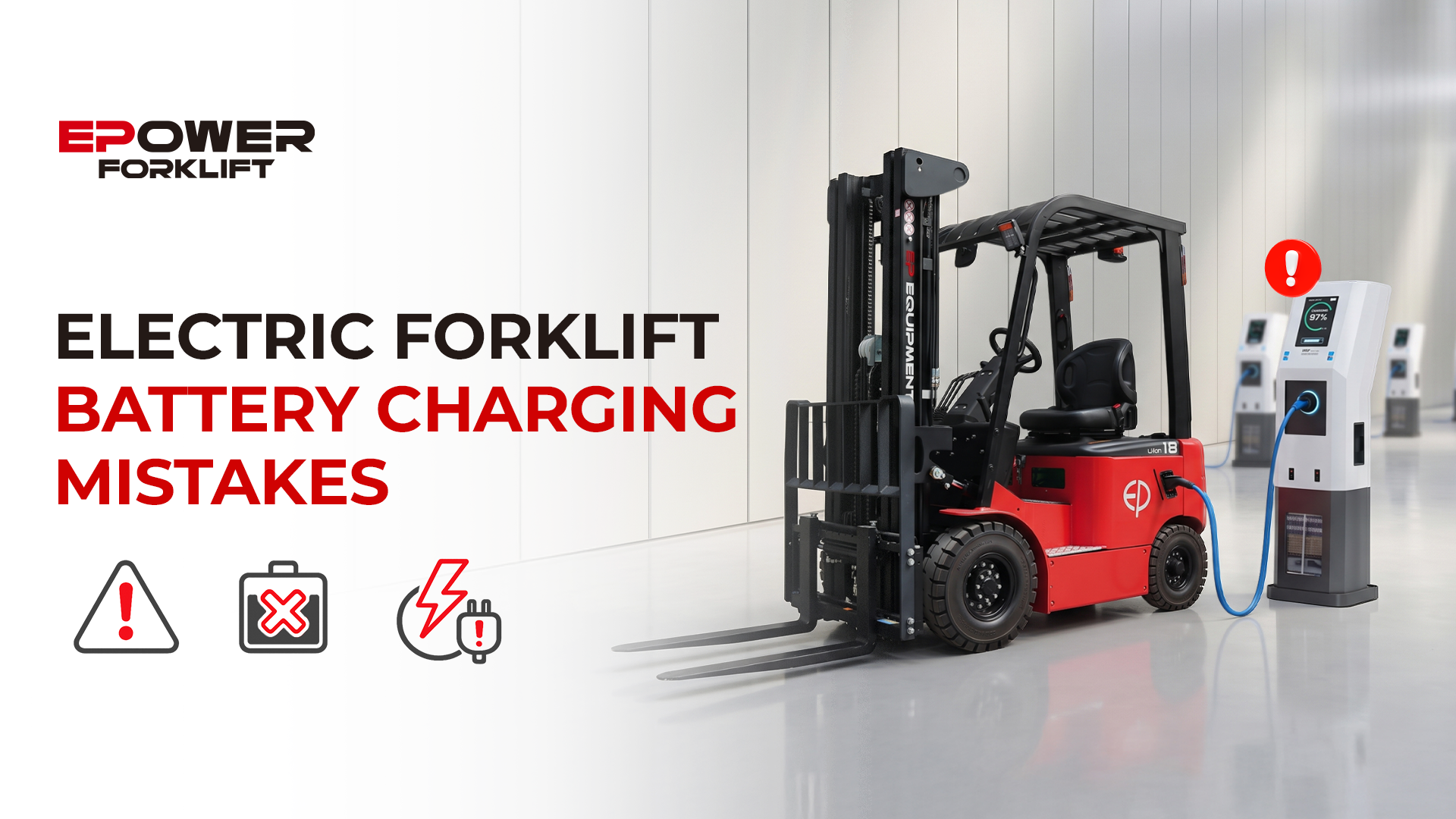
Many forklift battery failures are not random. They follow a pattern — and that pattern often traces back to charging. The most common electric forklift battery charging mistakes are deep discharging, using lead-acid habits on lithium-ion batteries, interrupting lead-acid charge cycles, using incompatible chargers, charging in extreme temperatures, and storing batteries at the wrong state of charge.
A fleet manager running a warehouse operation in Melbourne contacted us about three electric forklifts showing reduced run time in their second year. All three were running flat before end of shift. He assumed the batteries were defective. When we pulled the BMS data, the units had been regularly discharged to under 10% SOC — in some cases to 5 or 6% — because operators were pushing through end-of-shift to avoid interrupting a pallet run. The batteries were not showing the pattern we would normally expect from a manufacturing defect. The issue was charging behaviour: they had been repeatedly discharged too deeply from the start.
Depending on chemistry and operating conditions, lithium-ion forklift batteries typically deliver 3,000 to 5,000 cycles under correct charging. LFP (lithium iron phosphate) chemistry, increasingly common in modern electric forklifts, sits at the higher end of that range. Under poor charging practices, the same battery degrades noticeably in a fraction of that time.
Why Do Lead-Acid and Lithium-Ion Batteries Need Different Charging Habits?
The single most dangerous situation in a mixed fleet is applying lead-acid charging habits to lithium-ion units. Both are "electric forklift batteries." Both charge from a wall outlet. Their charging requirements are opposite in several critical areas.
Lead-acid needs complete charge cycles. Interrupt a lead-acid charge at 70% and you leave sulfation unreversed. Do it repeatedly and the sulfation becomes permanent capacity loss. Lead-acid also needs periodic equalization charging — a controlled overcharge every 5 to 10 cycles to break down residual sulfation.
Lithium-ion does not need complete charge cycles. It benefits from frequent partial top-ups. And it must never be equalization charged — applying equalization to a lithium-ion battery can cause serious cell damage.
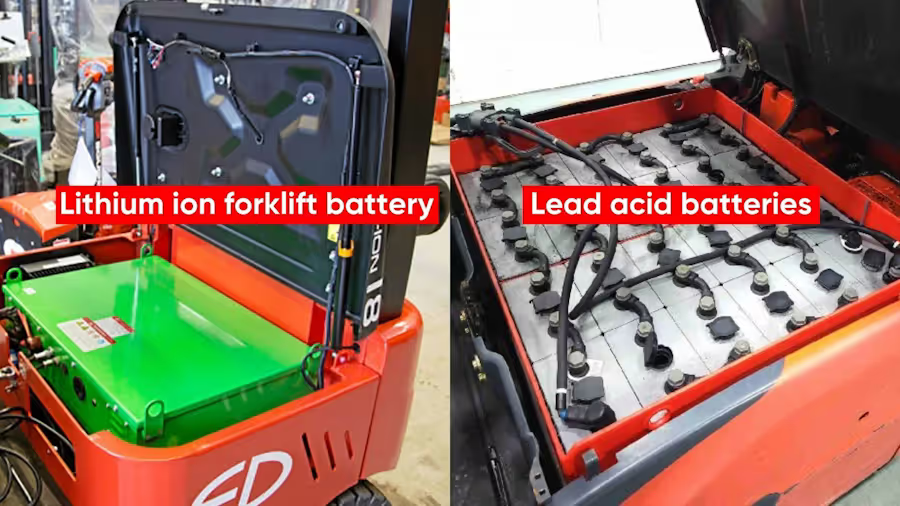
The transition from lead-acid to lithium-ion fleets is where most of the mistakes we see originate. The equipment changed. The habits did not.
Mistake 1: Running the Battery Too Low
Repeated operation below 10 to 15% State of Charge may accelerate cell degradation and increase the risk of certain failure modes under some conditions. Modern BMS systems will cut off the battery before it reaches dangerous territory — but the region between 10 and 20% SOC, visited repeatedly, creates cumulative stress that shortens cycle life.
The behavioural driver is always the same: one last pallet run. The low battery warning appears at 20% SOC and the operator decides to finish the current task before plugging in. At a fleet level, across dozens of shifts per week, this adds up to a measurable reduction in battery lifespan.
The low battery warning should be treated as a charging trigger, not as spare capacity to be used up. As a practical rule, operators should treat 20% SOC as the point to plan charging, not the point to start calculating how much work remains.
Mistake 2: Interrupting Lead-Acid Charge Cycles
For lead-acid, an interrupted charge is more damaging than most supervisors recognise.
We had one warehouse running a mixed fleet — lead-acid reach trucks alongside newer lithium-ion counterbalance units. The lead-acid reach trucks were being pulled off the charger after lunch breaks to cover afternoon shifts. Each interruption left the battery at 60 to 70% charge. Over four months, three of the four reach truck batteries showed significant capacity loss. The fourth had been consistently charged overnight to completion. It was fine.
Equalization is the other lead-acid practice that gets skipped. It requires a dedicated charge window — typically a weekend — and feels like it cannot be worth the time. It is. A lead-acid battery without regular equalization accumulates sulfation across cells at different rates. Cell imbalance builds slowly and becomes expensive.
Mistake 3: Using Opportunity Charging on the Wrong Battery Type
Most modern lithium-ion forklift batteries are designed to support opportunity charging when used with a compatible charger and within manufacturer-approved SOC and temperature limits. Plugging in during a lunch break, a shift changeover, a 20-minute loading dock wait — all of these are good practice. They keep the battery operating between 20 and 80% SOC, which is where lithium-ion chemistry experiences the least degradation per cycle.
The mistake at one end: running lithium-ion on a lead-acid schedule. Full charge overnight, nothing during the day, shift ends at 15% SOC. This is cycling deeper than necessary and accumulating more stress per shift than the chemistry requires.
The mistake at the other end: opportunity charging lead-acid. Partial charges throughout the day prevent full sulfation reversal. The operator doing this on a lithium-ion forklift and a lead-acid forklift in the same warehouse is doing the right thing on one machine and damaging the other. Same behaviour, opposite outcomes.
Mistake 4: Charging in Extreme Temperatures
This one matters more in Australia than most charging guides written for European or North American markets acknowledge.
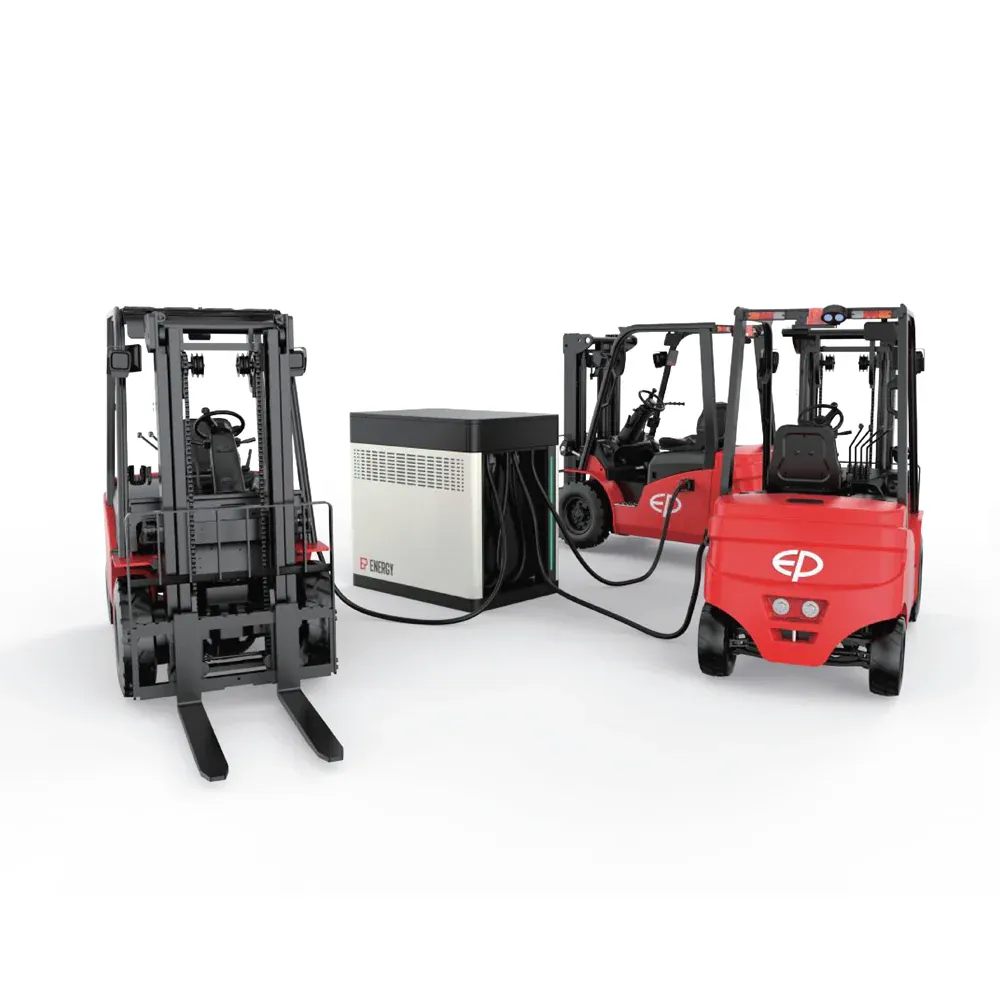
Charging a lithium-ion battery when cell temperature is above 45°C puts stress on the electrolyte. The BMS will throttle or pause charging when temperature exceeds safe limits — but that protection depends on the charger being compatible and communicating with the BMS correctly. A non-compatible charger charging on fixed parameters bypasses that protection.
In practice: a forklift worked hard through a Queensland summer afternoon has a battery temperature well above ambient. Plugging in immediately is not automatically safe. Fifteen to twenty minutes in a shaded, ventilated area first costs nothing.
Cold matters too. Charging lithium-ion below 0°C can cause lithium plating on the anode. Cold storage operations need to account for battery warm-up time before connecting to chargers.
Mistake 5: Using the Wrong Charger
We have seen this happen more than once: a charger fails, someone sources a replacement based on voltage alone, and the replacement matches voltage but uses a different charging profile. On lead-acid, this often goes unnoticed. On lithium-ion, the consequences can be significant — incorrect cutoff voltage, no BMS communication, no temperature monitoring.
Modern lithium-ion forklift batteries communicate with compatible chargers via CAN-BUS protocol. The charger reads cell voltage, temperature, and SOC from the BMS and adjusts charge parameters in real time. A non-compatible charger operates on fixed parameters without that data.
Voltage match is necessary but not sufficient. Chemistry profile, cutoff voltage, and BMS communication must all align. If you need a replacement charger, confirm compatibility with your forklift manufacturer or authorised dealer before purchasing.
Why Lithium Forklifts Are Replacing Fuel Models in Australia?
Mistake 6: Storing Batteries at the Wrong State of Charge
This mistake is seasonal and therefore easy to miss until the damage has already happened.
Lithium-ion stored at 100% SOC for weeks degrades faster than lithium-ion stored at 40 to 60% SOC. Stored at 0% SOC, the battery may enter deep discharge protection and not recover normally. The correct storage SOC for lithium-ion is 40 to 60%.
Lead-acid requires the opposite — store fully charged and top up monthly because it self-discharges at around 5% per month.
Christmas shutdowns are a common time for this issue to appear. We encounter operators discovering their electric forklifts are showing reduced capacity after six weeks parked "fully charged." Fully charged is correct for lead-acid. It is not correct for lithium-ion. Charge to 50% SOC before any shutdown longer than two weeks.
How to Tell If Charging Has Already Damaged the Battery?
Reduced run time that appears over weeks rather than years is the clearest indicator. Normal wear is gradual over years. Charging-related degradation is faster and more uneven across a fleet — units with worse charging habits show problems earlier than others of the same age.
Abnormal charge acceptance is the second indicator. A battery reaching "full" in significantly less time than previously has less capacity to fill. A battery taking longer than normal with charger errors showing has cell imbalance from incomplete cycles.
On lead-acid: white crystalline deposits on terminals, electrolyte levels dropping faster than normal, excessive gassing during charging.
On lithium-ion: persistent BMS error codes that reappear after charging. A recurring error code is not a software glitch — it is the BMS flagging a condition it has detected in the cells. Address recurring codes before continuing to operate.
Electric Forklift Battery Charging Rules: Quick Reference
Charging limits vary by battery chemistry, BMS configuration, charger model, and manufacturer specification. Always follow the forklift and battery manufacturer’s operating manual where it differs from general guidance.
| Battery Type | Best Practice | What to Avoid | Why It Matters |
|---|---|---|---|
| Lithium-ion | Opportunity charge during breaks; keep between 20–80% where possible | Repeatedly running below 10–15% SOC | Reduces deep-cycle stress and supports longer service life |
| Lead-acid | Complete full charge cycles; equalise regularly | Partial charging and interrupting charge cycles | Helps prevent sulfation and cell imbalance |
| Storage | Lithium-ion: store around 40–60% SOC | Storing lithium-ion at 0% or 100% for long periods | Reduces storage-related capacity loss |
| Charger | Use manufacturer-approved compatible chargers | Choosing a charger by voltage alone | Protects BMS communication, cutoff voltage, and temperature control |
What Is the Correct Charging Schedule for Electric Forklift Batteries?
Single-shift lithium-ion: plug in when SOC reaches 20%; opportunity charge during any downtime of 15 minutes or more; before any shutdown longer than two weeks, reduce to 50 to 60% SOC.
Multi-shift lithium-ion: opportunity charge at every changeover and break; aim to keep SOC between 20 and 80% across shifts; a full charge to 100% once per day is fine but not required every cycle.
Lead-acid: complete charge after every shift without interruption; equalize every 5 to 10 cycles; check water levels after each equalization.
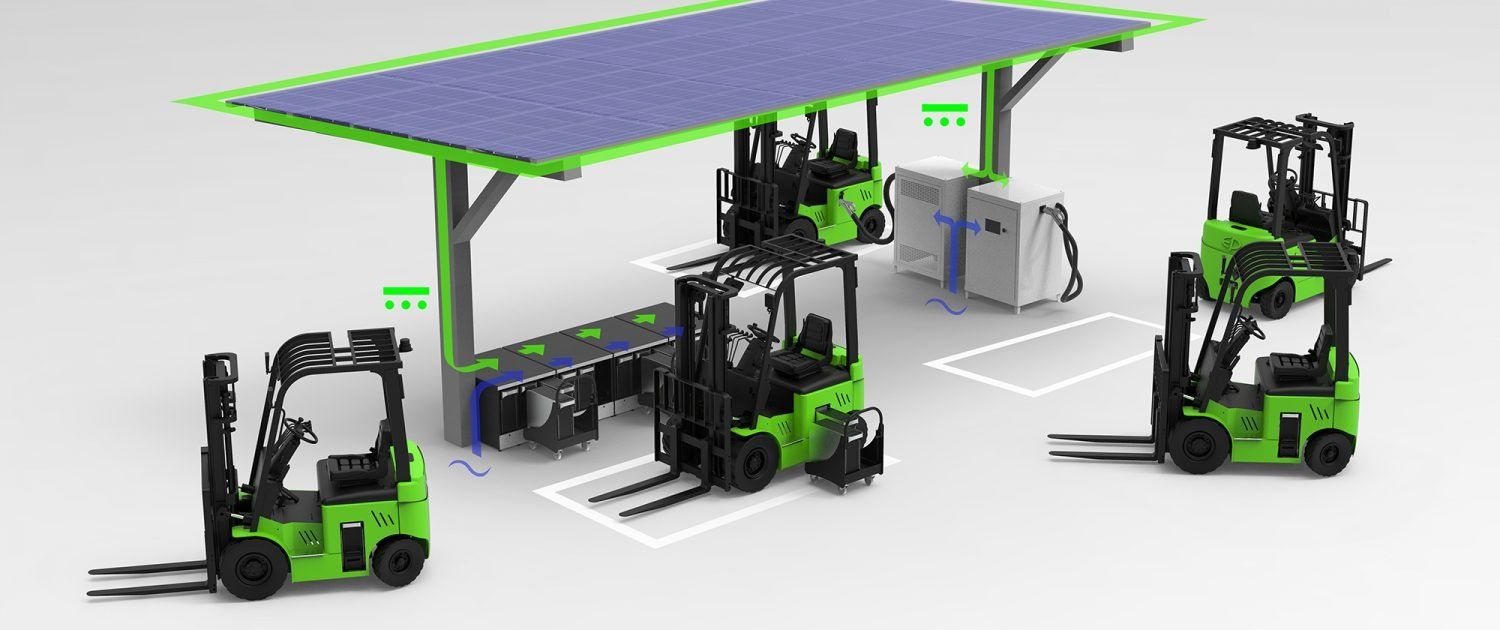
For lead-acid batteries, the charging area also matters. Charge in a ventilated area, keep cables and connectors in good condition, avoid open flames near charging stations, and make sure operators use the correct PPE when checking electrolyte levels. These practices do not just protect battery life — they reduce avoidable safety risks around the charging station.
Conclusion
The charging practices in this guide apply to every electric forklift — regardless of brand or model. Battery lifespan is not determined by the manufacturer's rating alone. It is determined by what happens every shift, at every charge point, across the battery's working life.
Epower distributes electric forklifts across Australia. When buyers come to us — whether for purchase or rental — we cover charging practices as part of the handover because we know it is where most avoidable battery problems begin. A forklift that is well charged costs less to run and stays in service longer. That matters whether you are buying one unit or managing a fleet of twenty.
If you are choosing an electric forklift for your warehouse, speak with the EPower team before you buy. We can help you match the right forklift, battery, charger, and charging routine to your shift pattern and operating environment. Speak with the EPower team today!