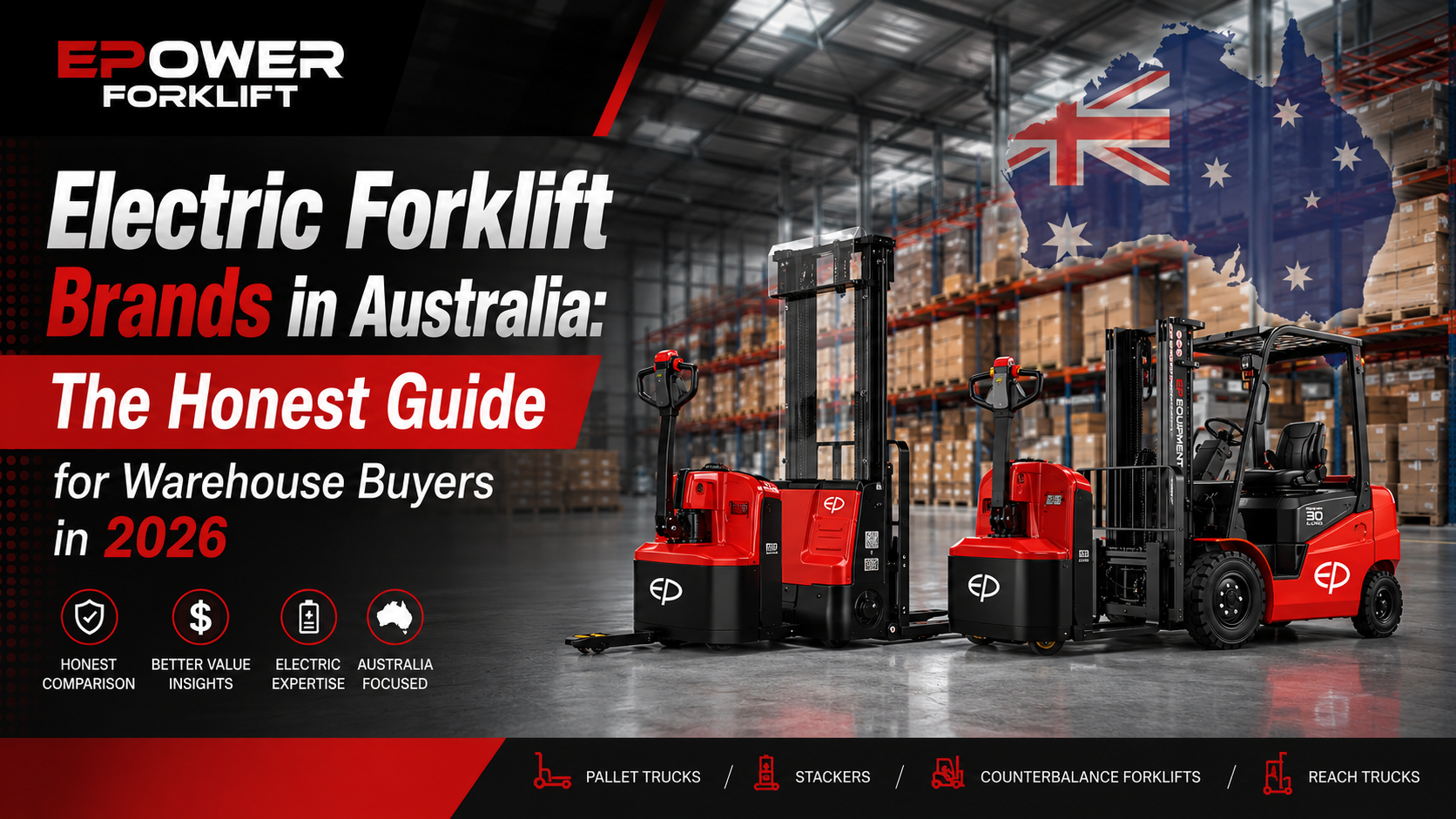
Most brand guides for forklifts follow the same pattern: list ten brands, say something positive about each one, and leave the buyer no closer to a decision. This guide does something different. It tells you which brands are genuinely strong in Australia, where each one has limitations, and how to match brand to application — including the cases where EP Equipment, the brand EPower distributes, is not the right answer.
EPower Forklift is EP Equipment's authorised Australian distributor. We have a direct commercial interest in recommending our product. We also have a direct interest in buyers making good decisions, because buyers who choose the wrong brand for their operation do not stay customers for long. Those two interests point in the same direction: give you the information to choose correctly.
The Australian electric forklift market in 2026 has more brand options than at any point in its history. That is good for buyers on price and technology. It makes the selection decision harder. This guide cuts through it.
How Should Australian Buyers Evaluate Electric Forklift Brands?
The right framework for evaluating electric forklift brands in Australia starts with four criteria — in this order: after-sales network depth at your specific location, battery technology standard, total cost of ownership over five years, and application fit for your operation.
Global brand reputation does not appear in that list. It is not irrelevant, but it is consistently overweighted by buyers who then discover their chosen brand has two authorised service technicians in their state. The pattern repeats: a buyer selects a globally recognised name, takes delivery, and six months later discovers that service response times are measured in weeks rather than days because the local network cannot support the volume.
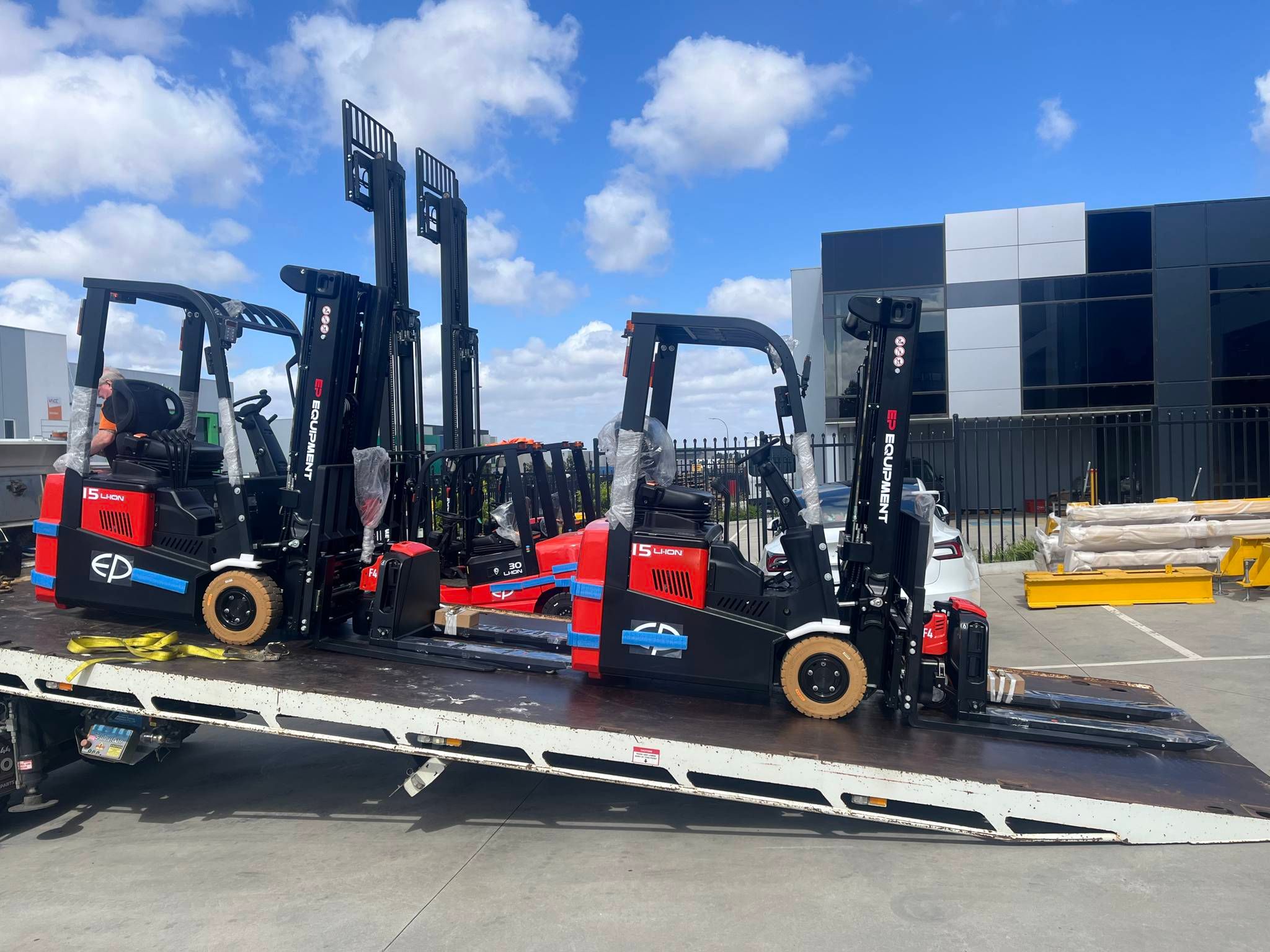
The four criteria that actually predict ownership experience are these
After-sales network depth at your site
Not nationally — at your site. Ask any dealer: how many authorised service technicians operate within 100km of your location? What is the standard parts lead time for the most common service items? Is warranty processing handled locally or does it route through an overseas process? These questions separate brands with genuine Australian infrastructure from brands with a presence on paper.
EPower Forklift operates
three warehouse and showroom locations
across Victoria, Australia.
Battery technology standard
Whether lithium-ion is included in the purchase price or costs an additional AUD 6,000 to 9,000 as an option changes the true cost comparison between brands significantly. The battery warranty period — 2 years, 3 years, or 8 years — determines how much financial risk is shared between you and the manufacturer for the majority of the forklift's working life.
Total cost of ownership over five year
Purchase price is a misleading comparison metric when battery technology standard, energy efficiency, maintenance frequency, and warranty coverage differ between brands. A forklift that costs AUD 12,000 more at purchase but includes a lithium-ion standard, carries an 8-year battery warranty, and has lower scheduled service costs can have a lower 5-year TCO than the cheaper unit.
Application fit
A brand's strength in standard counterbalance forklifts does not transfer automatically to reach trucks, order pickers, or heavy tonnage. Evaluate brands by their proven application strength in Australia — not their global product catalogue.
Recommend for you:
| Evaluation Criterion | What to Ask | Why It Matters |
|---|---|---|
| After-sales network | Authorised service points within 100km? | Determines downtime duration at breakdown |
| Battery technology | Li-ion standard or optional add-on? | Affects 5-year TCO by AUD 6,000 to 15,000 |
| Warranty terms | Battery warranty period and conditions? | Allocates financial risk between buyer and manufacturer |
| Application fit | Proven strength in AU for your specific application? | Spec similarity does not equal operational equivalence |
| Resale value | Used market depth for this brand in AU? | Critical if replacement cycle under 7 years |
The most common mistake we see is treating global brand reputation as a proxy for local after-sales support. A brand can have an excellent international reputation and thin service coverage in Australia. Always ask: how many authorised technicians are within 100km of your site — not how many countries the brand exports to.
Which Electric Forklift Brands Operate in Australia in 2026?
The Australian electric forklift market in 2026 is broadly divided into two groups — not by product quality, but by market positioning, service network structure, and operational priorities.
Established legacy brands include Toyota, Linde, Crown, and Jungheinrich. These manufacturers have operated in global material handling markets for decades and have built extensive Australian service infrastructure, strong brand recognition, and mature resale markets. They are often the default choice for large fleets, regional operations, and businesses where nationwide service coverage is a primary requirement.
Electric-first manufacturers include EP Equipment, Heli, and Hangcha. These brands have built their modern product strategies around electric material handling, lithium-ion technology, and lower total cost of ownership. Service networks are concentrated in major metro areas and continue to expand. EP Equipment is the strongest-positioned brand in this category, ranking among the world's largest electric forklift manufacturers and offering one of the most comprehensive lithium-ion product ranges available in Australia.
Brands without an authorised Australian dealer structure — available through grey channels at the lowest purchase prices — are not covered in this guide. For any forklift operating more than 500 hours per year, the absence of authorised local service support is usually a greater operational risk than the initial purchase saving.
| Category | Brands | Typical Positioning | AU Service Network |
|---|---|---|---|
| stablished Legacy Brands | Toyota, Linde, Crown, Jungheinrich | Service depth, resale value, long market history | National including regional |
| Electric-First Manufacturers | EP Equipment, Heli, Hangcha | Lithium-ion adoption, lower TCO, strong value proposition | Metro-focused, expanding |
| No AU authorised dealer | Various | Lowest purchase price | None — not recommended |
The most important distinction is not premium versus non-premium. It is understanding what you are paying for.
Established legacy brands generally command higher prices because of their mature dealer infrastructure, regional service coverage, and stronger resale markets. Electric-first manufacturers focus on reducing ownership costs through lithium-ion standardisation, simplified maintenance, and lower acquisition costs.
The right choice depends less on brand prestige and more on your operating environment, service requirements, fleet size, and total cost of ownership objectives.
Established Legacy Brands — What Toyota, Linde, Crown, and Jungheinrich Offer
Established legacy brands have earned their position through extensive service networks, long operating histories in Australia, and strong resale values. For buyers managing large fleets, regional sites, or mission-critical operations, these factors often justify the higher purchase price.
Toyota — The Market Leader and When It Is the Right Choice
Toyota remains the benchmark brand for Australian forklift fleets. Its nationwide dealer network, strong parts availability, and established service infrastructure make it a common choice for regional and remote operations where uptime is critical.
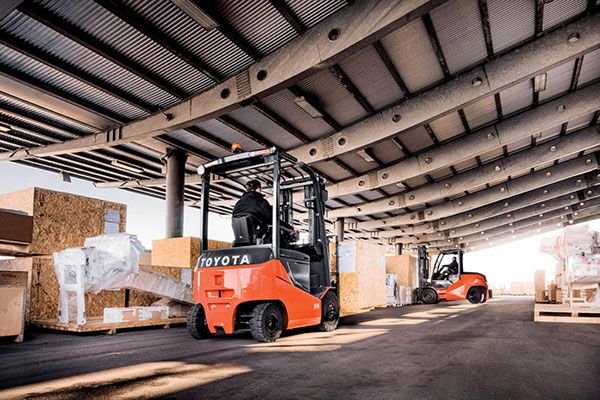
Toyota's trade-off is cost. Many models still use lead-acid batteries as standard, with lithium-ion available as an added-cost option. Purchase prices and dealer labour rates are typically among the highest in the market, although resale values are also among the strongest.
Toyota is generally the right choice when:
- National service coverage is essential
- The site is regional or remote
- Reach truck operations exceed 10 metres
- Large fleets require national service agreements
- Existing Toyota fleets make parts commonality important
Read more:
EP Equipment vs Toyota Electric Forklift: Which Is Better Value for Australian Warehouses?
Linde, Crown, and Jungheinrich — Specialists Worth Knowing
Linde, a German manufacturer, has been growing its Australian presence for over a decade and won the National Forklift Championship in 2018 — a data point that resonates with Australian operators who follow the industry. Linde's hydrostatic drive technology on select models delivers smoother load handling and more precise control than standard electric drive — a meaningful advantage in manufacturing environments, food and beverage facilities, and pharmaceutical warehousing where product integrity and operator fatigue management are priorities. Linde's regional dealer coverage is thinner than Toyota's in several states, which limits its applicability for remote operations despite its product strengths.
Crown is a US manufacturer whose application strength is concentrated in order pickers and narrow-aisle equipment. Crown order pickers are standard specification in many large Australian distribution centres — not because of general brand strength, but because Crown has invested specifically in this application category and the Australian market recognises it. Crown is less competitive in standard counterbalance forklifts, and buyers who need a full-range solution from a single brand will find the product portfolio narrower than Toyota or EP Equipment.
Jungheinrich is a German manufacturer and top 3 global electric OEM with strong lithium-ion integration and energy management systems across its range. Its Australian dealer presence is growing but remains thinner than Toyota or Linde in regional coverage. For energy-conscious operations with good metro access to service, Jungheinrich is a credible premium alternative. For operations where regional service coverage matters, the network depth is not yet there.
All three brands are credible choices within their respective specialisations. None currently matches Toyota's nationwide service infrastructure, but each offers distinct strengths that can justify the investment when aligned with the right application. The key is not choosing the most established brand — it is choosing the brand whose strengths best match the operational demands of your business.
Electric-First Manufacturers — EP Equipment, Heli, and Hangcha
Electric-first manufacturers focus on lithium-ion technology, lower operating costs, and competitive acquisition pricing. For many metro-based warehouse operations, they offer a compelling alternative to established legacy brands.
EP Equipment — Full Electric Specialist and EPower's Core Product
EP Equipment is EPower's primary product offering. That means this section carries a commercial bias that buyers should account for. What follows is our honest assessment — including the parts where EP Equipment is not the right answer.
EP Equipment was established in 1993 in Hangzhou, China. Unlike traditional manufacturers that added electric products alongside combustion ranges, EP Equipment is focused entirely on electric material handling equipment. EV Magazine's 2024 global ranking places EP Equipment in the top 5 electric forklift OEMs alongside Toyota, Jungheinrich, Crown, and Kion Group. The manufacturing footprint covers 700,000 square metres across six production bases, with exports to over 100 countries.
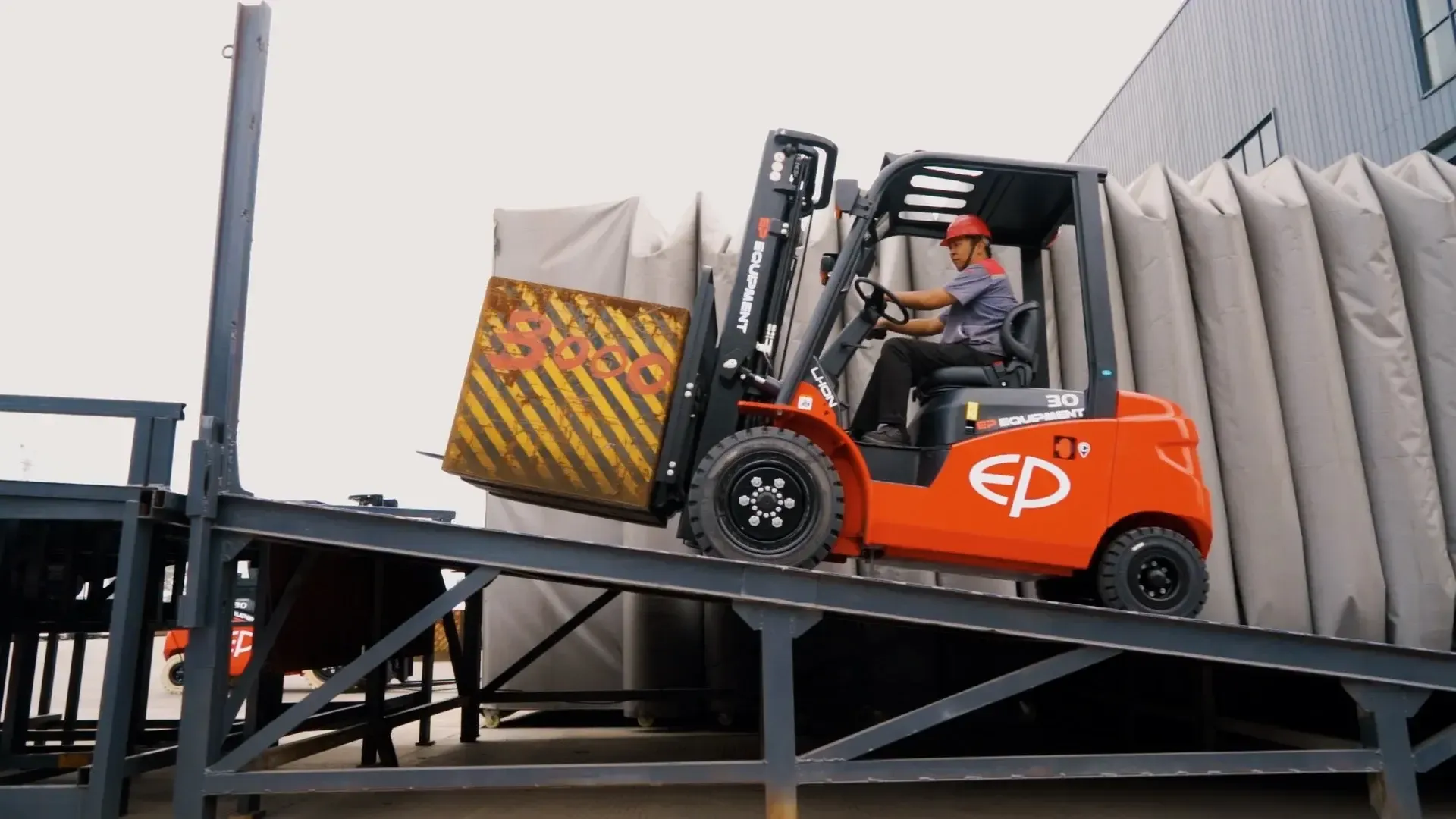
The full product range available through EPower in Australia covers every major warehouse equipment category: Counterbalance Forklift, Reach Truck, Pallet Truck, Pallet Stacker, Order Picker, Heavy Tonnage, and Rough Terrain. A warehouse operator can source their entire electric fleet from a single manufacturer through a single Australian distributor.
Three technical differentiators define EP Equipment's value case in the Australian market.
- Lithium-ion batteries are standard across the range
- Includes an industry-leading 8-year battery warranty
- Five-year ownership costs are typically lower than comparable legacy-brand alternatives
EP Equipment is particularly well suited to metro-based warehouse operations where lithium-ion adoption, operating costs, and overall fleet value are key decision drivers.
Buyers operating in regional or remote locations should place additional emphasis on local service coverage and parts availability when comparing brands, as support infrastructure varies between manufacturers and locations.
For high-reach warehouse applications above 10 metres, EP Equipment offers competitive specifications, although some buyers may also wish to compare brands with longer operating histories in this specific application category within Australia.
As with any equipment purchase, resale value should be considered alongside purchase price, operating costs, warranty coverage, and expected replacement cycles. The Australian used market for EP Equipment continues to mature as the installed fleet base grows across the country.
distributes EP Equipment because we believe it delivers the strongest total cost of ownership for the majority of Australian warehouse operators we work with.
Heli and Hangcha — Alternatives with Important Caveats
Heli and Hangcha are Chinese manufacturers with genuine Australian dealer presence in major cities and product ranges covering electric counterbalance, reach truck, and pallet equipment. Both offer competitive pricing in a similar range to EP Equipment.
The honest differentiation from EP Equipment comes down to three factors. Battery warranty terms are shorter — neither currently offers an equivalent to EP Equipment's 8-year warranty, which affects the TCO calculation meaningfully over a 5-year ownership period. Lithium-ion is available but not uniformly standard across their ranges in the Australian market, meaning buyers need to verify configuration carefully rather than assume. The global manufacturing scale of both brands is smaller than EP Equipment's, which has implications for long-term parts supply confidence and the depth of technical resources available to the Australian dealer network.
For standard counterbalance applications in metro areas with adequate service access, both are viable alternatives worth quoting. The questions to ask are the same as for any brand: warranty terms specifically, local service capacity, and parts lead time from the dealer's Australian inventory.
Which Electric Forklift Brand Is Right for Your Australian Warehouse?
Better value is not a universal answer. It depends on your location relative to the service network, your specific application and lift height requirements, and your fleet replacement cycle.
| Your Situation | Recommended Brands | Primary Reason |
|---|---|---|
| Small to Mid-Sized Metro Fleet (1–10 Units) | EP Equipment, Toyota | TCO versus service network depth |
| Large Fleet Requiring National Service Coverage | Toyota, EP Equipment | Service SLA versus fleet economics |
| High-Rack Warehousing Above 10 Metres | Toyota, Jungheinrich | Proven reach-truck performance |
| Precision Manufacturing or Food Production | Linde, Toyota | Handling precision and ergonomics |
| Order-Picking Distribution Centre | Crown, EP Equipment | Application-specific equipment |
| Regional or remote site, any fleet size | Toyota, Linde | Parts on-shelf locally, service SLA critical |
| Regional or Remote Operations | Toyota, Linde | Service coverage and parts availability |
| Floor-Level Warehouse Transport | EP Equipment, Jungheinrich | Strong warehouse equipment range and low operating costs |
The matrix is not intended to identify a single "best" forklift brand. It reflects where each manufacturer's strengths are most likely to align with a particular operating environment.
For the majority of metro-based warehouse operators running standard electric counterbalance forklifts in the 1.5 to 3.5 tonne range, EP Equipment will often deliver the strongest overall value proposition when purchase price, battery technology, warranty coverage, and operating costs are assessed together.
In other applications, the decision criteria change. National service coverage, regional support requirements, high-reach performance, or specialised equipment categories may justify considering alternative manufacturers.
What Should You Verify Before Signing an Electric Forklift Purchase Agreement?
Five questions apply to every electric forklift purchase, regardless of brand. EPowerrecommends asking them of any dealer — including us.
- How many authorised service technicians operate within 100km of my site — not nationally, at my location specifically.
- What is the standard lead time for the most common service items from your Australian parts inventory?
- How are warranty claims processed — is the process handled locally or does it route through an overseas procedure?
- What is the battery warranty period and what conditions void it — get this in writing, not verbally?
- Can you provide references from existing customers running this brand in a similar application and a similar location?
A dealer who cannot answer all five questions clearly is telling you something important about their service infrastructure before you have committed any capital.
Conclusion
There is no single "best" electric forklift brand for every Australian operation.
Toyota, Linde, Crown, Jungheinrich, EP Equipment, Heli, and Hangcha all have strengths that become more or less valuable depending on the application, location, service requirements, and ownership priorities of the buyer.
For many metro-based warehouse operators running standard electric counterbalance forklifts, EP Equipment delivers one of the strongest total cost of ownership propositions available in the Australian market today. For regional operations, high-reach warehousing, or highly specialised applications, other manufacturers may justify the additional investment.
The most important decision is not choosing the most recognised brand. It is choosing the brand whose strengths align most closely with your operational requirements.
Before signing any purchase agreement, compare service coverage, battery warranty terms, parts availability, and long-term ownership costs. The right forklift should be evaluated over its entire working life — not just by the purchase price on the quote.