Operating a forklift without the correct licence class is more than an administrative mistake. In Victoria, operators must hold the appropriate High Risk Work licence for the specific machine they are assigned to operate.
The question Epower hears most often from new fleet managers is not “how do I get a forklift licence” — it is “do my operators have the right licence for the specific machines I just ordered?” Those are different questions. An operator can hold a valid, current LF licence and still be unlicensed for an order picker. The licence class must match the machine class, not just the broad category of “forklift.”
This guide covers what each Australian forklift licence class covers, which machines require which class, and what employers are legally required to verify before a machine enters service.
Why Does Australia Have Different Forklift Licence Classes?
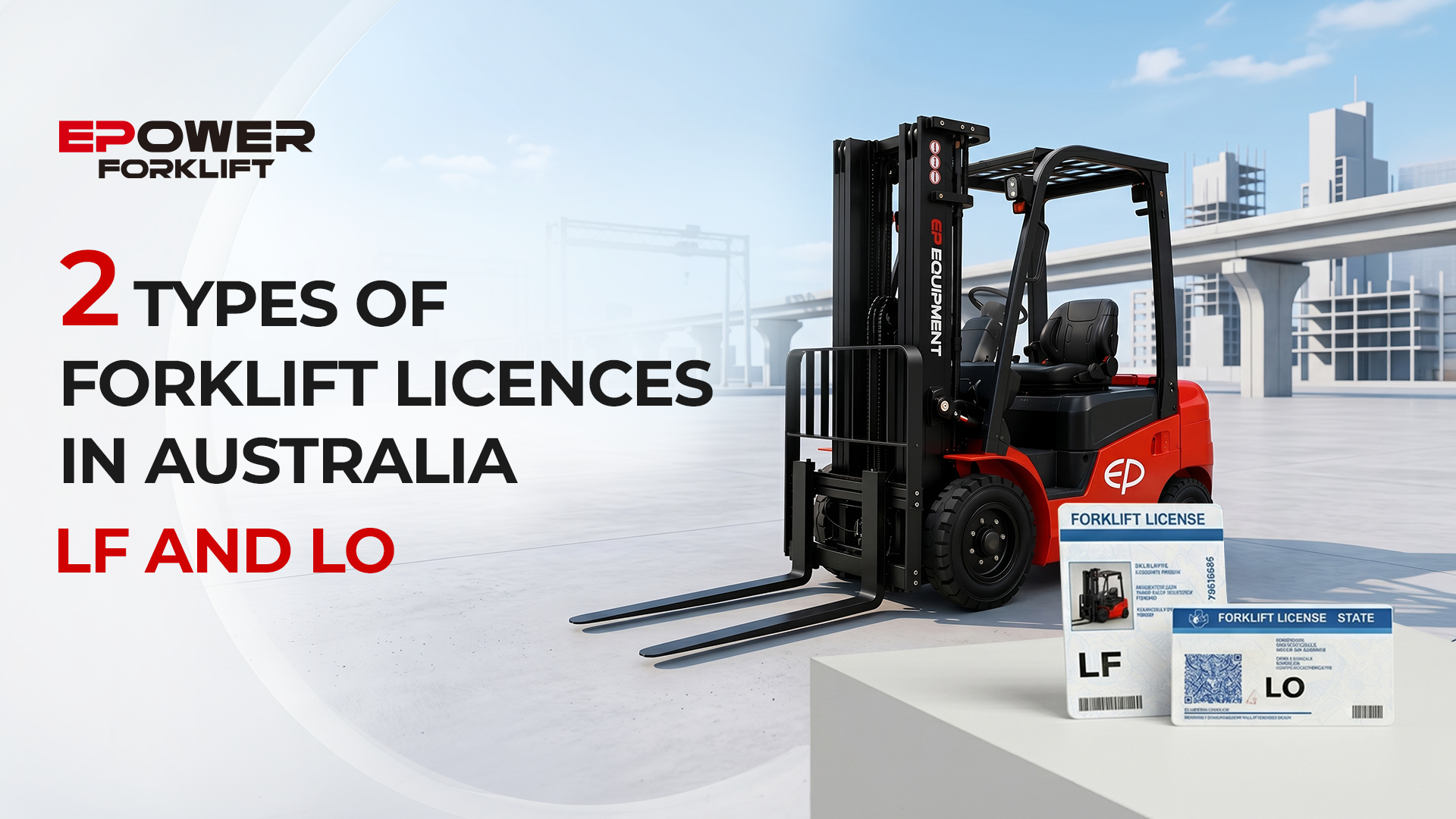
Two forklift licence classes exist because two fundamentally different risk profiles exist: operating a machine where the operator stays at ground level, and operating a machine where the operator’s body rises to height with the load. Each requires distinct training, a separate competency assessment, and a separate licence.
Forklift operation is classified as high-risk work under Australia's national licensing framework. In Victoria, licensing and workplace safety obligations are enforced by WorkSafe Victoria under the Occupational Health and Safety Act 2004 (Vic) and associated regulations.
The licence classes themselves are nationally consistent. An LF licence issued in Victoria covers the same machines as an LF licence issued in Queensland. The administrative process varies by state; the class definition and scope do not.
What Is the LF Forklift Licence and What Does It Cover?
The LF licence — Licence to Perform High Risk Work, Forklift Truck — covers any forklift fitted with a mast and elevating load carriage where the operator’s position remains fixed and does not rise with the load. It is the most widely held forklift licence in Australia and covers the majority of warehouse and industrial applications.
Machines commonly requiring an LF licence include:
- Counterbalance electric forklifts across all capacity ranges
- Reach trucks
- Pallet trucks
- Pallet stackers
- Heavy tonnage electric forklifts
- Rough terrain electric forklifts
- Multidirectional forklifts (excluding order pickers)
- Truck-mounted forklifts
(Exception: Pedestrian-operated pallet trucks and walk-behind stackers generally do not require an LF licence, although site-specific training and authorisation requirements still apply)
The LF licence does not cover order-picking forklifts where the operator rises with the load — that requires LO. It also does not cover reach stacker container handlers used in port operations — that requires a separate specialist class.
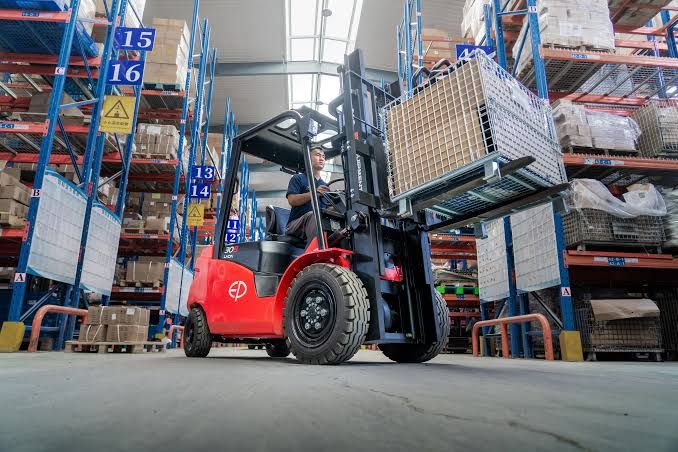
The LF licence covers all EPower models except the Order Picker series. This is the licence operators need before taking delivery of the majority of EP Equipment electric forklifts distributed through Epower.
What Is the LO Forklift Licence and When Is It Required?
The LO licence — Licence to Perform High Risk Work, Order-Picking Forklift Truck — covers order-picking forklifts where the operator’s control position rises with the load carriage. The defining characteristic is operator elevation with the load, not the lift height of the machine itself.
This distinction matters. A reach truck can lift loads to 12 metres and is an LF-class machine — the operator remains at ground level throughout. An order picker may only reach 6 metres but is an LO-class machine because the operator’s platform rises with the forks. The licence class follows operator position, not machine height.
The separate licence exists because the risk profile is fundamentally different. An elevated operator faces fall-from-height risk, crush risk between the elevated platform and racking, and requires specific emergency descent procedures. The LO training and assessment is designed specifically for these hazards — the LF course does not cover them.
The LO licence is narrow in scope. It covers order pickers and elevated-platform stock pickers. Most operators who hold LO also hold LF to remain employable across machine types.
EPower order picker models — used in e-commerce fulfilment, pharmaceutical distribution, and retail warehousing — require LO-licenced operators. Fleet managers ordering order pickers should confirm LO coverage for the operators assigned to those specific machines before delivery. An operator holding only an LF licence cannot legally operate an Order Picker, regardless of experience or familiarity with the machine.
How to Get a Forklift Licence in Victoria: Step-by-Step Guide for 2026
What Licence Is Required for Each EPower Forklift?
The table below maps every Epower product category to the required Australian licence class. This is the reference we provide to fleet managers at the time of order.
| Category | Licence Required |
|---|---|
| Counterbalance Forklift — EFL/CPD/EFX/TDL/ICE series | LF |
| Reach Truck — CQD series | LF |
| Pallet Stacker — ESA/CQE series | LF |
| Heavy Tonnage Forklift — EFL series | LF |
| Rough Terrain Forklift - RTF series | LF |
| Order Picker - JX series | LO |
The LO licence requirement is often overlooked when Order Pickers are introduced into a fleet that previously operated only LF-class equipment. Unlike counterbalance forklifts and reach trucks, an Order Picker requires operators to hold an LO licence.
For fleet managers, this is worth confirming before delivery. If no operators currently hold an LO licence, additional training and licensing may be required before the machine can be used as intended. Identifying the requirement early helps avoid delays to commissioning and workforce scheduling.
What Are an Employer's Obligations When It Comes to Forklift Licence Classes?
In Victoria, employers have a legal duty to ensure workers are properly trained, licensed where required, and authorised to operate the equipment assigned to them. When forklifts are involved, this means verifying that operators hold the correct High Risk Work (HRW) licence class for the specific machine being used.
Three practical obligations apply.
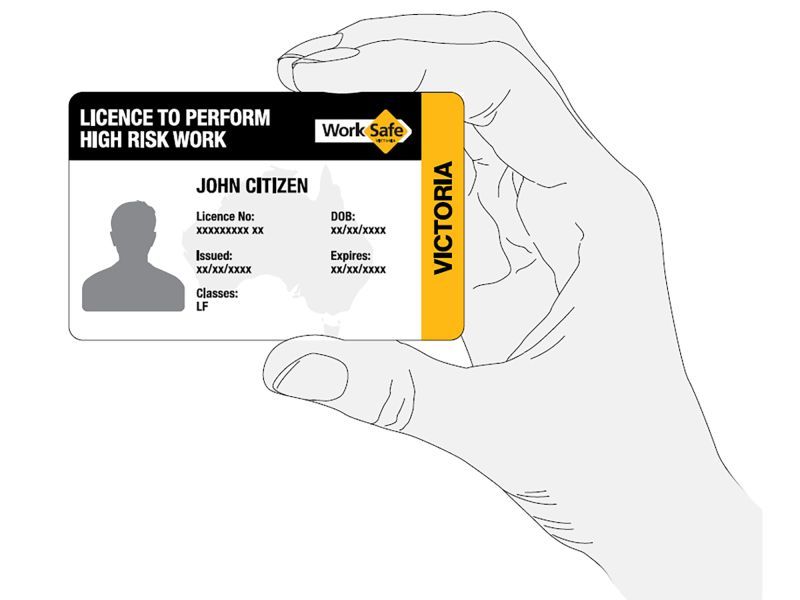
Verify Licence Class Before Assignment
Check that the operator holds the correct HRW licence class for the machine being assigned.
An LF licence covers most forklift trucks, including counterbalance forklifts and reach trucks. Order Pickers require an LO licence. Holding an LF licence does not authorise operation of an Order Picker.
For mixed fleets that include both LF and LO equipment, licence class should be verified before operators are assigned to a machine.
Verify Licence Currency
Both LF and LO licences are valid for five years.
Before assigning an operator, employers should confirm that the licence remains current and has not expired. An expired licence should be treated as invalid until renewed.
Maintain Licence Records
Maintain a register showing:
- Operator name
- Licence number
- Licence class held
- Expiry date
Keeping licence records up to date makes it easier to manage compliance, onboarding, audits, and workforce planning.
Failure to ensure operators hold the correct licence can expose businesses to regulatory action, insurance complications, and increased liability following an incident.
EPower recommends maintaining a simple licence register alongside the fleet register, showing which licence class is required for each machine and which operators hold that class. For fleets that include Order Pickers, clearly identifying LO-qualified operators helps avoid operational disruptions when machines are deployed or staff assignments change.
The Complete Pre-Start Checklist for Forklift Operators: What to Check Before Every Shift
Do You Need Both LF and LO Licences?
Whether an operator needs both depends on what machines they are assigned to — not their job title or years of experience.
If an operator works only with LF-class machines — counterbalance, reach truck, pallet truck — an LF licence is sufficient. If an operator works only with order pickers, LO alone is technically sufficient but severely limits job opportunities since most warehouse roles also require LF-class operation. If an operator is assigned to both machine types in the same role, both licences are required. LF and LO are separate licences, not levels of the same qualification. Holding both requires completing both training programmes and both competency assessments.
Many RTOs offer combined LF and LO courses that cover both in a single enrolment. This is the practical choice for warehouse operators who will work across machine types, and for employers who want operational flexibility across a mixed fleet.
An LF licence does not authorise operation of an Order Picker. Operators assigned to Order Pickers must hold an LO licence before operating the machine. There is no provisional arrangement. If the task requires LO and the operator does not hold it, the task cannot proceed.
For fleet managers running counterbalance units alongside Order Pickers — a common configuration in distribution centres — Epower recommends ensuring key operators hold both LF and LO. This provides operational flexibility and eliminates the scenario where the only available operator for a machine does not hold the right class at the wrong moment.
Additional Questions About Forklift Licences
Is a Victorian Forklift Licence Valid in Other Australian States?
Yes. High Risk Work licences are recognised across all Australian states and territories. An LF or LO licence issued in Victoria can be used throughout Australia, subject to any local administrative requirements that may apply.
How Long Are LF and LO Licences Valid?
Both LF and LO licences are generally valid for five years and must be renewed before expiry. Employers should maintain licence registers and set renewal reminders to ensure operators remain compliant.
For fleet managers, the practical takeaway is simple: verify that operators hold the correct licence class and that the licence remains current before assigning them to a machine.
Conclusion
The difference between Australia's forklift licence classes is straightforward: *LF covers most forklift trucks, while LO is required for Order Pickers where the operator rises with the load.*
For employers and fleet managers, the key responsibility is ensuring that the licence class matches the machine being operated. Holding a forklift licence is not enough if it is the wrong class.
Before introducing new equipment into a fleet, verify operator licence coverage, licence expiry dates, and any additional training requirements. Identifying gaps early helps avoid compliance issues and operational delays.
If you are unsure which licence class applies to a specific electric model, the EPower team can help confirm the requirements before delivery and assist with planning for mixed LF and LO fleets. Talk to the EPower Forklift team today →