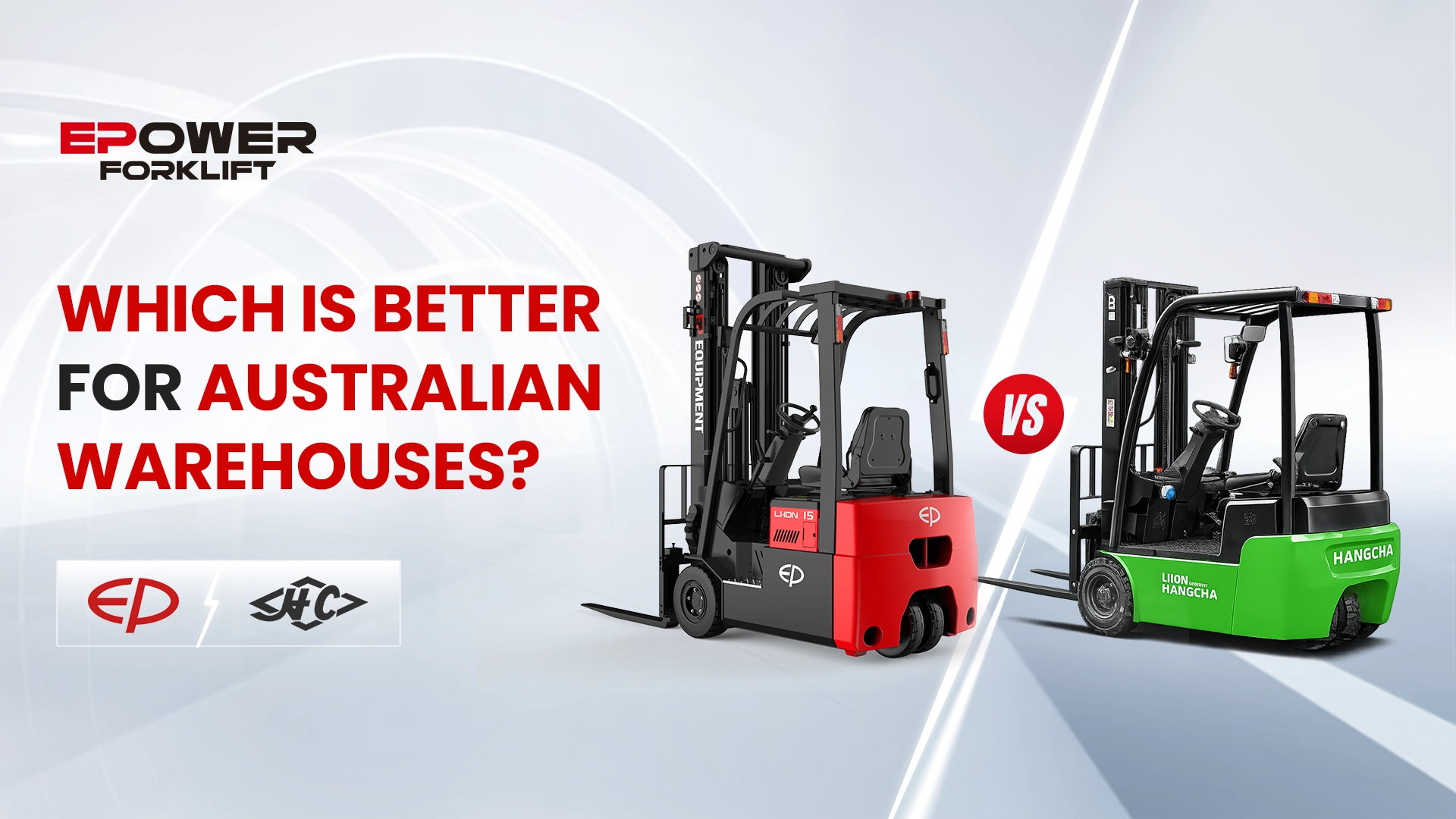
Buyers who have already decided on a Chinese electric forklift brand are asking a more specific question than most comparison articles answer. The choice is not between Chinese and Japanese, or between value and premium. It is between two established electric manufacturers with different technical approaches, different product strategies, and different levels of Australian market presence.
EPower distributes EP Equipment in Australia. That position is disclosed upfront. What follows is an honest assessment of where Hangcha genuinely leads, where EP Equipment wins, and how to match the right brand to your specific application.
How EP Equipment and Hangcha Compare as Electric Forklift Brands
EP Equipment was founded in 1993 in Hangzhou and is best known for electric material handling equipment. Its in-house battery program, started around 2016, covers battery pack and BMS development — giving it direct involvement in battery integration and warranty management. The product range includes counterbalance forklifts, reach trucks, pallet trucks, stackers, order pickers, and heavy-duty models.
Hangcha Group was founded in 1956, also in Hangzhou, and has a longer manufacturing history that includes internal combustion forklifts. Its electric pivot over the last decade has been significant. Unlike EP Equipment’s electric-focused approach, Hangcha offers a full IC and electric portfolio from one brand.
The clearest technical difference between the two brands is where high-voltage (HV) lithium architecture is deployed. Hangcha's XH series applies HV across a broad tonnage range, including the counterbalance sizes most warehouses buy, which means Hangcha can quote an HV truck in the same bracket as a standard warehouse counterbalance. EP Equipment uses high-voltage architecture in selected heavy-duty and rough-terrain configurations — for example a 309V/150Ah system storing approximately 46.4kWh — while its standard warehouse range runs on 80V. Before comparing any two quotes, confirm which configuration you are being quoted: Hangcha sells both HV and standard-voltage lithium, and the specification, charger requirement and price differ materially between them.
| Criteria | EP Equipment | Hangcha |
|---|---|---|
| Founded | 1993 — Hangzhou | 1956 — Hangzhou |
| Manufacturing focus | Electric-focused | IC + electric |
| Battery approach | In-house battery pack and BMS development | HV lithium option; standard lithium on other models |
| Application strength | Full electric range | Counterbalance and standard warehouse; IC heritage |
For a broader view of the market, read EPower’s guide to the top electric forklift brands in Australia.
What Are Hangcha’s Genuine Strengths?
High-voltage battery platform
Hangcha’s HV architecture uses a higher battery voltage than typical warehouse trucks. Higher voltage with equivalent power output requires lower current — and lower current means less heat in cables, connectors, and motor windings under load.
For high-throughput, multi-shift counterbalance operations handling heavy loads repeatedly, this architecture may offer efficiency advantages under sustained duty cycles. Buyers should confirm whether the specific unit being quoted uses Hangcha’s HV platform or the standard voltage configuration — Hangcha sells both, and the technical characteristics differ.
IC and electric from one brand
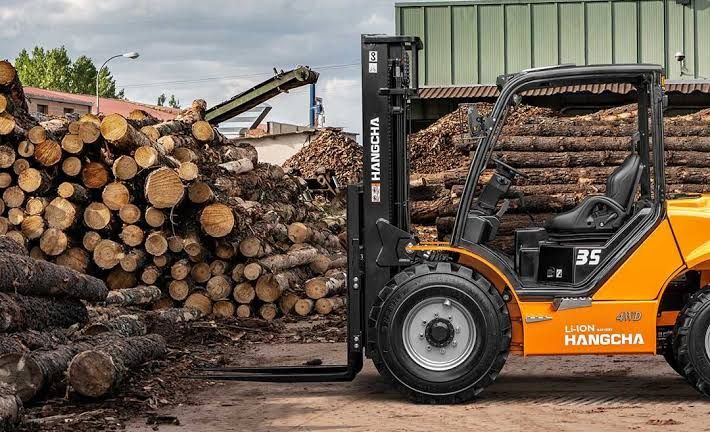
For operations running mixed fleets — outdoor LPG or diesel counterbalance alongside indoor electric warehouse equipment — Hangcha can supply both from a single brand. EP Equipment is electric-focused. For buyers who value single-brand simplicity across a mixed fleet, Hangcha has a coverage advantage.
What Are EP Equipment’s Genuine Strengths vs Hangcha?
In-house Battery Pack and BMS Development
Both EP Equipment and Hangcha use lithium iron phosphate (LFP) chemistry in their lithium forklift ranges, so chemistry alone is not the main point of difference between these two brands. The more practical difference is how the battery system is developed, integrated and supported.
Hangcha’s high-voltage lithium platform uses battery technology developed with CATL, a major global battery manufacturer. EP Equipment runs its own battery pack and BMS development programme in-house.
For a buyer, that matters in three practical areas:
- Integration. Pack design, BMS logic, charge management and truck controller requirements can be aligned through one engineering structure.
- Warranty pathway. When the truck and battery system are supported through one manufacturer pathway, the escalation process can be clearer for the dealer and end user.
- Diagnostics and support. BMS data, firmware logic and charging behaviour can be reviewed through the same technical support channel that supports the truck.
Neither approach is inherently better engineering. CATL is a credible battery supplier, and Hangcha’s high-voltage platform is one of its genuine technical strengths. The advantage of EP Equipment’s structure is practical accountability: for buyers who want one support path for the truck, battery, charger and BMS, EP’s in-house battery programme may be easier to manage over the ownership period.
Electric range breadth
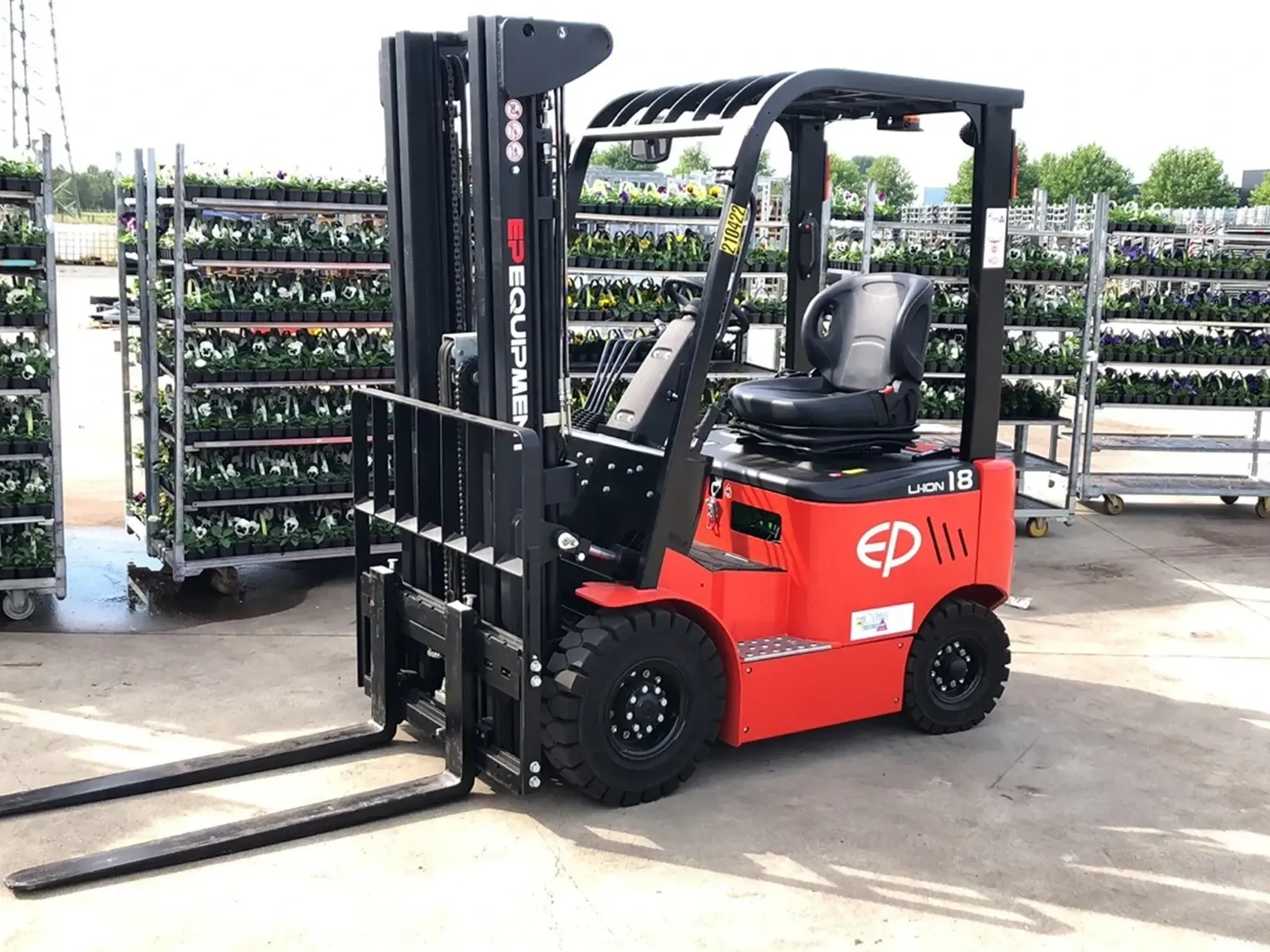
For operations that need unified electric coverage across multiple machine types, EP Equipment’s range covers counterbalance, reach trucks, warehouse equipment, and heavier-duty models. Both EP Equipment and Hangcha offer broad electric ranges, including higher-capacity models.
For heavy-duty or rough-terrain applications, the comparison should be made model by model using locally available units, charger requirements, attachments, warranty terms, and parts support.
Australian market presence
EP Equipment is distributed in Australia by EPower, which supplies nationally and runs its service operation from Victoria. EPower maintains parts inventory and a documented service process with an escalation path through EP Equipment’s Asia-Pacific network. Hangcha is distributed in Australia through multiple independent dealers. Parts inventory and service capability are set by each dealer individually, so support quality depends on which dealer holds the territory for your site.
EPower operates from the following locations:
Which Brand Has Better After-Sales Support in Australia?
In Australia, both EP Equipment and Hangcha are commonly sold and supported through dealer or distributor networks, unlike brands such as Toyota or Crown that have highly established national corporate operations.
For EP Equipment, EPower is the authorised Australian distributor. Supply is national; direct service coverage is Victoria-based, with parts inventory held locally. Buyers outside Victoria should confirm the service arrangement for their site before purchase.
For Hangcha, multiple Australian dealers distribute the brand. Parts availability varies by dealer and whether inventory is held locally or imported.
For metropolitan Australian operations, both brands have workable service access when dealer relationships are established before purchase. For regional operations, the question to ask both dealers before committing: what parts do you hold locally, and what is the typical lead time for components not in stock? The difference between a two-day and a three-week parts lead time determines whether a breakdown is a minor inconvenience or an extended operational shutdown.
EP Equipment vs Toyota Electric Forklift: Which Is Better Value for Australian Warehouses?
Which Brand Fits Your Australian Warehouse Better?
| Your Situation | Likely Better Fit | Primary Reason |
|---|---|---|
| High-throughput multi-shift heavy counterbalance work | Hangcha HV | HV platform may suit sustained heavy-duty cycles, if the quoted model is confirmed HV |
| Standard single-shift metro warehouse counterbalance | Compare like for like before deciding | Confirm whether the Hangcha quote is HV or standard lithium. For single-shift use, HV capability may not be necessary, so compare the exact models on charger cost, warranty, parts availability and service access. |
| Electric-focused warehouse fleet | EP Equipment | Stronger fit for buyers standardising around electric material handling |
| Mixed IC and electric fleet | Hangcha | IC and electric range from one brand |
| Battery integration and warranty certainty | EP Equipment | In-house battery pack and BMS development, clearer support path through EPower |
| Lowest upfront purchase price | Compare current quotes | Pricing varies by model, battery, charger, warranty and dealer terms |
Frequently Asked Questions
Can Both Brands be Used Outdoors?
Selected models from both brands can support mixed indoor and outdoor work. Buyers must confirm tyre type, ground clearance, weather protection, ramp performance and loaded gradeability for the individual model.
Which Brand Holds Resale Value Better in Australia?
Resale value should be checked against current Australian used listings, dealer buy-back terms, and auction activity. Neither EP Equipment nor Hangcha has the same used-market liquidity as Toyota or Crown, so buyers with short replacement cycles should verify resale assumptions before purchase rather than relying on general brand comparisons.
Should You Consider EP Equipment, Hangcha, or Neither?
If the operation requires the national service depth of Toyota or Crown — particularly for regional sites, large order picker fleets, or operations where downtime has significant commercial consequences — neither Chinese brand may be the appropriate specification at this stage of their Australian market development.
Conclusion
If the operation is metropolitan, primarily counterbalance, and total cost is the primary driver, both EP Equipment and Hangcha are viable alternatives to premium legacy brands. The choice between the two comes down to battery technology preference, confirmed product availability for the specific application, and confidence in the local dealer relationship
If you are comparing EP Equipment and Hangcha for a Victorian warehouse, EPower can help review the application, confirm suitable EP Equipment models and provide a current quote based on your load profile, charging setup and operating schedule. Contact EPower team!