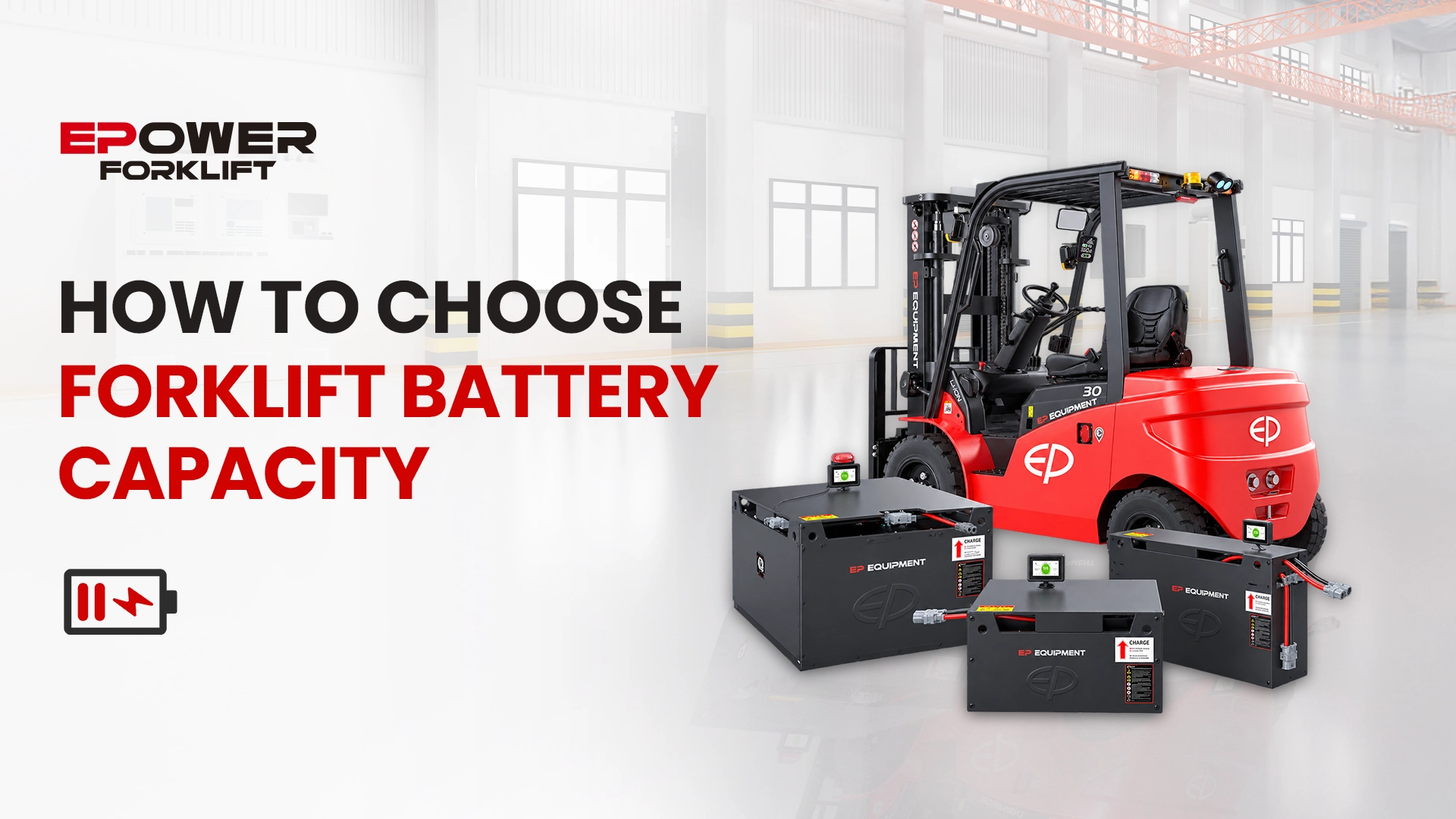
Battery capacity questions come up in almost every order EPower processes. The question is rarely “how big a battery can I fit” — it is “*how long does the forklift actually need to run, under what conditions, and does the standard battery cover that or not.*”
The answer depends on shift pattern, operating intensity, and whether the site allows charging during breaks. This guide works through each scenario using EP Equipment’s actual battery configurations.
Why Does Shift Pattern Matter More Than Forklift Capacity When Sizing a Battery?
Two 2.5T counterbalance forklifts doing different work need different batteries. A forklift running 3 to 4 hours per day in a retail warehouse with a lunch break charge opportunity has fundamentally different energy requirements from the same machine running two continuous shifts in a 3PL operation.
The variables that determine battery draw are operating hours, whether operation is continuous or includes idle periods, load weight, travel distance, gradient, indoor or outdoor, and temperature. Forklift load capacity influences the typical battery platform and configuration, but it does not determine how long the battery needs to last.
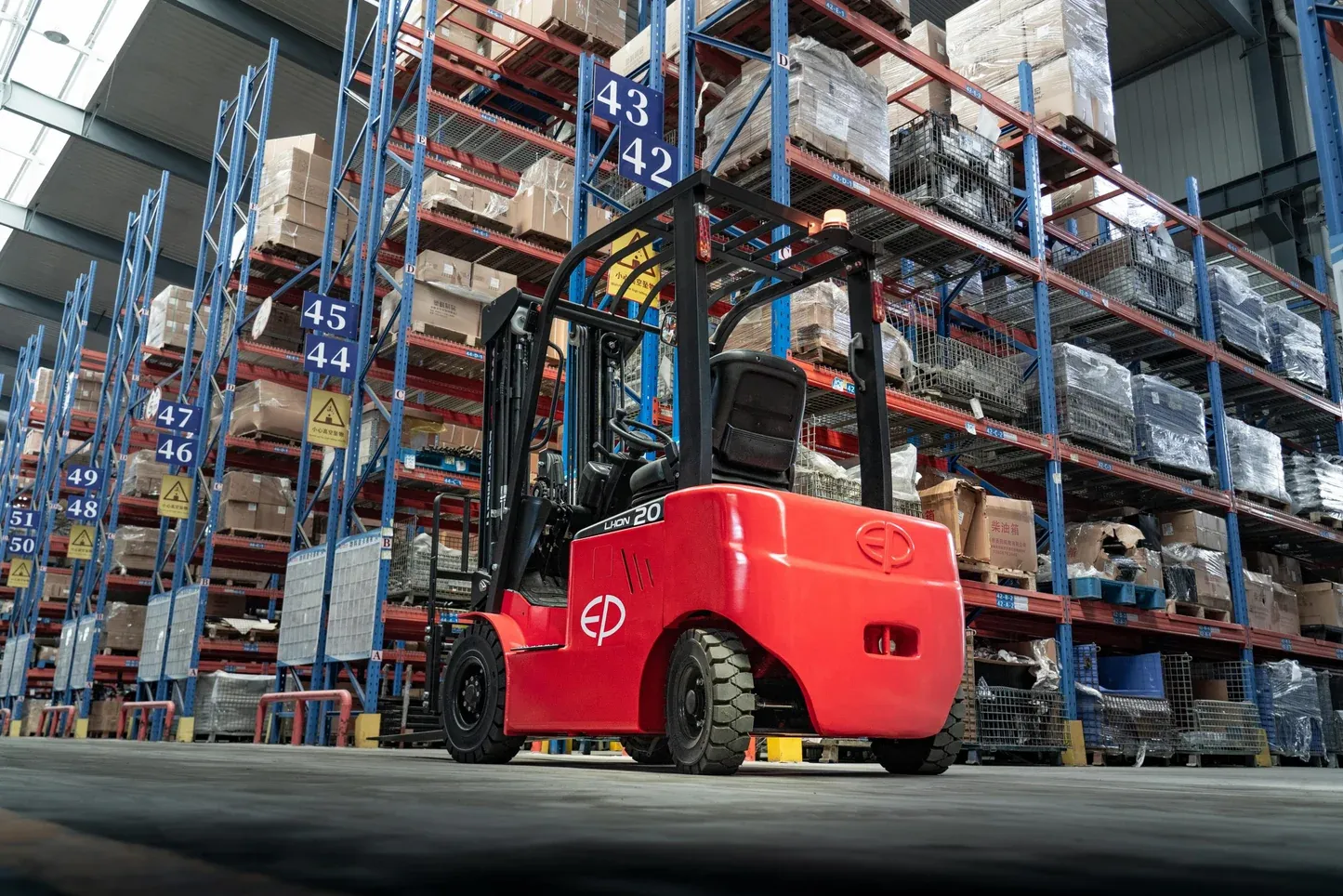
The core decision is straightforward: standard battery configuration suits light to medium duty work with breaks and charging opportunities. A larger battery is warranted when the forklift must operate continuously, carry heavier loads, travel longer distances, work outdoors, operate on gradients, or run in cold storage.
All runtime figures in this guide are based on EP Equipment’s battery and operating data. Actual operating time varies with conditions — treat figures as reference points, not guarantees.
What Battery Size Do Single-Shift Forklift Operations Need?
Single-shift means the forklift operates up to 8 hours per day, then charges overnight. The overnight window is the critical variable — it gives a full recovery charge before the next shift, which simplifies battery sizing considerably.
Light to medium duty single-shift
Applications include building materials yards, retail warehouses, small freight forwarding, and wholesale markets. The forklift typically works 3 to 5 actual operating hours within the shift, with stops and idle periods, relatively flat surfaces, shorter travel distances, and often the opportunity to top up during a lunch break.
For these conditions, the standard battery configuration may be sufficient, depending on the actual daily workload:
- 2.0 to 2.5T: standard 80V/230Ah — typical runtime 4 to 5 hours
- 3.0 to 3.8T: standard 80V/280Ah — typical runtime 3 to 5 hours
- 5T: standard 80V/560Ah — typical runtime 3 to 4 hours
High-intensity single-shift
Applications include 3PL operations, large supermarket distribution, and large warehouses. The forklift operates more continuously within the shift, handles heavier loads, travels longer distances, and may work outdoors or on gradients. Break charging opportunities are limited or unavailable.
For these conditions, a larger battery is recommended:
- 2.0 to 2.5T: 80V/460Ah — typical runtime 9 to 10 hours; provides full shift coverage with margin
- 3.0 to 3.8T: 80V/410Ah (typical runtime 4 to 6 hours) or 560Ah (typical runtime 7 to 8 hours) depending on actual intensity
- 5T: 80V/690Ah — typical runtime 4 to 6 hours
The lunch break charging question
For single-shift operations using a standard battery, a 30 to 45-minute lunch break charge is often the deciding factor. Plugging in during lunch can extend usable runtime enough to complete the shift comfortably, provided the charger output and workload are suitable.
If the site layout makes break charging impractical, specify a higher-capacity battery at the time of order rather than trying to solve battery shortfalls after delivery.
Electric Forklift Battery Charging Mistakes That Shorten Battery Life: How to Avoid Them
What Battery Size Do Double-Shift Forklift Operations Need?
Double-shift means the forklift operates across two shifts — typically 14 to 16 hours of potential operating time per day. The overnight window is shorter and may not allow a full lead-acid charge recovery. This is the shift pattern where the difference between lead-acid and lithium becomes most operationally significant.
Lead-acid in a double-shift operation requires battery swap: a second battery set per forklift, charged while the first is in use, plus the battery room and swap infrastructure. For a fleet of six forklifts on double-shift, that is twelve battery sets and a dedicated charging room.
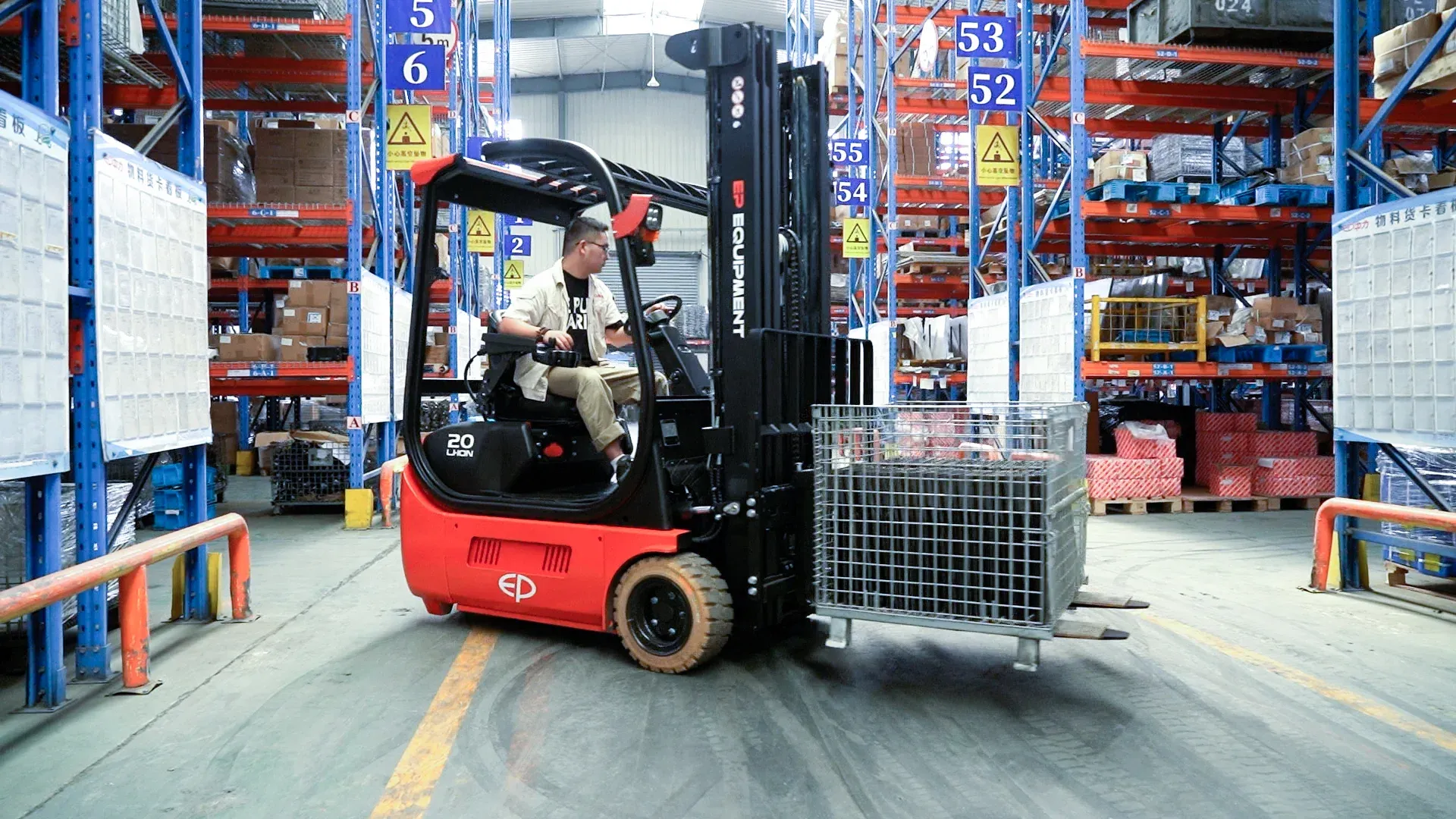
Lithium supports partial opportunity charging without the same full-cycle and equalisation requirements as flooded lead-acid batteries. A changeover top-up of 30 to 45 minutes adds meaningful runtime without requiring a full charge cycle. In many double-shift applications, a correctly sized lithium battery with planned opportunity charging may reduce or remove the need for a second battery set.
Battery sizing for double-shift lithium operations:
- 2.0 to 2.5T: 460Ah — 9 to 10 hours base runtime; changeover top-up extends second shift coverage
- 3.0 to 3.8T: 410Ah for moderate intensity; 560Ah for high-intensity continuous double-shift (7 to 8 hours base runtime)
- 5T: 690Ah recommended — standard 560Ah is marginal for high-intensity double-shift
Double-shift is the scenario where EPower most consistently recommends moving to the larger battery option. The additional cost of the 460Ah over the 230Ah on a 2.5T unit is recovered quickly against the alternative of purchasing a second battery set plus charging infrastructure for a lead-acid setup.
What Battery Size Do Continuous or 24/7 Forklift Operations Need?
Continuous operation means the forklift runs across three shifts with minimal scheduled downtime. Battery must sustain high draw with only brief charging windows available.
For lithium, continuous operation is manageable with the right battery size and a charging strategy that uses every available window — shift changeovers, loading delays, scheduled maintenance stops. Lithium’s tolerance for partial charging makes this viable. Lead-acid cannot be run this way without a battery rotation system.
Battery sizing for continuous lithium operations:
- 2.0 to 2.5T: 460Ah — with fast charging top-ups at changeovers, workable for light to medium continuous duty; high-intensity continuous should be discussed with EPower to confirm charger strategy
- 3.0 to 3.8T: 560Ah minimum — 7 to 8 hours base runtime; scheduled fast charging top-ups extend coverage across shifts
- 5T: 690Ah — 4 to 6 hours base runtime; continuous operation at 5T requires reliable charging windows every 4 to 5 hours
Highest-intensity applications
Mining, agriculture, and port operations typically use 7T+ rough terrain forklifts designed for demanding continuous use. EP Equipment’s rough terrain configuration with a 309V/150Ah battery (~46kWh) provides approximately 10 hours runtime. For context, an 80V/460Ah battery stores approximately 37kWh — the 309V/150Ah configuration stores roughly 25% more energy. These units are built for the highest-intensity applications with large-battery configurations as standard.
For genuine 24/7 operations with no scheduled downtime, the battery capacity decision cannot be made in isolation from charger strategy and charge point placement. Discuss the full operational profile with EPower before specifying.
Special Case: How Should You Size Forklift Batteries for Cold Storage?
Cold temperatures directly reduce usable battery capacity. This is a chemistry issue, not a charging issue — the battery loses charge faster at low temperatures regardless of how recently it was fully charged.
As our experience, at temperatures below -20°C, battery performance typically drops to 60 to 70% of normal capacity. A 2.5T counterbalance with a standard 230Ah battery that runs 4 to 5 hours at ambient temperature may only run 2.5 to 3.5 hours in a -20°C cold store.
As a practical guideline, cold-storage applications often require a larger battery than the equivalent ambient-temperature application. An application that would use the standard 230Ah battery at ambient temperature may require the 460Ah option in cold storage, depending on workload, charging windows, and freezer exposure.
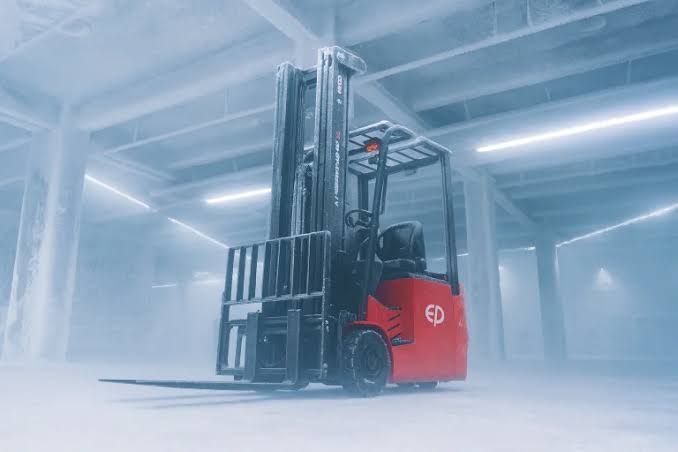
The battery must also be specified with suitable cold-storage protection. A standard ambient battery in a cold environment is not an equivalent substitute. EP Equipment’s cold-storage configurations address this directly. For example:
- CPD18TVL cold-storage version: a 1.8T lithium forklift configuration with anti-freezing measures and support for in-zone opportunity charging
- CPD18TV8: a 1.8T lead-acid forklift configuration with a 360Ah battery and anti-freezing measures
These 1.8T models are examples of how cold-storage protection is specified at the model level. For 2.0T and above applications, confirm the approved cold-storage battery, charger and protection package with EPower before ordering.
Lithium can be a strong fit for cold storage because it supports opportunity charging and can be specified with cold-storage protection. However, standard chargers may not operate reliably inside cold zones. Confirm the charger temperature rating with EPower before installing charge points in refrigerated or freezer areas.
Cold storage under-specification is one of the common battery sizing mistakes EPower sees when customers use ambient runtime figures for freezer applications. The runtime reduction at low temperatures is significant enough that cold storage should always be treated as a separate sizing exercise, not an extension of the ambient calculation.
Why Cold Storage Operations Are Switching to Lithium-Ion Forklifts?
EP Equipment Battery Options by Forklift Capacity
| Forklift Capacity | Standard Battery | Typical Runtime | Larger Option | Typical Runtime |
|---|---|---|---|---|
| 2.0 to 2.5T | 80V / 230Ah (~18.4kWh) | 4 to 5 hours | 80V / 460Ah (~36.8kWh) | 9 to 10 hours |
| 3.0 to 3.8T | 80V / 280Ah | 3 to 5 hours | 410Ah or 560Ah | 4 to 6 / 7 to 8 hours |
| 5T | 80V / 560Ah | 3 to 4 hours | 690Ah | 4 to 6 hours |
| Rough terrain / 7T+ | 309V / 150Ah (~46.4kWh) | ~10 hours | — | Designed for continuous high-intensity use |
Operating times are indicative based on EP Equipment data. Actual runtime varies with load, travel distance, gradient, temperature, and operating intensity.
Before placing an order, EPower recommends confirming:
- How many hours per day does the forklift actually operate — not just hours on site?
- Is operation continuous or does it include idle periods and breaks?
- Is charging possible during breaks or shift changeovers?
- What is the maximum load being handled and are there gradients?
- Indoor or outdoor operation?
- What is the operating temperature — ambient, chilled, or frozen?
- Single-shift, double-shift, or continuous?
Frequently Asked Questions
Is a standard forklift battery enough for a single shift?
It may be enough for light to medium single-shift work, especially where the forklift operates for around 3 to 5 actual hours per day and has idle periods or lunch-break charging opportunities. For high-intensity single-shift work with continuous movement, heavier loads, long travel distances or gradients, a larger battery may be recommended.
When should I choose a larger forklift battery?
A larger battery should be considered when the forklift must operate continuously, cover double shifts, work in high-intensity applications, travel longer distances, carry heavier loads, operate outdoors, work on gradients or run in cold storage. The larger battery provides more usable runtime and reduces the risk of low-charge interruptions.
Can opportunity charging reduce the need for a larger battery?
Yes, in some applications. If operators can reliably plug in during lunch breaks, shift changeovers or idle periods, opportunity charging can extend usable runtime from the same battery. However, the charging window only helps if the charger is accessible, the charger output is suitable and operators actually plug in during that time.
Conclusion
Forklift battery sizing should start with the real working pattern, not the forklift capacity alone. A standard battery may be suitable for light to medium single-shift work where the forklift has idle periods and charging opportunities. A larger battery becomes more important when the operation is continuous, high-intensity, double-shift, outdoor, gradient-heavy or temperature-sensitive.
Before placing an order, confirm the actual operating hours, workload intensity, charging windows, load weights, travel distance, gradients and working temperature. Getting the battery specification right upfront avoids low-charge interruptions, unnecessary battery upgrades and charging problems after delivery.
If you are unsure which battery configuration fits your shift pattern and operating conditions, EPower can advise based on your specific application before you order. Contact EPower team today!