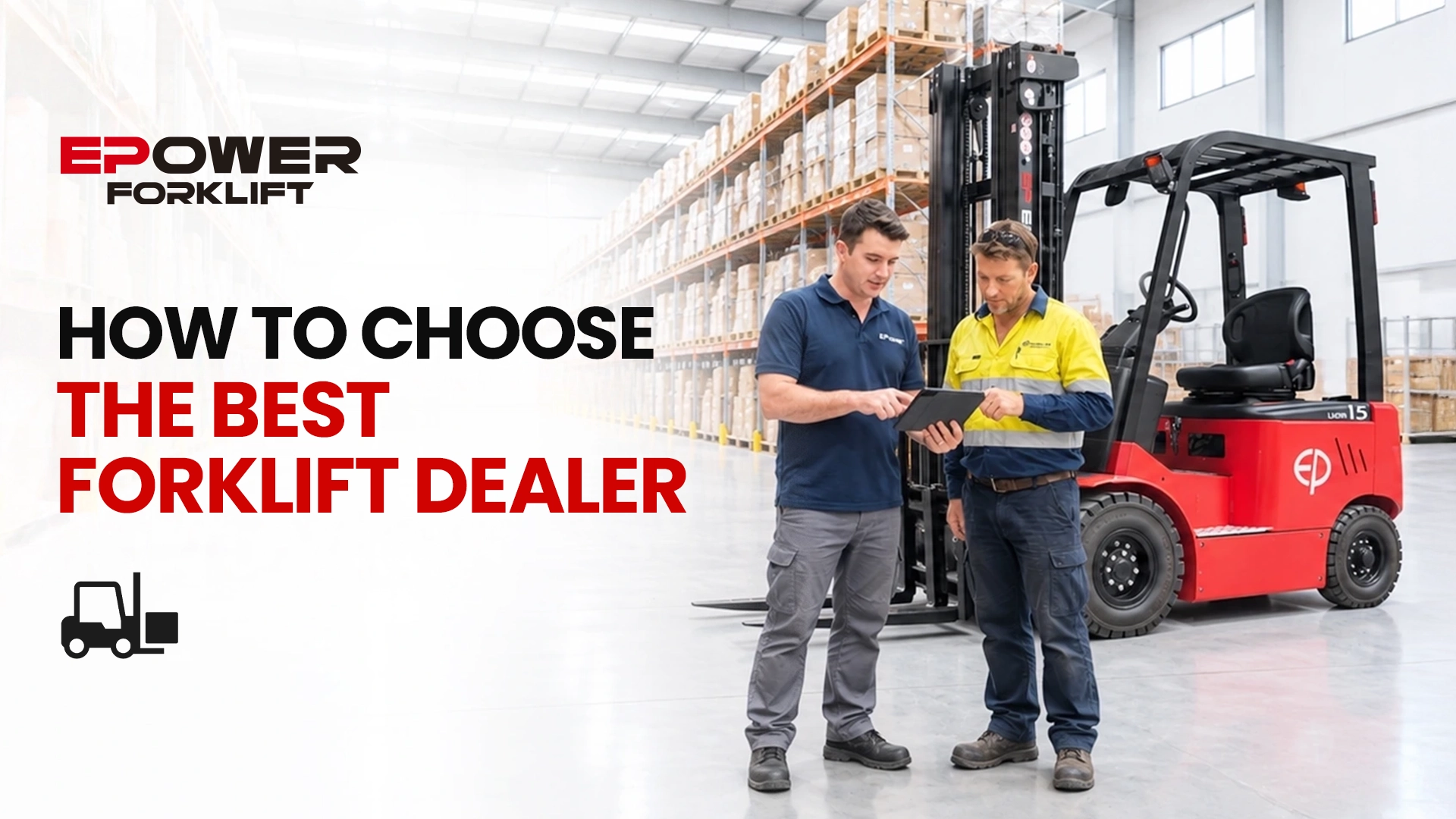
Choosing a forklift dealer is about more than comparing brands, specifications and prices. A knowledgeable dealer should understand how the machine will be used, check whether it suits your site and application, and explain what support you can expect after delivery.
The questions below will help you assess both the quality of the advice you receive and the support behind the machine.
8 Questions to Ask Any Forklift Dealer Before Signing
Q1: Is this forklift actually suitable for my site and application?
A good dealer should understand how and where the forklift will be used before recommending a model. That means asking about your load type, aisle and pallet dimensions, floor conditions, ramps, indoor or outdoor use, and typical operating pattern.
The key is not whether the forklift looks suitable on a specification sheet, but whether its dimensions, manoeuvrability and operating characteristics match your actual site.
Be cautious if a model is recommended before the dealer has asked enough questions about your application. A knowledgeable dealer should be able to explain why the machine suits your operation — not simply why it meets a few headline specifications.
Forklift Charging Area Requirements: What Your Site Needs to Run Lithium Forklifts
Q2: Can this forklift handle my load at the height I need?
The dealer should check more than the forklift’s nominal capacity. Your maximum load weight, load dimensions, required lift height, load centre and any attachments all need to be considered before a model is confirmed.
A forklift rated at 1.8 tonnes may not retain that full capacity in every configuration. Depending on the mast, lift height, load centre and attachments, the machine’s residual capacity can be lower than the headline rating.
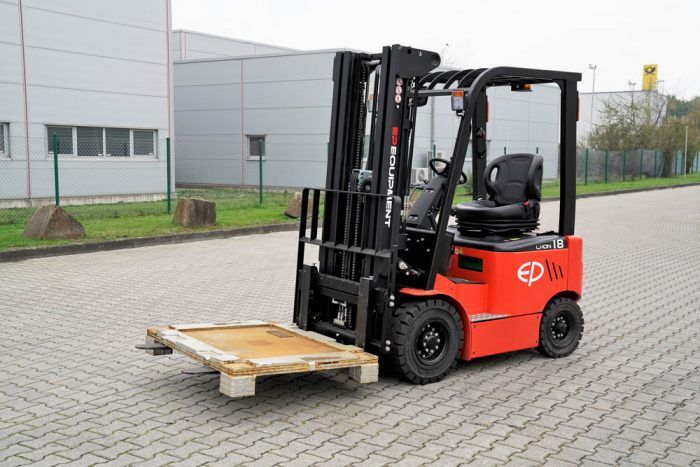
A knowledgeable dealer should be able to confirm the required capacity from the manufacturer’s load chart or technical data, rather than relying on the rated capacity alone.
Electric Forklift Load Capacity Chart: How to Read It Safely
Q3: What does the warranty actually cover?
Ask for the warranty terms in writing and check the coverage period, exclusions and claim process — not just the number of years advertised.
For electric forklifts, the battery may have separate warranty conditions from the forklift itself. Ask whether coverage is based only on defects or also includes retained capacity, usage limits or charging conditions.
A knowledgeable dealer should be able to explain clearly what is covered, what is not, and how a claim would be handled if a major component or battery develops a fault.
Q4: Which parts for this model do you stock locally?
A dealer should be able to tell you which commonly replaced parts are held locally for the model being quoted, and give a realistic lead time for anything that must be ordered.
Generic answers such as “parts are readily available” are not enough. Ask specifically about high-wear and critical components, and whether they are stocked in Australia or sourced from overseas.
Parts availability has a direct impact on downtime. Two dealers may sell the same machine, but the one with local stock and a reliable supply chain can often return it to service much faster when a failure occurs.
Q5: Who will service the forklift, and what response time can I expect?
Before buying, ask who will actually attend your site when the forklift needs servicing or develops a fault. The important questions are whether those technicians are trained on the model, have access to the required diagnostic tools and parts, and how quickly support is typically available in your area.
For electric forklifts, this becomes more important when faults involve the battery management system, controllers or other electronic components that may require model-specific diagnostics.
Be cautious if the dealer cannot clearly explain who provides the service, what coverage they offer, or what happens when a fault cannot be resolved on the first visit. A strong after-sales network should have a clear escalation path.
Q6: Is the battery and charging setup right for my operation?
For an electric forklift, battery capacity alone does not tell you whether the truck will suit your operation. The dealer should consider how many hours the forklift runs each day, how many shifts you operate, how much charging time is available, and whether opportunity charging is practical.
The charger also needs to match the site’s electrical supply and the battery system supplied with the truck. If the forklift will operate in cold storage or other demanding environments, ask whether there are specific charging or temperature requirements.
A good recommendation should explain how the battery and charger will support your actual duty cycle.
Forklift Battery Sizing by Shift Pattern: Single, Double and 24/7 Shifts
Q7: What checks are completed before the forklift is delivered?
A dealer should be able to explain how the machine is inspected and prepared before handover, and provide documentation of the checks completed.
For a new forklift, this should confirm that key operating and safety functions have been checked and the machine matches the ordered specification. For demo, clearance or previously used units, the inspection becomes even more important because condition can vary from one machine to another.
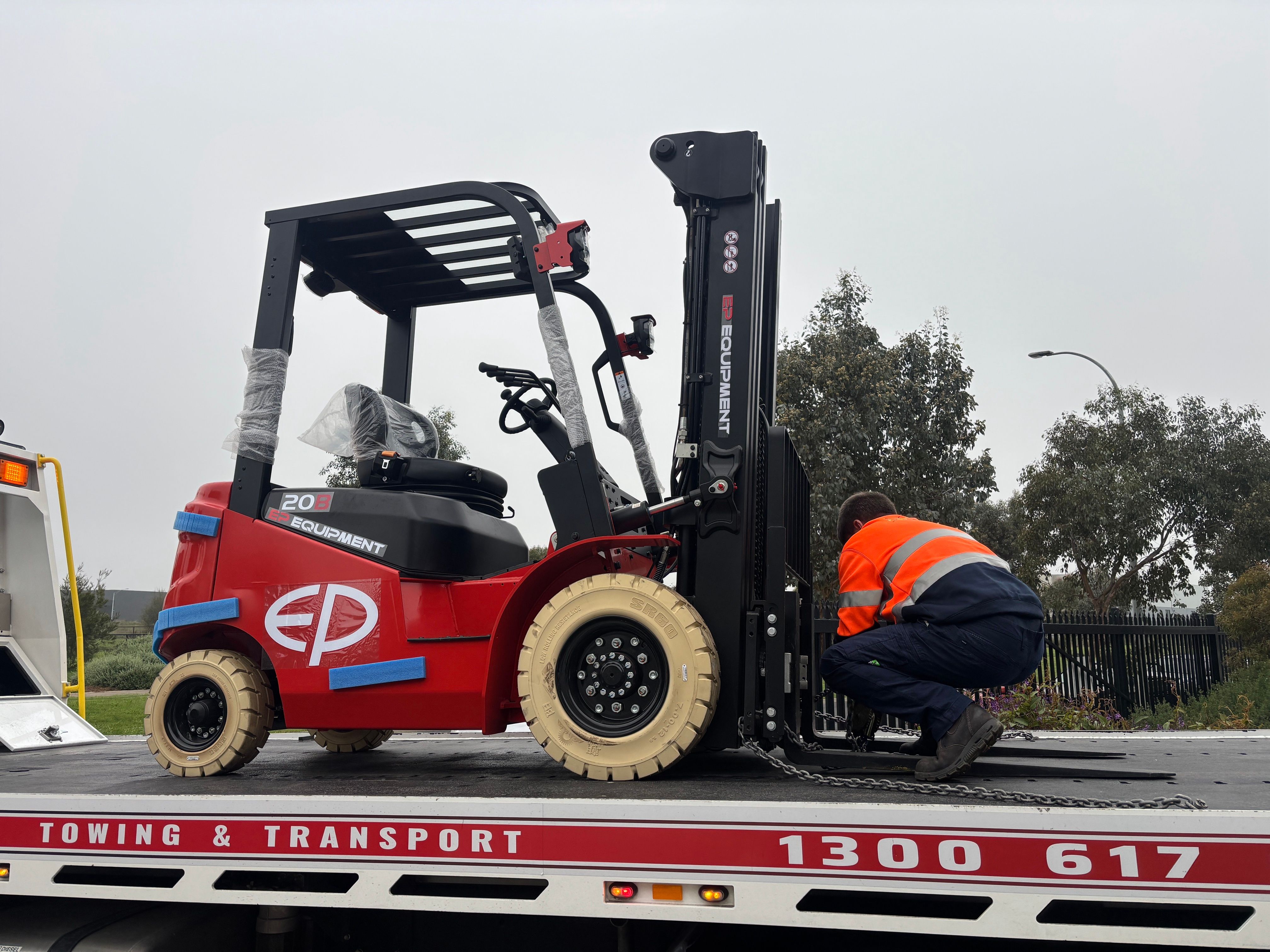
Ask whether you will receive a pre-delivery inspection record with the forklift. It gives both sides a clear reference for the machine’s condition at handover and helps avoid disputes if an issue is identified shortly after delivery.
Q8: What long-term support is available for this model and brand in Australia?
Before committing, ask how parts, warranty and technical support are structured beyond the initial sale. A strong dealer should be able to explain where parts come from, who handles warranty claims, what technical support sits behind the dealership, and whether there are alternative support channels if the local arrangement changes.
Signs a Forklift Dealer May Not Be Giving You the Right Advice
Not every unanswered question is a warning sign — a salesperson may need to confirm technical details before giving you a reliable answer. The concern is when several of these patterns appear during the buying process:
- Recommends a model before understanding your site, loads and operating requirements
- Relies on nominal capacity without checking lift height, load centre or attachments
- Cannot explain warranty exclusions or provide the terms in writing
- Gives vague answers about local parts availability or lead times
- Cannot clearly explain who will service the forklift or how faults are escalated
- Recommends an electric model without discussing operating hours, charging time or site power
- Cannot explain what checks are completed before delivery
- Gives unclear answers about long-term parts, warranty or technical support in Australia
A good dealer does not need to know every answer immediately, but they should be able to verify the information and come back with a specific, documented response.
Why Choose EPower as Your Forklift Dealer?
EPower combines access to the EP electric forklift range with local sales, parts and service support across Victoria and South Australia. Our team works with warehouse, logistics, manufacturing and materials-handling businesses to match equipment to real operating requirements.
With locations in Truganina, Epping, Dandenong South and Burton, EPower provides a local point of contact for product advice, servicing, warranty support and parts supply.
Our warehouse addresses:
- 30 Apex Dr, Truganina VIC 3029
- Unit 3, 17 Trafalgar Road, Epping VIC 3076
- 17 Crompton Way, Dandenong South VIC 3175
- Unit 3, 71 Helps Road, Burton SA 5110
If you are considering an EP forklift, contact EPower to discuss your application and suitable models.
Conclusion
The right forklift dealer should be able to explain why a machine suits your operation and how it will be supported after delivery. Use the questions above to compare dealers on expertise, transparency and long-term support — not purchase price alone.