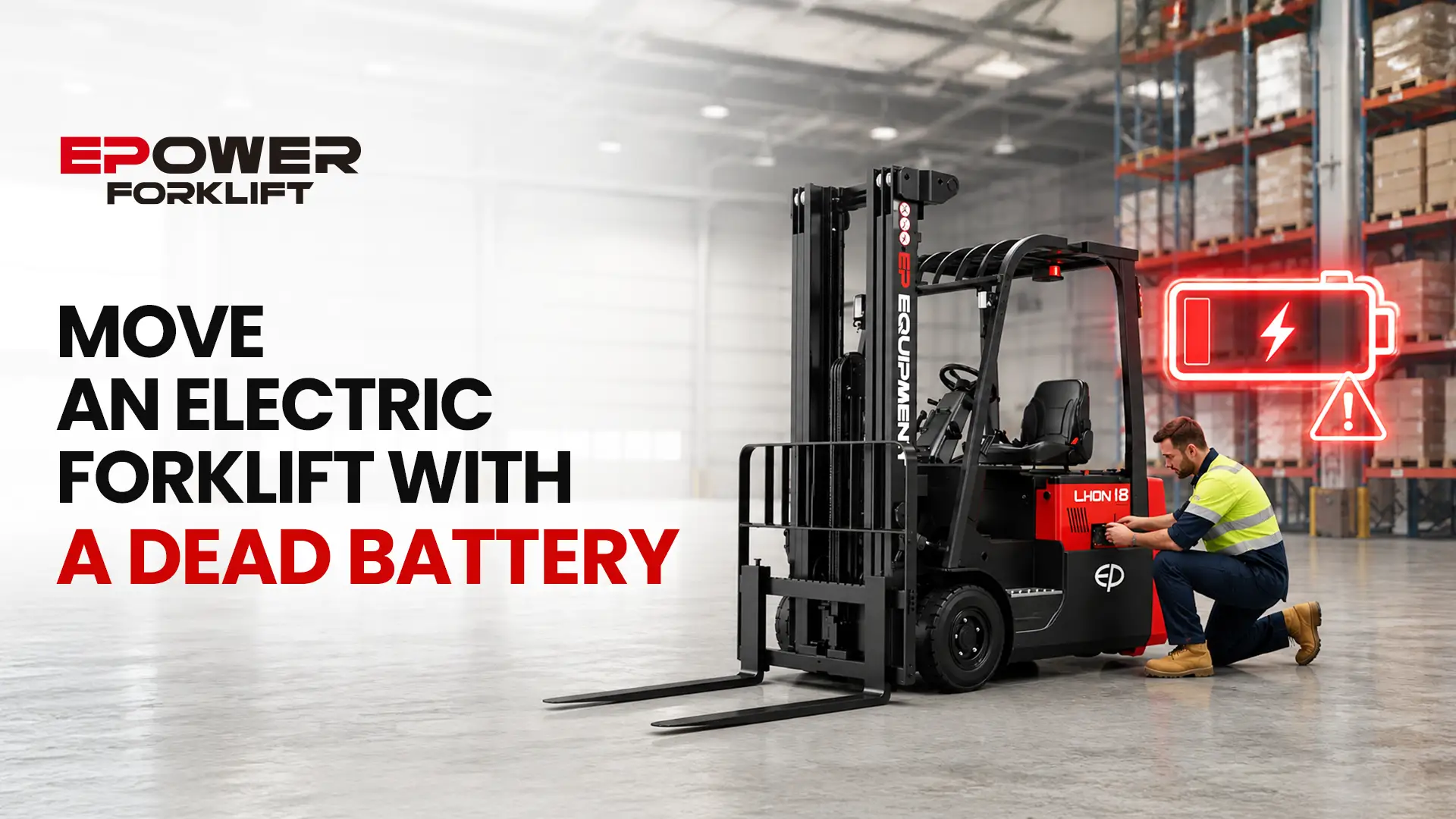
If you need to move an electric forklift with a dead battery, do not force it to move. First check whether the battery is actually depleted, then follow the recovery procedure specified for that model.
There is no universal recovery procedure for a disabled electric forklift. The correct method depends on the model, braking system, battery configuration and manufacturer instructions.
Step 1: Confirm the Battery Is Actually the Problem
Before attempting to move the forklift, confirm that battery depletion is actually the reason it has stopped.
Start with the state-of-charge indicator and dashboard fault codes. If the battery still shows usable charge but the forklift will not drive, treat it as a fault or protection event rather than a flat battery. BMS protection, safety interlocks, connector faults and control-system issues can all produce similar symptoms.
A completely dark display does not prove the battery is discharged either. It may indicate battery isolation, loss of electrical supply or another circuit fault.
If an unfamiliar fault code is present, record it and check the operator manual or contact the dealer before proceeding. If the forklift is genuinely discharged and no other fault is indicated, move to Step 2.
Electric Forklift Battery Charging Mistakes That Shorten Battery Life
Step 2: Restore Enough Power to Move the Forklift
If the battery is genuinely discharged and no other fault is indicated, the preferred recovery is to restore enough charge for the forklift to move under its own power. This keeps the normal drive, steering and braking systems available and avoids the additional risks involved in manual brake release or towing.
Use the charger approved for the specific battery and forklift configuration. Do not rely on a fixed charging time — the amount of charge required will vary with battery capacity, charger output, temperature, battery condition and how deeply the battery has been discharged.
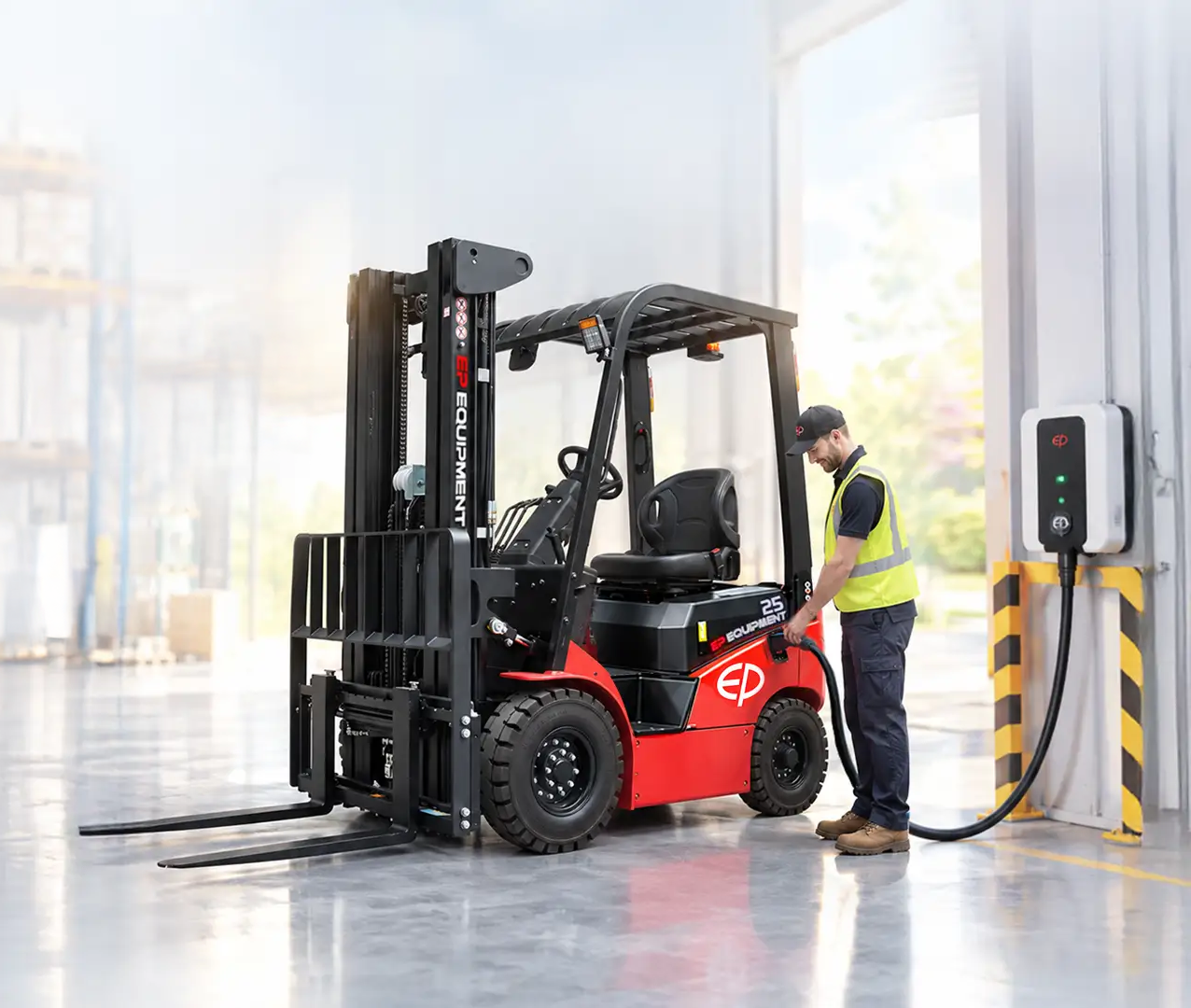
For EP lithium-powered forklifts, follow the charging and recovery procedure specified for that model. Do not connect car batteries, improvised power supplies or an incompatible charger unless the manufacturer explicitly permits that method.
If the forklift has been charged correctly but still will not drive, stop treating the problem as simple battery depletion. Check for fault codes and move to the manufacturer’s recovery procedure.
Step 3: If It Still Won’t Move, Follow the Manufacturer’s Recovery Procedure
Many electric forklifts use braking systems that prevent the forklift from rolling freely when electrical power is unavailable. If the forklift will not move, do not push or drag it against the brake.
Some models provide a manual brake-release or emergency recovery procedure. The method varies by forklift, so follow the operator or service manual for the specific model.
If a manual brake release is provided:
- Follow the operator or service manual exactly.
- Secure the surrounding area before releasing the brake.
- Be aware that powered steering or braking assistance may not be available.
- Do not leave the forklift unsecured after the brake has been released.
If the forklift needs to be towed
If towing is required, only proceed where the manufacturer permits it and approved recovery points and equipment are available. A forklift’s rated lifting capacity is not the same as its towing capacity.
Use only the towing method and attachment points specified for the model. Do not attach straps or chains to the mast, forks, hydraulics or another unapproved point.
If the manufacturer’s towing instructions are unavailable, or the route involves slopes, ramps or pedestrian traffic that cannot be adequately controlled, stop and contact the dealer or a competent technician.
When to Stop and Call the Dealer
Stop the recovery attempt and contact the dealer or a competent technician when:
- Fault codes are present that cannot be identified from the operator manual
- The battery state-of-charge shows charge remaining but the forklift will not respond — possible BMS protection or system fault
- The battery connector, housing, or casing shows visible damage
- The correct recovery procedure for the model cannot be confirmed
- The brake cannot be safely released following the model’s documented procedure
- The forklift still will not operate after being charged correctly
For an EP forklift, provide EPower with the model number and any fault code shown on the display. This allows the service team to identify the correct model-specific recovery procedure.
What Not to Do
- Do not force the forklift to move if its parking or drive brake has not been released using the procedure specified for that model.
- Do not jump-start an electric forklift with an improvised battery source unless the manufacturer explicitly approves that method.
- Do not use an incompatible charger simply because its voltage appears similar.
- Do not tow from the mast, forks, hydraulics or unapproved attachment points.
- Do not return the forklift to service while active safety-related faults or defects remain unresolved.
Conclusion
Moving a disabled electric forklift safely depends on using the recovery procedure specified for that model. Avoid forcing the forklift, improvising a power source or towing it without confirmed manufacturer guidance.
If the forklift repeatedly runs out of charge before the end of a shift, review the battery capacity, charging schedule and actual duty cycle. Contact EPower if you need help identifying the correct recovery procedure or checking whether the battery setup still matches the application.